ECO Secretary General Highlights Iran’s Central Role at Tehran Conference
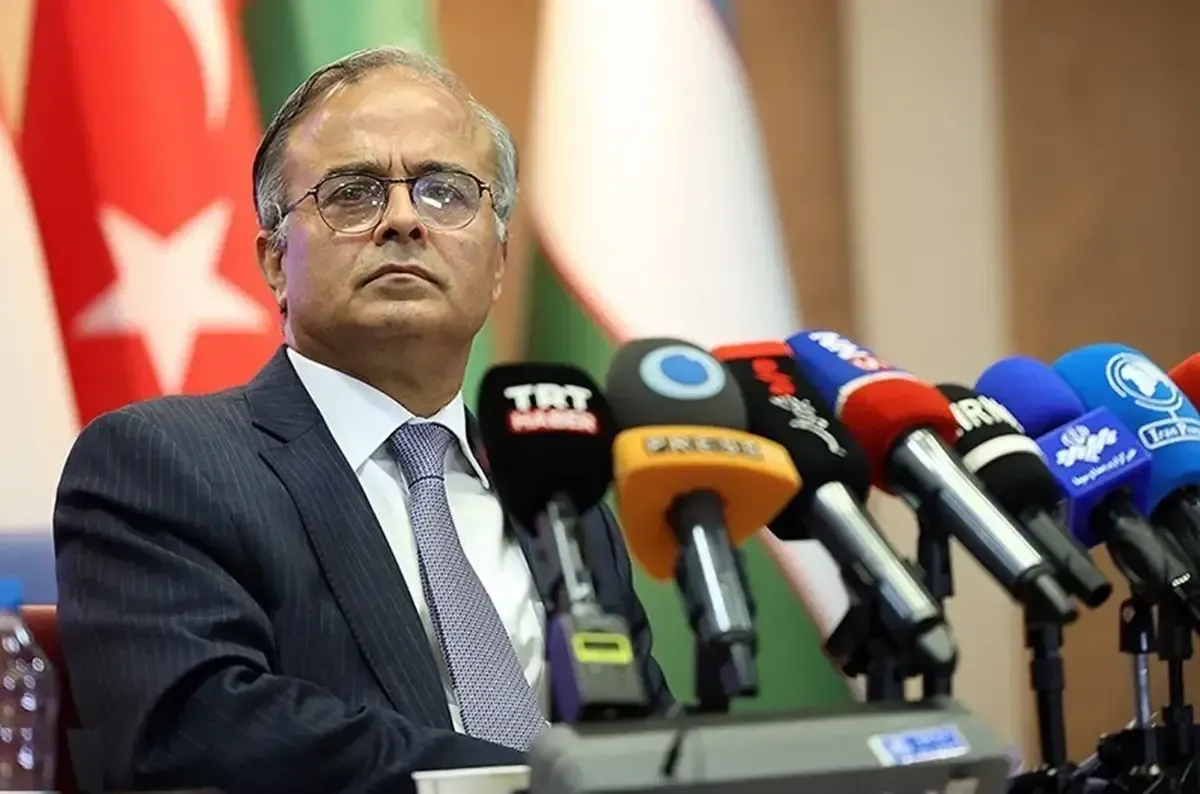
Tehran - BORNA - Dr. Asad M. Khan, Secretary General of the Economic Cooperation Organization (ECO), delivered the opening remarks at the Second Iran-ECO National Conference hosted by the Institute for Political and International Studies (IPIS) in Tehran on Tuesday, September 16, 2026.
His statement is as follows:
Distinguished Participants,
Esteemed Guests, Ladies and Gentlemen,
Good Day/Morning
It is a privilege to be here today at the opening of this significant Iran-ECO National Conference. On behalf of the Economic Cooperation Organization, I extend my sincere gratitude to the Ministry of Foreign Affairs of the Islamic Republic of Iran for organizing this important gathering, and to the Institute for Political and International Studies for hosting us.
Dear Participants,
The Economic Cooperation Organization is one of the oldest frameworks for regional cooperation in the developing world. Founded in 1964 as the Regional Cooperation for Development by Iran, Türkiye and Pakistan, and expanded in 1992 with the accession of Azerbaijan, Kyrgyzstan, Kazakhstan, Tajikistan, Turkmenistan, Uzbekistan and Afghanistan, ECO today brings together ten member states. With a combined population of more than half a billion people and an area of 8 million square kilometers, our region is endowed with enormous potential. Yet, as we all recognize, our achievements have not always matched this potential, and much more remains to be done to fulfill the aspirations of our peoples.
For Iran, as a founding member, host of the ECO Secretariat and a pivotal country in the neighborhood, ECO has always been a natural ground for advancing multilateral economic diplomacy. In this regard, I would also like to recall the remarks of H.E. Dr. Masoud Pezeshkian, President of the Islamic Republic of Iran, at the 17th ECO Summit held in Khankendi on July 4, 2025, where he highlighted trade liberalization, connectivity, tourism, digitalization, artificial intelligence and resilience as priority areas for our future cooperation.
Over the years, Iran has played a central role in supporting ECO’s subsidiary bodies and hosting key institutions that contribute significantly to the organization’s goals and objectives. This steadfast commitment to strengthening regional cooperation and advancing ECO’s development agenda has been further demonstrated this year when Iran hosted the Transport Ministers Meeting on June 2 and has expressed its readiness to host ministerial meetings on Agriculture, Interior and Health, as well as the 18th ECO Summit, which would make Iran the first country in ECO history to host the Summit in-person for the fourth time.
Iran’s exceptional geostrategic location, sharing land borders with seven countries and maritime borders with eight, positions it as a natural trade and transit hub. With borders shared with five ECO countries, Iran plays a vital role in fostering connectivity and regional integration.
Distinguished Participants,
I am pleased to note the thoughtful design of today’s program that seeks to engage every segment of the society and the whole range of stakeholders. This makes it a truly pathbreaking event, and one that is very much aligned with the original idea of establishing RCD, which was to harmonize and align regional development plans through seamless national coordination.
What this event does is to bring the ECO out of the narrow confines of official policymaking processes for all stakeholders to fully contribute to and own the Organization and its processes. We saw this idea of multi-stakeholder engagement in action at the 17th Summit where we were able to bring the whole ECO family and other stakeholders together during the ECO week of the Summit to collectively reflect and brainstorm the focus and priorities for ECO’s future vision and strategic goals.
As we prepare to formulate the ECO’s Strategic Goals of Economic Cooperation for next ten years, it is important to briefly reflect on our journey under ECO Vision 2025 which guided our Organization’s quest for sustainable economic growth, enhanced regional connectivity and socio-economic development.
In doing this, we rely on the findings of the ECO Vision’s midterm review-2021 and subsequent evaluations by the Vision Review Committee in 2024, providing invaluable lessons for laying the foundation for a more inclusive, responsive and target-oriented strategy for the decade ahead.
Distinguished Participants,
In drawing up the new vision and goals for the future, the following lessons learnt from the past are influencing our approach and strategy:
First, an all-encompassing multi-stakeholder approach has been adopted to develop ECO goals and priorities.
Second; greater emphasis is being placed on securing expanded private sector involvement by convening them next to sectoral ministerial meetings. For example, convening tour operators or freight forwarders on the sidelines of Tourism and Transport ministerial meetings.
Third, we are moving beyond sectoral silos by adopting an integrated and cross-sectoral approach. For example, to deal with regional trade and transport integration, a transport strategy, no matter how well-defined, cannot succeed without addressing visa facilitation, tariff harmonization and standardization issues. Coordination across sectors and institutions and developing an inter-agency approach to deal with cross-cutting issues is essential for meaningful progress.
Fourth, we are working hard to strengthen ECO’s visibility and foster a stronger sense of regional unity by promoting a family feeling in ECO.
Fifth, we are incorporating some working areas and operating tools, such as evidence-based economic research and digitalization in our day-by-day work.
Sixth, we a have embraced a structured approach that seeks to ensure sectoral priorities in trade, energy, connectivity, tourism and human resources, are advanced by setting realistic, measurable and impactful goals and targets.
Distinguished Participants,
The new Strategic Goals of the Economic Cooperation 2025 are anchored on three core pillars: Advancing Sustainability, Strengthening Regional Integration and Fostering Innovation and Inclusive Growth. Happily, these three pillars are also mirrored in the discussions the distinguished panelists will have today.
With dedicated panels on connectivity, technologies and resilience, this Conference provides an ideal opportunity to test and enrich these ideas with the insights of experts, practitioners and policymakers. The views, experiences and recommendations shared here will be critical in shaping our future vision for it to be both ambitious and practical, and aligned with the real needs and hopes of our people.
Distinguished Participants,
In closing, I would like to thank the government and people of Iran for their continued support to ECO. The outcomes of today’s panels will not only inspire the drafting of Strategic Goals of Economic Cooperation 2025 but also contribute to our collective thinking toward ECO’s trajectory beyond 2035. I am confident that today’s discussions will guide us in building a roadmap that promotes inclusive development, strengthens regional cohesion and delivers tangible benefits to all our people.
Thank you very much!
End Article