Iranian and Kazakh Religious Leaders Meet to Deepen Spiritual Ties
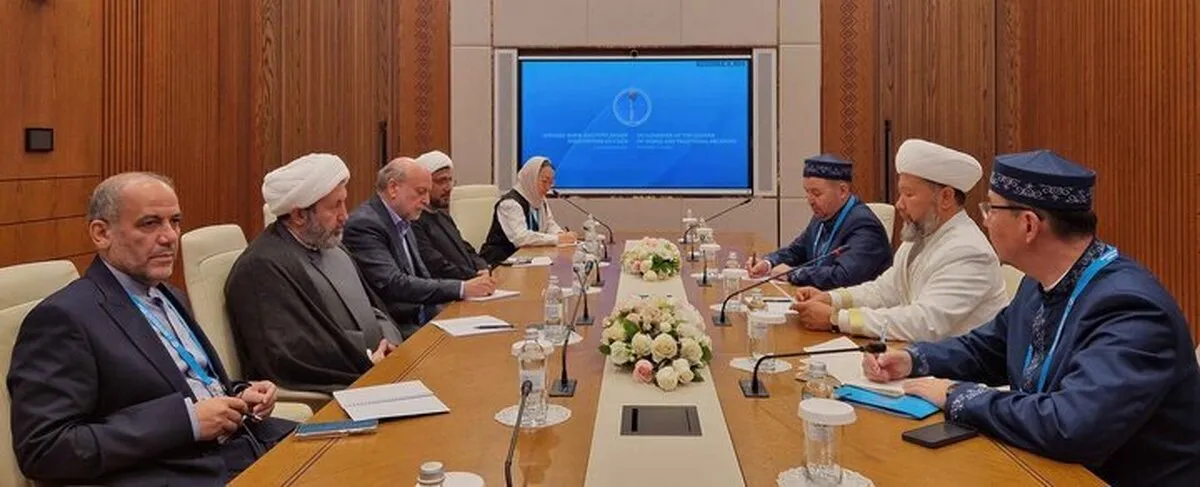
Tehran - BORNA - Nauryzbai Haji Taganuly, the Grand Mufti and Chairman of the Religious Administration of Muslims of Kazakhstan, hosted Hojjatoleslam Mohammad Mehdi Imanipour, President of Iran’s Islamic Culture and Relations Organization.
The Grand Mufti highlighted the shared spiritual and religious roots of the two countries and noted the ongoing development of bilateral ties. He stressed that in today’s world, where conflicts—including those framed in religious terms—are on the rise, promoting spiritual and moral values is of vital importance. Kazakhstan, he said, actively promotes interfaith peace and friendship, with the Congress of Leaders of World and Traditional Religions serving as one of its key initiatives.
“This congress is unique in its mission to promote and defend the values of peace and religion globally,” Taganuly stated, adding that Iran’s Islamic Culture and Relations Organization has also undertaken valuable work in this field, which Kazakhstan fully supports.
Imanipour, for his part, thanked the government and people of Kazakhstan for successfully hosting the congress. He praised the constructive role of the Grand Mufti in the broader Islamic community and wished him continued success.
He emphasized the importance of recognizing “where we stand in the world and where we must go,” arguing that religion remains an essential need in today’s world. He criticized the historical separation of religion from society and governance during the Renaissance, which, he said, paved the way for modern wars and atrocities that international institutions now ignore.
Imanipour warned against groups that misuse religion to distort its true values and sow division within societies, stressing that such exploitation has had devastating consequences for humanity. He also voiced concern about ongoing military conflicts worldwide and the passivity of international security organizations in responding to them.
Referring to remarks made by the Israeli representative at the congress, Imanipour criticized the attempt to justify war and terrorism at a gathering devoted to peace and interfaith harmony, saying such positions stand in clear contradiction to the spirit of the event.
He stressed that mobilizing religious leaders is now more urgent than ever. “If Muslim countries strengthen mutual trust and work closely together, they will undoubtedly be more resilient in the face of external threats and pressure,” he said.
Imanipour underlined the necessity of fostering Islamic unity, declaring that “if Islamic nations stand together, no danger can threaten them.” He expressed hope that the Grand Mufti’s upcoming official visit to Iran would provide an opportunity to further advance bilateral dialogue and cooperation in religious and scholarly fields.
The Iranian official concluded that such collaboration could expand friendship between nations and pave the way for new joint initiatives.
End Article