Iran Calls for Stronger Security Foundations to Unlock ECO's Vast Untapped Economic Capacity
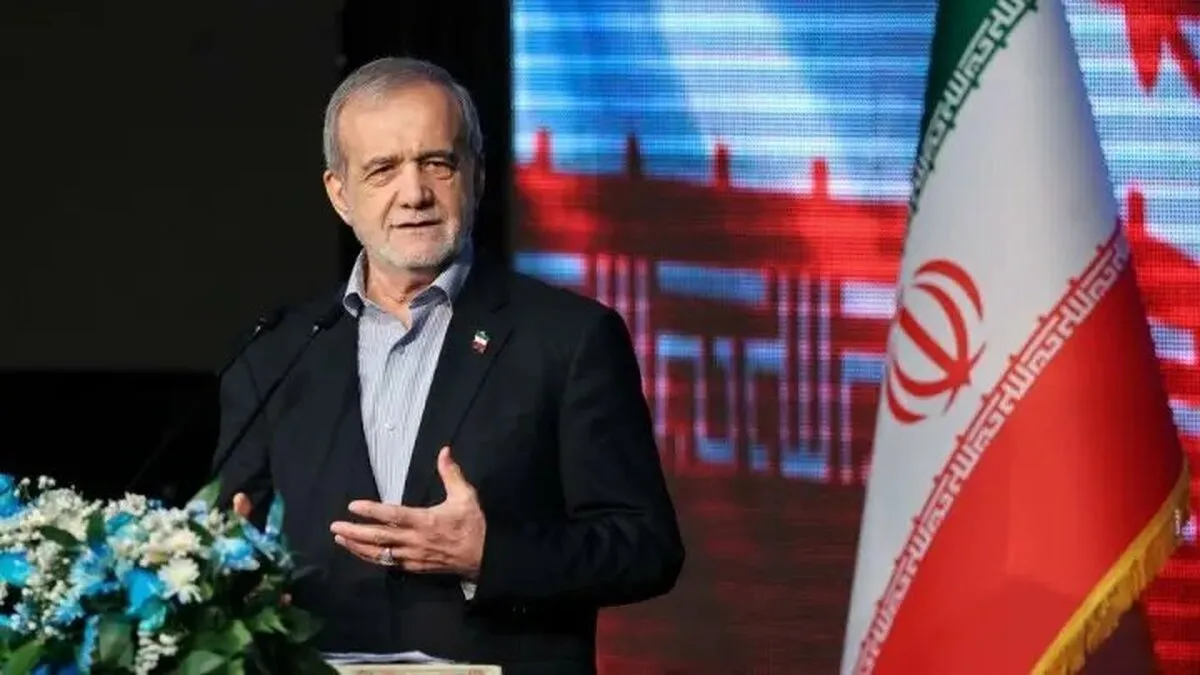
Tehran - BORNA - The President's remarks were delivered at the 4th Meeting of Interior Ministers of the ECO, held at the Tehran’s Summit Conference Hall. The gathering, occurring after a 15-year hiatus, reflects the ECO organization's pursuit of renewing the will of member countries to strengthen cooperation and coordination in important areas.
Ministers and senior officials from the ten member states—including Pakistan, Turkey, Tajikistan, Turkmenistan, the Republic of Azerbaijan, Afghanistan, Kazakhstan, Kyrgyzstan, and Uzbekistan—along with the ECO Secretary-General and guest delegations from Oman and Iraq, participated in the event.
The Critical Role of Security Ministries
Pezeshkian strongly emphasized that Interior Ministries play a crucial role beyond their specialized duties, as they provide the essential foundation for economic development, namely security and social stability.
He asserted that success in regional economic cooperation requires strong, predictable, stable, and resilient common frameworks and platforms, noting that Interior Ministries have an irreplaceable role in securing and reinforcing these prerequisites. He highlighted that achieving lasting regional stability requires robust cross-border collaboration in border management, law enforcement, and the collective fight against pervasive threats such as illegal migration, human trafficking, drug smuggling, all forms of terrorism, and other organized crimes.
The President stated that the ECO is the heir to several decades of efforts, synergy, and persistence by its members toward economic convergence, which has achieved considerable progress but still possesses vast untapped capacities. He noted that the recent summit in Khankendi, Azerbaijan, confirmed the members' growing determination, where a set of attractive and operational proposals was raised at the highest level. The ECO Vision 2035 is to be drafted based on this, which promises a bright future for the region and its members.
Pezeshkian added that the ECO serves as a bridge for connecting the nations of the region and a valuable platform for dialogue, experience exchange, and synergy in all fields. He stressed that in a world where challenges and opportunities are rapidly changing, joint and regional cooperation is not a choice, but an undeniable necessity.
Call for ECOPOL and Warning Against External Greed
The President pointed to one of the unfinished tasks in the organization as the creation of the joint police force, known as "ECOPOL," whose process has not yet been finalized. He noted that the ECO region is one of the few regions in the world that lacks a joint police force, stating that this gap, besides creating internal regional vulnerabilities, prevents the optimal utilization of cooperation with other regional police forces and Interpol.
Pezeshkian warned that the region and its surrounding areas are not immune to external ravages (threats), noting that the greatest foreign interventions in contemporary history have occurred here, and the biggest occupation of the century continues near our region. He referred to the recent atrocities in Gaza, describing them as the most horrific genocide and crime against humanity in the world over the past two years, perpetrated by the occupying regime in West Asia.
He concluded that due to the great thirst among the greedy and international norm-breakers for presence and intervention in the region, ECO member states—spanning Central Asia, the Caucasus, Southwest Asia, and the Persian Gulf—must plan and implement a cohesive, stabilizing, inward-looking (endogenous), and development-oriented security architecture.
End Article