Moscow: Anti-Iran Resolution by Board of Governors Was a Blow to Safeguards Regime
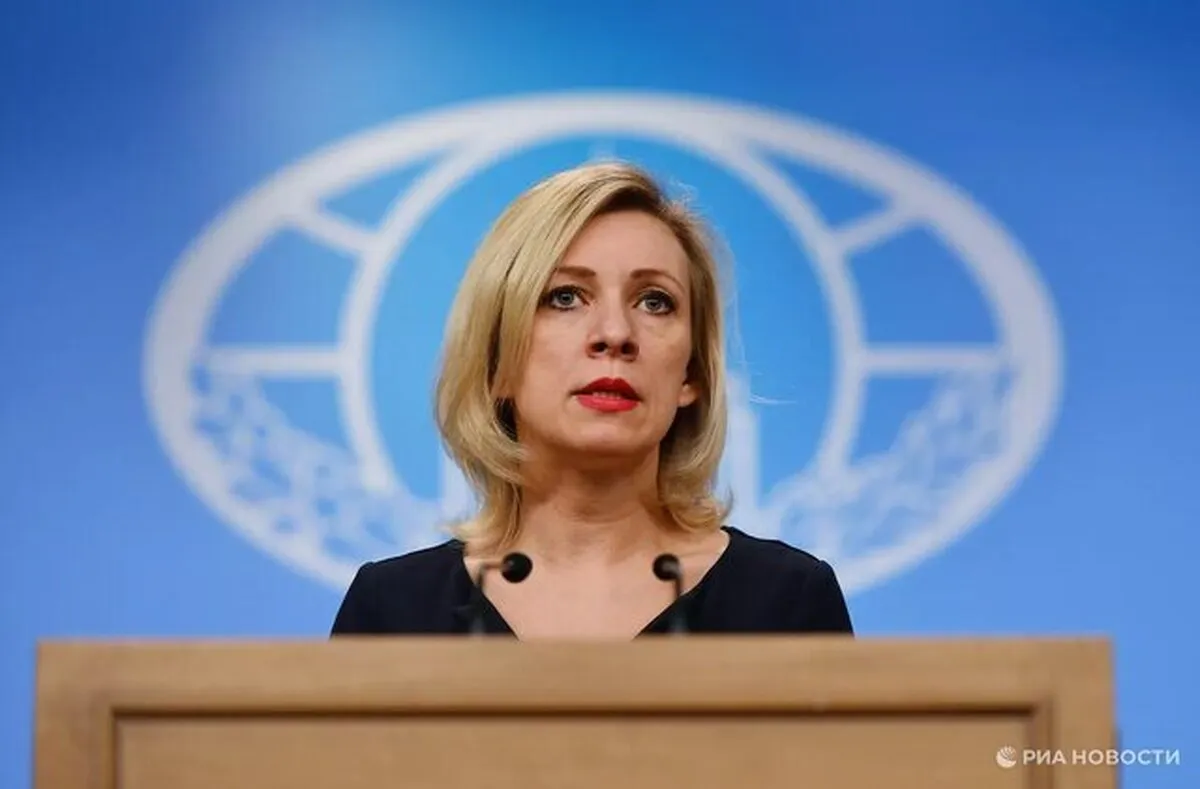
Tehran - BORNA - Maria Zakharova, Spokesperson for the Russian Foreign Ministry, reacted on Friday to the provocative, anti-Iran resolution proposed by the Western camp in the International Atomic Energy Agency (IAEA) Board of Governors and the vote on it, stating: "On November 20, the IAEA Board of Governors voted on the draft resolution 'NPT Safeguards Agreement with the Islamic Republic of Iran,' prepared by Germany, Britain, and the United States. Only 19 out of 35 members of the Board of Governors voted in favor of the draft resolution, while the remaining countries rejected it. Russia, China, and Niger voted decisively against it."
The Spokesperson for the Russian Foreign Ministry, in response to the event, said: "We consider this provocative resolution by the Western camp as a serious blow to international confidence in the Agency's safeguards system and the global nuclear non-proliferation treaty. There was no basis for the IAEA Board of Governors to take emergency action in connection with verification activities in Iran."
She noted that the Agency's Secretariat had not requested any instructions from the Board of Governors.
Zakharova emphasized: "Russia recognizes the fact that Iran remains committed to its obligations under the NPT and the Comprehensive Safeguards Agreement with the IAEA, despite the Israeli and US attacks in June on its nuclear facilities under the Agency's safeguards, and despite the unacceptable actions of Western countries in August and September aimed at the illegal revival of UN Security Council sanction resolutions against Iran that had been revoked under the Joint Comprehensive Plan of Action (JCPOA)."
Zakharova pointed out: "Tehran continued cooperation with the IAEA, gradually expanding the scope of verification activities on its soil, primarily concerning facilities that were unaffected by the US and Israeli attacks and where safeguards conditions remained in place."
She added: "The proposers of the anti-Iran resolution in the Board of Governors are the same countries that for years violated the JCPOA, which was concluded in 2015 to resolve the situation surrounding Iran's nuclear program, and disregarded UN Security Council Resolution 2231." Conversely, she noted: "Tehran remained faithful to its obligations, taking into account the precise and verified balance of interests within the framework of the original nuclear agreement."
Zakharova also highlighted that "the JCPOA expired on October 18," meaning that all international restrictions against Iran are no longer in effect. In this regard, she seriously questioned the directive to the IAEA Director General to prepare regular reports on Iran's adherence to obsolete UN Security Council resolutions that were in effect before the JCPOA. "The goals set out in those resolutions were achieved, their provisions were implemented by Tehran, and all remaining Agency questions for the Iranian side were finally resolved. This was clearly reflected in the Director General's report of December 2, 2015, and the IAEA Board of Governors resolution of December 15, 2015."
The Spokesperson for the Russian Foreign Ministry concluded: "The West's desire to justify the revival of old sanctions by citing the current difficulties in the Agency's verification in Iran—which we emphasize were not caused by Tehran—is a gross deception and undermines the foundations of the Agency's verification activities. The limited support for the new resolution among the IAEA Board of Governors member states confirms the growing understanding of the unacceptability of using the Agency for political score-settling and pursuing personal political agendas unrelated to nuclear non-proliferation. We firmly believe that peaceful cooperation in the nuclear energy sector with Iran must enjoy the same conditions of cooperation as with other non-nuclear weapon states that honestly comply with their obligations under the NPT."
End Article