Abduction as Policy: The Seizure of Venezuela’s President and the Naked Logic of Hard Intervention in the Western Hemisphere
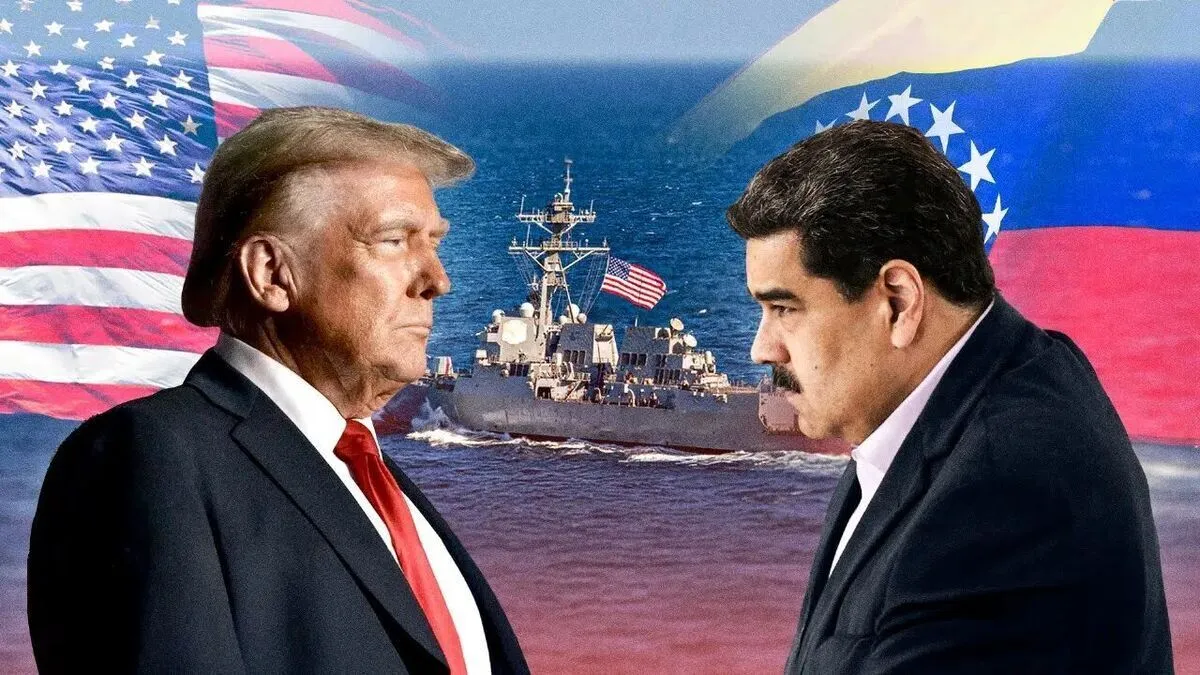
Amjad Abdi – Editorial Secretary of Borna news agency: The detention and forced transfer of the sitting President of Venezuela to U.S. soil is not an ordinary event in international relations. It cannot be reduced to a mere security operation or a bilateral crisis; rather, it is a quintessential manifestation of "State Abduction."
The transfer of Venezuelan President Nicolás Maduro to the United States—conducted via a military operation on sovereign soil—marks a critical turning point in the evolution of U.S. foreign policy. This act simultaneously presents a direct challenge to the fundamental principles of national sovereignty, the rules of international law, and the geopolitical balance of Latin America.
A Deliberate Violation of National Sovereignty
The abduction of a sovereign nation's president is the most severe violation of the principle of national sovereignty. This action transcends political intervention or diplomatic pressure; it directly targets the legal existence of the targeted state. Such an act sends a clear signal of total disregard for the established norms of the international order.
This event fundamentally undermines the concept of sovereign immunity for high-ranking state officials. This immunity, a pillar of stability in international relations, has effectively been suspended in this case. The implicit message is clear: the era of legal security for leaders who do not align with Washington has ended—even within their own borders.
Furthermore, the abduction of a head of state cannot be justified even through security logic. No accepted framework in international law legitimizes such an act. This situation creates a profound chasm between the rhetoric of a "rules-based order" and the reality of power politics. The strategic consequence of crossing this red line is heightened systemic instability. When a country’s highest executive official lacks immunity, political security across the entire region erodes, turning the political arena into a field of permanent anxiety.
Abduction as a Tool of U.S. Foreign Policy
The abduction of the Venezuelan president should not be viewed as an impulsive or emotional decision. It is the product of a cold, calculated strategy within the framework of the U.S. National Security Strategy of 2025. Washington’s new foreign policy views direct intervention not as a cost, but as a primary tool for threat management.
U.S. behavior indicates that the country has entered a phase of "Naked Punitive Politics." The abduction of a state leader represents the highest level of political punishment, and this message is addressed to every government in Latin America. The logic of this action rests on the principle of "demonstrative deterrence." Such a display of power seeks a goal far beyond changing behavior in Venezuela; its primary function is to instill strategic fear in other regional capitals. This pattern reflects a shift in American strategic culture, where normative constraints that previously prevented extremist actions have been discarded, and "national security" has become the ultimate justification for any form of aggression.
Linking Abduction to the Trumpian Version of the Monroe Doctrine
The abduction of the Venezuelan president cannot be understood without reference to the "New Monroe Doctrine." The Trumpian version of this doctrine defines the Western Hemisphere as a realm for the exclusive exercise of U.S. authority, where any deviation results in a "hard" reaction.
This new doctrine makes political independence conditional upon strategic alignment. Governments that choose a different path lose their legitimacy in Washington’s eyes, and the abduction of a president is the practical translation of this logic. In effect, the U.S. views itself not merely as a player, but as the regional "security guardian." This self-appointed status provides a license for direct intervention, with Venezuela serving as the concrete victim. The result is the reproduction of hierarchical relations in the Americas, reducing regional states to actors with varying degrees of autonomy—a situation reminiscent of the imperialist orders of the past.
A Message to Latin America and the World
The abduction of the Venezuelan president is not just a regional message; it is a global warning from a bellicose president who disregards international rules with ease. Following this event, Latin American governments will be forced to reassess their security calculations, as the personal security of leaders becomes a strategic variable.
This event increases the likelihood of governments gravitating toward anti-U.S. alliances, as a shared sense of insecurity becomes the engine for mutual convergence. Conversely, one cannot ignore the hypothesis that some leaders in the Global South might move closer to the U.S. simply to preserve their own positions. On a global scale, this act weakens the credibility of the international legal order. The silence or impotence of international institutions sends a dangerous message: that power has become more decisive than the law.
A Turning Point for the Future of the Hemisphere
The abduction of the Venezuelan president marks a watershed moment in U.S. policy toward Latin America. This action has shifted the previous boundaries of intervention. Moving forward, there may be no red lines or "safety zones" for any leader in this region.
The emphasis on the Western Hemisphere in the 2025 National Security Strategy suggests an increase in the frequency and intensity of interventions, with Venezuela being the first tangible example of this new phase. It must be stated clearly: the future of this region in the shadow of this development is framed as tense and unstable. Mutual distrust will replace cooperation, as security becomes the dominant concern of governments.
The abduction of the Venezuelan president is not the end of a crisis, but the beginning of a new era—one in which the Monroe Doctrine has returned with a violent and unmasked face, turning the Western Hemisphere once again into a stage for the confrontation of naked power.
End Article