Russian Ambassador to Iran: Ukraine is a Pretext for Europe’s Hostility Toward Iran / Russia Does Not Abandon Its Friends
Tehran - BORNA - The relations between the Islamic Republic of Iran and the Russian Federation, with a long and ups-and-downs history, have recently been upgraded to the level of "Comprehensive Strategic Partnership." The signing of the Comprehensive Strategic Partnership Treaty on January 17, 2025 (28 Dey 1403) by Presidents Masoud Pezeshkian and Vladimir Putin, which became enforceable on October 2, 2025, after being approved by the parliaments of both countries, is considered a historic turning point in these relations. This 20-year treaty has institutionalized cooperation in the fields of political, economic, defense, energy, transport, cultural, and countering unilateral sanctions, providing the ground for the all-round expansion of relations against common challenges.
In the economic field, the volume of trade exchange between the two countries has grown significantly, and key projects such as the International North-South Transport Corridor (INSTC), cooperation in oil, gas, and nuclear energy, and independent mechanisms for bypassing sanctions are moving forward with momentum. Iran and Russia also have close coordination in multilateral organizations such as the Shanghai Cooperation Organization (SCO), BRICS, and the Eurasian Economic Union (EAEU), and recently the Free Trade Agreement with the Eurasian Union has been implemented.
From a political and security perspective, the two countries have taken common positions on regional issues such as stability in the West Asian region, the South Caucasus, and countering terrorism, as well as at the global level such as supporting multipolarity and opposing Western unilateralism. In December 2025, Sayyid Abbas Araghchi and Sergey Lavrov, the Foreign Ministers of the two countries, signed the cooperation program of the Foreign Ministries for the years 2026-2028, which provides the roadmap for regular consultations.
According to what the officials of the two countries have emphasized, this strategic partnership is based on mutual interests, respect for each other's sovereignty, and countering foreign pressures, and in the current complex geopolitical conditions, it plays an important role in strengthening regional peace, security, and development.
Significant Progress in Various Fields
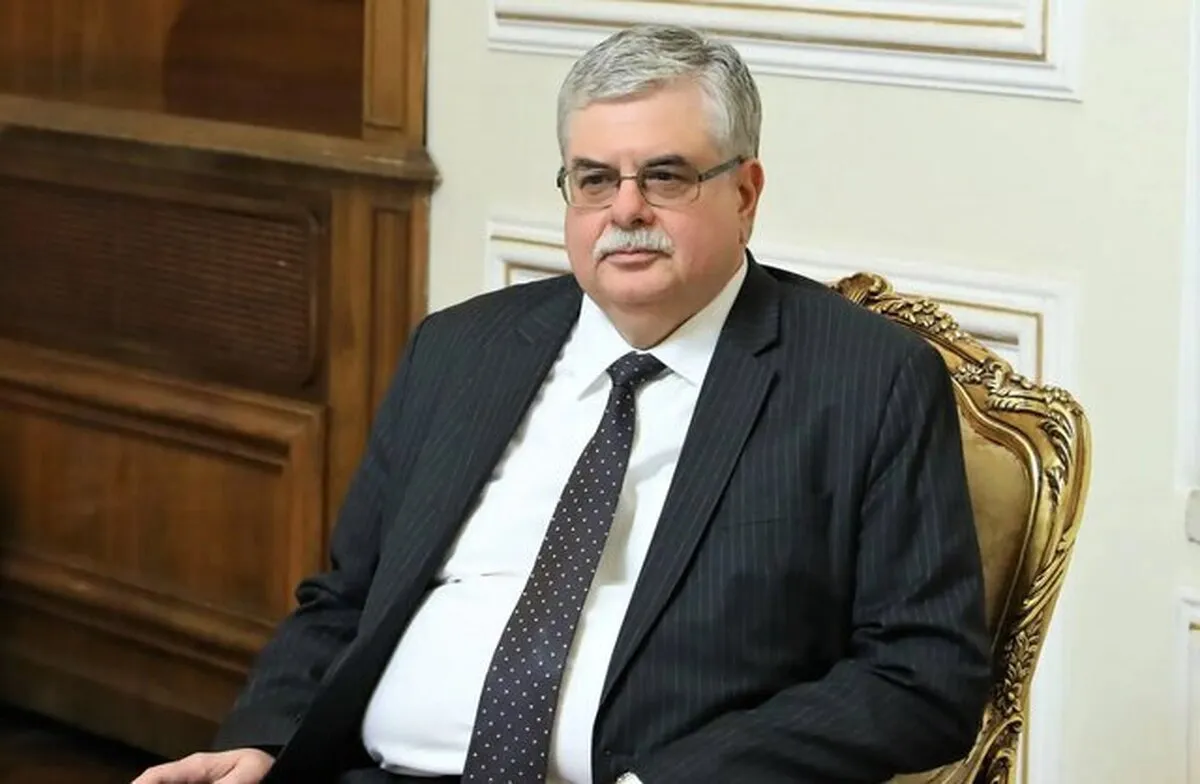
From this perspective, Alexey Dedov, the Ambassador of the Russian Federation to the Islamic Republic of Iran, emphasized in a conversation with Iranian media that the relations between the two countries have been upgraded to an unprecedented level in recent years and the Comprehensive Strategic Partnership Treaty has provided a solid foundation for this sustainable cooperation.
Ambassador Dedov, emphasizing the multi-dimensional nature of the relations, reported significant progress in the fields of politics, energy, transport, finance-banking, and culture. He considered the International North-South Transport Corridor, and especially the completion of the Rasht-Astara railway line, as a key project and added that cooperation in the field of gas, electricity, and nuclear energy is also expanding.
In the nuclear sector, the Russian Ambassador reported the success of the first unit of the Bushehr power plant, the continuation of the construction of the second and third units with the presence of 700 Russian specialists, and the signing of new documents for the construction of a large power plant in Hormozgan province and Small Modular Reactors (SMRs).
Neutralizing the Effects of Unilateral Western Sanctions
Referring to the implementation of Iran's Free Trade Agreement with the Eurasian Economic Union and the mutual support of the two countries in international issues, Dedov said: "Russia considers the activation of the 'Snapback' mechanism illegal and by creating independent payment infrastructures and alternative logistics routes, the neutralization of the effects of unilateral Western sanctions is being carried out." He also supported the diplomatic resolution of Iran's nuclear program and called Western actions non-constructive.
Regarding the Ukraine crisis, the Russian Ambassador emphasized that Moscow remains committed to the conditions announced by President Putin for a lasting peace, and considered the accusations against Iran in this regard merely a pretext for pressuring Tehran and limiting its cooperation with Moscow.
Russia Ready to Help Normalize Iran-Syria Relations
The Russian Ambassador emphasized that his country's presence in various regions of the world has not only not decreased but has been strengthened and added: "Russia is ready to help normalize the relations between Iran and the new Syria."
Dedov, expressing his being impressed by the cultural and geographical diversity of Iran, mentioned traveling to different provinces of the country as one of his most memorable experiences and listed carpet weaving, traditional music, and Iranian poetry as the most attractive aspects of Iranian culture.
Full Text of the Interview
How have the diplomatic relations between Iran and Russia developed in recent years, especially considering the implementation of the Comprehensive Strategic Partnership Treaty? In recent years, the relations between Russia and Iran have been upgraded to an unprecedented level; a matter that was consolidated in the form of the mentioned treaty, which was signed by the presidents of the two countries in Moscow on January 17, 2025, during the visit of His Excellency Mr. Masoud Pezeshkian to Russia, and became enforceable from October 2nd. The path chosen by the high political officials of the two countries is based on national interests and all government institutions pursue it continuously and regardless of short-term conditions.
What specific achievements have been obtained in the recent meetings of the Presidents and Foreign Ministers of Iran and Russia? In both meetings, a wide range of issues was reviewed and the implementation process of joint projects was evaluated, and existing issues and problems that must be resolved were identified. The main focus was on the continued expansion of trade, economic, and investment cooperation. Also, the two sides coordinated their positions with each other regarding the most important political and international issues.
How do you describe the nature of cooperation between the two countries in various fields? Relations between the two countries are multidimensional. The travel of delegations is performed regularly so that all aspects of cooperation are reviewed in a trust-based manner. In the fields of politics, energy, transport, finance and banking, and cultural and humanitarian, significant progress has been achieved. Several large economic projects are being implemented. The Free Trade Agreement between the Eurasian Economic Union and Iran is also being implemented. In most international issues, the positions of the two countries are close to each other and we continuously support each other.
For the year 2026, the next meeting of the Joint Permanent Commission of Iran and Russia in the field of trade and economic cooperation is planned, during which the next paths of cooperation will also be determined.
If we want to talk about the fields where the cooperation capacity has not yet been fully activated, we should first mention the economy. The reason for this, until recently, has been the lack of proper trade infrastructure and low awareness of the economic actors of the two sides of each other's facilities.
Also, in the field of education, there are specific "complexities" that require more attention and dialogue. The decision of the Ministry of Science, Research, and Technology of the Islamic Republic of Iran to reduce the number of approved Russian universities in Iran by 80% from 2026 and limiting it to a few specific universities can have a serious impact on the process of developing scientific and academic cooperation between the two countries. The same issue is raised regarding the review of the list of approved medical universities, including Sechenov University, which until this moment is the place of study for a significant portion of Iranian students in Russia. We call on Iranian colleagues to take action to resolve the created situation and the process of reviewing two important issues, namely the agreement on mutual recognition of educational documents and determining the fields of interest of the Iranian side, should proceed with more speed.
How is the coordination of Iran and Russia in the United Nations, especially after the activation of the "Snapback" mechanism, to counter illegal sanctions? And how can Russia help Iran in this regard? We have close cooperation with Iran in various UN bodies and regularly consult on key issues, including the issue of sanctions. Russia considers the activation of the "Snapback" mechanism as not materialized and considers all sanctions raised based on it as illegal and legally invalid. However, Western countries, contrary to agreements and rules that should be observed by the UN Security Council, still try to re-establish anti-Iranian sanctions.
Russia intends to expand its cooperation with Iran in all fields and will continue the fight against illegal restrictions not only in the United Nations but also in platforms such as BRICS, the Shanghai Cooperation Organization, and the Eurasian Economic Union.
In practice, we have created an independent payment infrastructure that works well and allows the settlement of exchanges with national currencies. The exchange of advanced products, the creation of alternative and resilient mechanisms for bilateral trade, and the launch of new logistics routes are actions that "neutralize" the effect of sanctions and make them ineffective. We follow these issues jointly with Iranian colleagues every day.
What is Russia's position regarding Iran's nuclear negotiations with the West? And has Russia discussed this with the United States of America? Russia has always supported the diplomatic resolution of the issue of Iran's nuclear program and is still on the same position. Unfortunately, Western countries have weakened the negotiation process with non-constructive and sometimes aggressive actions, and by accusing Iran of violating its commitments without any basis, they prevent the progress of dialogues. We call on the Western parties to return to the path of constructive interaction with Iran and stop applying pressure on other countries and international institutions. We are ready to have comprehensive cooperation with our Iranian colleagues in this field. We hope that comprehensive negotiations will resume and lead to agreements that provide a fair and long-term solution for all issues related to Iran's nuclear program.
The Ukraine War
Please explain the negotiations related to Ukraine. Is Russia still committed to its initial conditions for ending the war? The negotiation process continues and the Russian and American sides are actively exchanging views. American officials understand the necessity of addressing the roots of this conflict, which started long before 2022.
The European Union prevents the peaceful resolution of the Ukraine crisis in every possible way. Europe, by sending weapons extensively to Ukraine, allocating very large amounts to continue the war, trying to confiscate Russian assets, and completely ignoring Russia's interests, still seeks to inflict a "strategic defeat" on Russia.
The Russian Federation still emphasizes resolving the Ukraine crisis by removing its main causes and based on the principles that His Excellency Vladimir Putin, the President of Russia, has raised many times: Ukraine must agree to a neutral, non-aligned, and non-nuclear status; it must be demilitarized and denazified; and Ukrainian forces must be completely withdrawn from the Donetsk and Lugansk People's Republics, as well as the Kherson and Zaporozhye regions.
For Russia, the fate of the people whose ancestors developed these lands over centuries, built cities, roads, and ports, and whose memorials stand as founders of these regions, is important. The rights of these people are now ignored by the Kyiv regime. For this reason, the population of the mentioned regions decided in referendums in their time not to live under a neo-Nazi regime.
Undoubtedly, the rights, freedoms, and interests of Russian-speaking citizens in Ukraine must be fully guaranteed and the rights of the official Orthodox Church of Ukraine must also be preserved. The presence of foreign military forces in Ukraine is unacceptable to us. I emphasize that Russia is not looking to stop the conflict to give a "breathing opportunity" to the armed forces of Ukraine, but the goal is to end it completely and reach a lasting peace.
Some experts believe that European countries are punishing Iran for its hypothetical role in the Ukraine war. What is your opinion on the accuracy of this view? In my opinion, European countries try to "punish" any country that has an independent foreign policy and refuses to comply with orders from Brussels or other European capitals. In the case of Iran, this first manifests itself in their position towards the Snapback mechanism.
The accusation of Iran's participation in the Ukraine conflict, which has been repeatedly denied by the officials of our two countries, is only a pretext for applying aggressive anti-Iranian measures, which are carried out with the aim of limiting Iran's sovereignty and its cooperation with Russia. If the issue of Ukraine was not raised, European countries with their same selfish approach would find other pretexts for destructive actions against Iranian officials.
Some believe that Russia's presence in various regions of the world such as the Caucasus, Africa, Latin America, and the Middle East has decreased because of the Ukraine war and Moscow is losing its allies in these regions. Do you agree with this view? Not at all. On the contrary, in the conditions of changing the world order, most countries of the world are aligned with the principles of Russia's foreign policy, which are based on justice, sovereign equality of states, mutual trust, respect for the right of each country to determine its path of development, and cultural and civilizational diversity. We are in favor of a multi-centric world, where decisions are made collectively and not imposed from one center. Constructive and practical cooperation with the countries of the "Global South" has been established. Russia plays an active leadership role in the development of organizations such as the Shanghai Cooperation Organization, BRICS, and the Eurasian Economic Union.
In Russia, it is not customary to abandon real and trusted friends whom time has tested. This approach has gained the respect of our allies around the world.
Is Russia currently playing the role of a mediator between Iran and Syria? Russia is in dialogue with the new Syrian authorities. For example, on December 24, Sergey Lavrov held another stage of substantive negotiations with Asaad al-Shaibani, the Syrian Foreign Minister.
The principled approaches of Russia and Iran for resolving the Syrian crisis are aligned. We are in favor of the rapid and long-term stabilization of the situation in Syria, preserving the unity, sovereignty, and territorial integrity of this country, starting the post-war reconstruction process, and resolving economic issues. In appropriate conditions, we are ready to help the process of normalizing the relations between Tehran and the new Damascus.
What is the current status of the cooperation between Iran and Russia in the field of building nuclear power plants? The "Bushehr" nuclear power plant is our main joint project, the first unit of which has been successfully operating for more than 10 years. The construction of its second and third units continues actively and currently about 700 Russian specialists are working on this project. This project is being implemented under the most severe sanctions pressure.
In recent months, several cooperation documents have been signed between Rosatom state corporation and the Atomic Energy Organization of Iran and their responsible organizations to develop cooperation in the field of nuclear energy. These documents include the agreement to develop the project for building a large nuclear power plant in Hormozgan province and the inter-institutional memorandum of understanding for cooperation in building small modular nuclear power plants.
Please explain the current aspects of cooperation between the two countries in the field of energy and transport corridors. The "North-South" international transport corridor is considered the most key project. It is expected that with the construction of the "Rasht-Astara" railway line section, the possibility of integrated transit from the Baltic Sea to the Persian Gulf will be provided. The construction of this line is under the supervision of the presidents of the two countries and is a vital condition for the full launch of the western branch of this international transport corridor, which concentrates the largest volume of cargo. Also, the eastern route and the trans-Caspian transit route have a great outlook.
In the field of energy, the possibility of cooperation between Moscow and Tehran in the field of gas and electricity is currently being discussed, and the competent bodies of the two countries are in constant contact with each other.
You served as the Deputy Ambassador at the Russian Embassy in Iran for five years and officially started working as the Ambassador in Iran in 2022. What prominent memories can you share? Please explain your impression of Iranian culture and which aspects were most attractive to you. The biggest impact on me was made by traveling to different regions of Iran. Iran has a unique geography and a very rich history, and for this reason, there are diverse tourist destinations in it; including Gilan and Mazandaran, East and West Azerbaijan, Khorasan Razavi, Isfahan, Yazd, Fars, Kerman, Lorestan, Khuzestan, the Persian Gulf islands, and many other regions.
In Iranian culture, what attracted me the most was its diversity and elegance; whether in carpet weaving, playing traditional instruments, or the famous Iranian poetry.
End Article