Iran’s Sports Minister Unveils Book on Supreme Leader’s Thought System in Sports
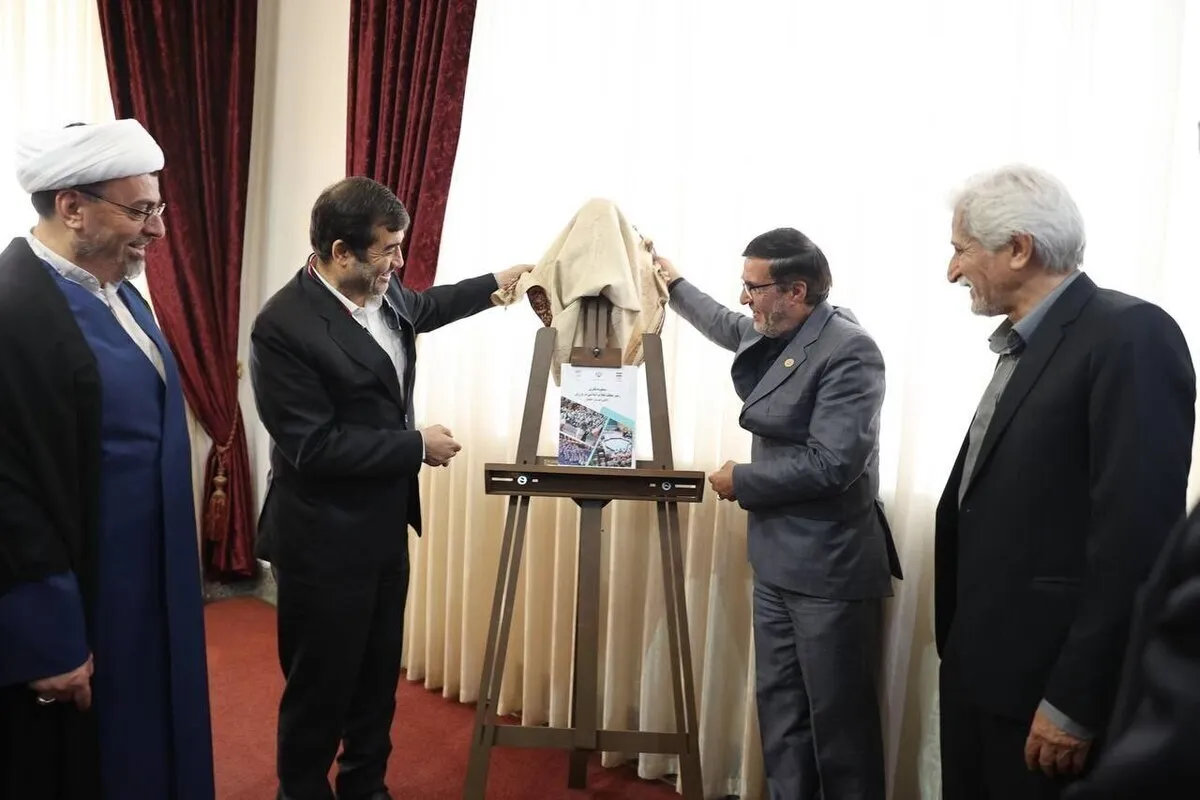
Tehran - BORNA - One of the key topics previously agreed upon by members of the National Sports Headquarters was the development of “The Intellectual Framework of the Supreme Leader of the Islamic Republic in the Field of Sports.” This comprehensive document was officially unveiled today by the Minister of Sports and Youth.
The framework was compiled by Mohammad Hassan Pasvar, Ph.D. in Public Policy Management from Tarbiat Modares University and a senior official at the Management and Planning Organization of Iran. It encompasses the Supreme Leader’s speeches, remarks, and meetings with athletes and the sporting community from May 17, 1988 to July 17, 2024, and has been published under the auspices of the National Sports Headquarters.
The content includes 35 sport-related speeches by the Supreme Leader, containing 14 overarching themes, 317 key statements, 313 core concepts, and 29 organizing themes—most of which center around spirituality in sports. Other key chapters include championship sports, sports and economy, sports and politics, mass sports, women’s sports, anti-arrogance through sports, as well as a section titled “The Supreme Leader’s Most Frequently Used Words in the Domain of Sports.”
After unveiling the document, Ahmad Donyamali, Minister of Sports and Youth, stated: The Supreme Leader’s guidance in the field of sports has always served as our beacon and should be considered a genuine strategic document. We must publish and circulate this framework among the sports community to enable full implementation of his directives, rooted in belief and commitment. A similar compilation could also be undertaken regarding the views of the late Imam Khomeini (RA).”
In another part of his remarks, the minister emphasized the supra-organizational role of the National Sports Headquarters, underscoring the significance of the responsibilities borne by this body and its members: “This headquarters is a forum for intellectual exchange. Our sessions must serve as a compass for execution. The headquarters plays a synergistic role—and we should harness that more extensively.”
The Minister also addressed the issue of soft warfare and strategies to confront it: “The destructive impact of soft warfare is no less than that of hard warfare. We must draft a doctrine of psychological warfare and formulate a plan to counter soft war. However, we shouldn’t wait for top-down directives—we must take initiative ourselves.”
End Article