45 Positions, 4 Contradictory Narratives: A Review of Trump’s War Rhetoric Against Iran
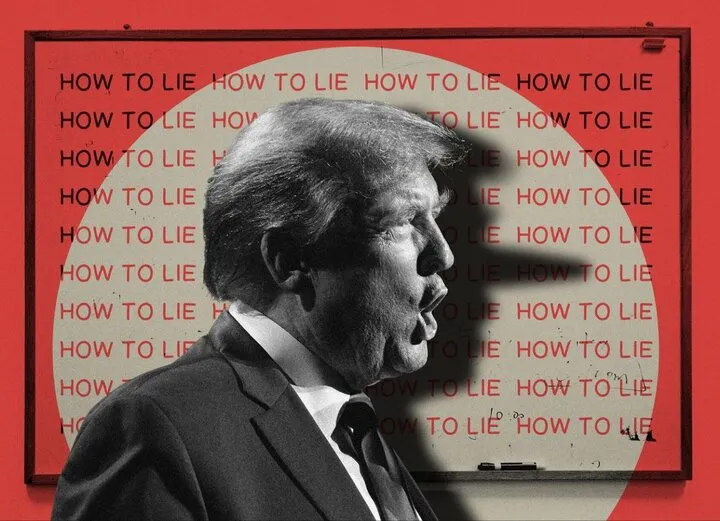
Tehran - BORNA - According to a data-driven analysis utilizing AI-based text processing and content categorization of Trump’s posts on "Truth Social" and his public speeches at least 35 to 45 direct positions regarding the conflict with Iran were identified between February 28 and May 5. These positions center on four main axes that frequently contradict one another.
The Pattern of Repetition: Four Key Propositions in Trump’s Narrative
In this report, Trump’s statements primarily revolve around four recurring propositions: "Full realization of military objectives," "Destruction of Iran’s military capability," "The imminent end of the war," and simultaneously, "Readiness for escalating military operations."
Among these, Trump spoke about the "end of the war" or "nearing a peace agreement" about 14 times. This is while almost simultaneously, in more than 12 separate instances, he announced U.S. readiness to conduct new attacks. Furthermore, the claim of "total destruction or weakening of Iran's military power" was repeated about 11 times in his speeches; a proposition that was subsequently challenged by field realities.
Notably, these propositions were raised by Trump in very short intervals, sometimes less than 48 hours; in one instance, he spoke of the "end of the war" and, a short time later, emphasized the "military option" and the escalation of the war again. In this regard, a temporal analysis of these statements shows that the contradictions are not merely content-related but are clearly visible in their chronological sequence as well.
At several points, Trump spoke of "progress toward peace" or "receiving a proposal from Iran" and even announced the "imminent end of the war," but shortly after, he raised the possibility of "new attacks." From the perspective of analysts, this pattern is interpreted as an attempt to manage several levels of audiences simultaneously: domestic public opinion, regional allies, and the opposing side—an attempt that has in practice resulted in the production of unstable and contradictory narratives.
Meanwhile, when Trump speaks of the "full achievement of military goals" or "Iran's military defeat," reports published in American media, including CNN, NBC News, the New York Post, and other U.S. outlets, present a different picture.
Satellite Images of Damaged U.S. Bases in the Region
Based on these reports, all U.S. military bases in the region have been targeted by attacks from Iran and resistance groups, sustaining operational damage. On the other hand, as acknowledged by published reports, Iran’s military power remains a "serious threat" against U.S. forces, and Iran’s military capabilities—especially in the missile and drone sectors—remain active. This difference in narrative has created a meaningful gap between the "claim of total destruction" and the "reality of continued operational capability" of Iran.
Despite the release of satellite images of U.S. bases in the region and the visibility of the damage inflicted, Trump has reacted to American media reports on several occasions by issuing repetitive statements, calling these media outlets "Fake News," rejecting their reports, and describing their goal as an assault against his administration. In the same vein, the official White House account on the "X" social network, in a desperate attempt to control public perception, recently published a one-hour video of Trump repeating the word "Winning" consecutively. This video was met with mockery rather than attention from users.
Exposure of Trump’s Lies in the Economy
In the economic sphere, the narrative of "total control of the situation" does not align with existing data. Rising energy prices, fluctuations in financial markets, and concerns over disruptions in the global oil supply are among the consequences emphasized even in Western media analyses. These developments have affected not only global markets but also the domestic U.S. economy, creating concerns about the long-term costs of this war.
Despite Trump’s repeated claims about "rapidly decreasing energy prices" in the U.S. "after the war ends" and his alleged statements about his administration's management of the country's energy markets, according to a report yesterday by USA Today, since the beginning of the U.S. and Israeli regime’s war against Iran, the price of each gallon of gasoline in the U.S. has increased by an average of 49%, reaching $6 in some states.
Reactions Inside the U.S.; From Analysts to Congress
Simultaneous with these developments, criticism from within the U.S. has also increased. Analysts such as John Mearsheimer, the prominent theorist of offensive realism, Daniel Davis, a retired U.S. Army officer and senior strategic affairs analyst, and Douglas Macgregor, who was an advisor to the U.S. Secretary of Defense in Trump’s first administration, have warned that the conflict with Iran could become a "strategic quagmire" for Washington.
At the political level, some Democratic representatives in Congress have described Trump's statements as "misleading" and warned about the gap between the official narrative and field realities. In their latest action, the party published a message on "X" describing the U.S. President as a "liar." Lawmakers of this party in the House of Representatives are also attempting to advance a plan for the President's impeachment under the 25th Amendment.
Such public expressions and messages are rare in U.S. presidential history, although previously in February 2020, Nancy Pelosi, the former Speaker of the U.S. House of Representatives, tore up the text of Trump’s speech immediately after the "State of the Union" address. When asked for her reason, she said she was looking for a page in it that did not contain a lie and could not find one, so she decided to tear the whole thing up.
Furthermore, according to polls conducted by Reuters and Ipsos, Trump’s popularity among the American people and the level of satisfaction with the President’s performance have reached the lowest level since the beginning of his presidency, at 34%. In this regard, as acknowledged by CNN, Trump has become one of the most unpopular presidents in U.S. history.
Trump; The Most Untruthful U.S. President
The contradictions in Trump's words and stances have drawn the attention of the American and global public, while a record of false claims by Trump has been documented before. According to a report by the Washington Post written during Trump’s first term, he made an average of dozens of false or misleading claims daily. Statistical estimates published in recent years show that the total reached about 30,573 claims during one presidential term. Many political analysts and historians, using Washington Post statistics, consider Trump unrivaled in the volume of false statements in modern American history.
So far, with nearly two years passing since the start of Trump’s second administration, no investigation as extensive as the Washington Post report has been conducted to fact-check all his statements in his second term. Nonetheless, various American publications have sporadically reviewed Trump’s major speeches and clarified his lies. In this regard, CNN and the New York Times, in separate reports, revealed that Trump made more than 30 groundless or entirely false statements during his recent annual speech.
Critics believe such conditions have caused his current statements regarding the war against Iran to be evaluated with even greater skepticism. Overall, the statistical and temporal analysis of Trump’s statements shows that his narrative of the Iran war is accompanied by a form of structural instability; an instability that, alongside field reports and independent analyses, has led to the formation of a deep gap between "official discourse" and "operational reality."
Under such circumstances, Iranian officials have repeatedly emphasized that the path to ending this crisis is not through continued military pressure, but through accepting field realities and moving toward an agreement based on balanced conditions. It seems that if this trend continues, the Iran war, more than being just a military conflict, will become a scene for the confrontation of one-sided narratives; a confrontation in which the credibility and coherence of political speech will be as decisive as military power.
End Article