Second Night of Military Tensions: U.S. Launches Renewed Strikes on Southern Iran; Strait of Hormuz Fully Closed
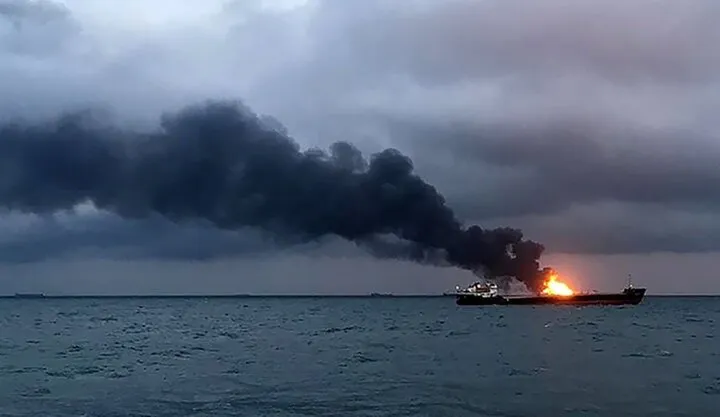
Tehran - BORNA - American media outlets described the political objectives behind this aggressive operation. In this regard, a Fox News anchor claimed that the strikes were designed to pressure Tehran into returning to the negotiating table. Jennifer Griffin, another analyst for the network, stated: "The hope is that another night of airstrikes might bring the Iranians back to the negotiating table." Meanwhile, Barak Ravid, a reporter for Axios, quoted a U.S. official stating that all targeted sites were located in southern Iran, encompassing air defense systems, radars, and drone command-and-control units.
Chronology and Operational Details of the Second Night
2:00 AM | Intense Clashes in the Strait of Hormuz: Reports indicate a significant escalation in the conflict within the Strait of Hormuz. Heavy, sustained fire and steadfast resistance from the Islamic Revolutionary Guard Corps (IRGC) Naval Forces reportedly caught the advancing U.S. forces by surprise. Initial reports state that U.S. forces targeted seven coastal points.
2:05 AM | U.S. Fighter Jet Repelled: The IRGC Public Relations Department announced that following the intrusion of a hostile American F−16 fighter jet into Persian Gulf airspace, the IRGC air defense system fired a missile at the aircraft, forcing the invading jet to flee the area.
2:12 AM | Calm in Asaluyeh: Ehsan Jahanian, the Deputy for Political, Security, and Social Affairs of the Bushehr Governorate, dismissed rumors concerning disruptions at energy facilities, confirming that no explosions had occurred at the Asaluyeh Gas Complex.
2:18 AM | Iranian Missile Strike on Al-Harir Base: Media sources reported that a U.S. military base in Erbil, located in northern Iraq, was hit. Confirmed reports indicate that a missile launched from Iran targeted the American Al-Harir base.
2:22 AM | Interception of Non-Compliant Vessels: The IRGC Navy announced that it struck two non-compliant vessels attempting an illegal transit through the Strait of Hormuz.
Full Closure of the Strait of Hormuz and Trump’s Message to Tehran
2:26 AM | Khatam al-Anbiya Central Headquarters Statement: The Khatam al-Anbiya Central Headquarters issued an official statement declaring: "Effective immediately, due to severe insecurity in the region, the Strait of Hormuz is closed to the transit of all vessels, including oil tankers and commercial ships. Any movement will be targeted."
2:34 AM | Severe Warning from the IRGC: Citing repeated violations of the ceasefire conditions by the U.S. military, the IRGC Navy emphasized that the Strait of Hormuz will remain closed until further notice. The IRGC warned that no vessel should depart from its anchorage in the Persian Gulf or the Sea of Oman, stating that any approach toward the Strait of Hormuz would be deemed active collaboration with the enemy.
2:53 AM | White House Message Delivered via Qatar: The Wall Street Journal, quoting official sources in Washington, reported that Donald Trump instructed his aides to convey a direct message to Tehran through Qatari mediators. The message emphasized that these strikes were solely a retaliatory response to the recent drone incident—which nearly claimed the lives of a U.S. Apache helicopter crew—and were not intended to signal the start of a full-scale war.
Previously, on Tuesday night, U.S. forces had targeted a number of positions in southern Iran under the pretext of an Apache helicopter being targeted in the Strait of Hormuz. That initial aggression was met with a swift counter-response from the Iranian Armed Forces, who launched retaliatory strikes against Washington’s military bases across the region.
End Article