Iran's FM: Diplomacy and the Battlefield Move Along the Same Path / End of War to Be Declared on All Fronts
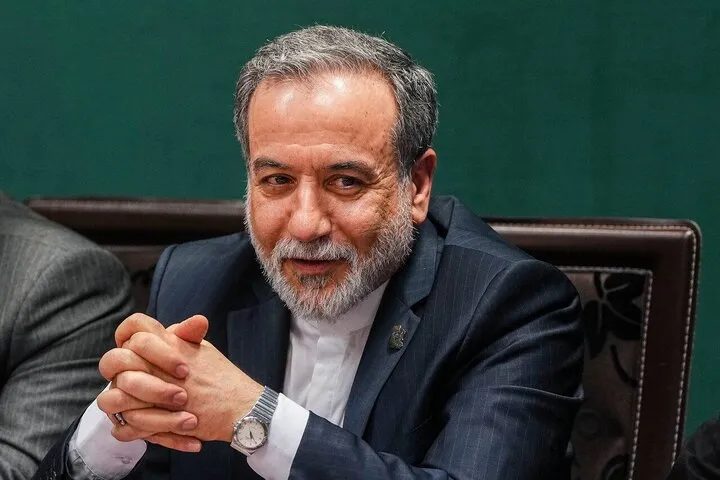
Tehran - BORNA - Seyyed Abbas Araghchi, on Friday night during the Special News Explicit Dialogue program, honored the memory of the martyrs of the 12-day war on the anniversary of the Second Imposed War and said: "Here, I must offer my condolences on the martyrdom of the Supreme Leader and the other loved ones who were martyred during the 40-day war."
He continued: "We have gone through two very heavy wars over the past year, and this is a reality."
Stating that after the 12-day war, they perhaps thought their equipment was not sufficiently ready, or thought they should have initially targeted our national cohesion—and in connection with the events that occurred, they prepared themselves for a larger war—Araghchi continued: "In this regard, we faced the 40-day war. They imagined they could finish the job in the 40-day war, but they faced a courageous and stubborn resistance from Iran and the country's armed forces, to the extent that the Westerners themselves confessed that the Iranian people are very stubborn."
Araghchi added: "We owe this stubbornness and resistance to the armed forces, the martyrs, and the people. We are a people who did not leave the armed forces and officials alone for a single moment and resisted through the hardships."
Araghchi expressed appreciation for the presence of the people in the streets and squares and their presence on the scene, which has been interpreted in a way as a "Ba'ath" (resurgence).
Two Wings of Power: The Synergy of Diplomacy and the Field
He also thanked the media, especially the IRIB, as well as Iran's diplomatic apparatus, which tried to be the voice of the Iranian nation, defend Iran's national interests, and at the same time assist the armed forces.
Araghchi said: "Diplomacy and the battlefield each move along the same path."
He added: "The battlefield, diplomacy, and the media move together, and this time, the street was also added to it."
The Iranian Foreign Minister said: "Iran's military achievements gain international legitimacy, become established, and turn into the rights of the Iranian people through diplomacy. In this war as well, I think our commanders endorse the companionship of the battlefield and diplomacy."
He added: "The duty of diplomacy is to consolidate battlefield achievements, which takes place in negotiations and agreements that are the result of negotiations; in fact, the negotiator relies on battlefield power."
The Iranian Foreign Minister said: "The termination of the war must be based on an agreement. The best time is when you have the upper hand. We are truly the victors of this field, and Iran emerged victorious from the war. Every day, I speak with various international officials, and I hear from them that 'Iran emerged stronger from the war and Iran created a miracle'."
He added: "Right now, the world looks at Iran as a hero because for 40 days, we resisted against the largest apparent superpower in the world and also alongside another army that fought by its side; both possessed the most advanced weapons and nuclear weapons. We thwarted their goals and achieved a strategic victory. It is natural that when you achieve a strategic victory, you need an agreement to consolidate it. We have always kept the pathways open."
The Two-Phase Road to the 'Islamabad MoU'
Araghchi said: "We started a movement that we are approaching the end of. The result of this movement is a 14-article memorandum of understanding, the details of which I prefer to talk about when it is finalized. It has not been signed yet, and up until the last moment, things may go up and down. I will explain each and every one of these data-x-items to the people. We discussed its details for the officials and followed all of these."
Referring to the ongoing consultations in the country regarding the details of this agreement, he said: "In these negotiations, which will lead to the termination of the war, two phases are anticipated; the first phase is a memorandum of understanding, and then, after the signing of the memorandum of understanding, negotiations for the second phase will begin, and we will have a final agreement in the second phase."
Araghchi clarified: "We have deferred the nuclear issue to the final agreement."
Explaining this topic, he said: "We did this for various reasons. Their demands on the nuclear issue were unacceptable. We brought other issues where an agreement was possible into the first phase, and the nuclear issue was deferred to the second phase. In the second phase, the nuclear issue, the lifting of Iran's sanctions, and one or two other issues will be reviewed, and the final agreement will be made."
This senior diplomat of the Islamic Republic of Iran said: "In the current agreement, which is named the 'Islamabad Memorandum of Understanding', the end of the war on all fronts, including in Lebanon, is declared. We have never forgotten Lebanon and Hezbollah because they fought alongside us."
Mutual Sovereignty and Confronting Foreign Sabotage
In explaining important parts of this memorandum of understanding and the commitments of the opposing side, Araghchi said: "A commitment will be given that they will no longer be the initiator of any war, and threat and force will not be used."
He continued: "The two sides will respect each other's sovereignty. I think this is the first time in the past 47 years that America respects Iran's sovereignty and puts it in writing. They commit not to interfere in Iran's internal affairs. This is one of the most important clauses of the agreement, that Iran's sovereignty will be respected. I think many understand its meaning, and those living abroad who had pinned hopes will be completely removed from the scene."
Araghchi stated: "The discussion on clearing the Strait of Hormuz, lifting the naval blockade, the next round of negotiations, lifting sanctions, the issue of Iran's reconstruction in the form of an economic development plan, and other issues that will occur, as well as Iran's frozen funds, are mentioned in the memorandum of understanding."
Araghchi emphasized: "This agreement has enemies, at the head of which is the Zionist regime, and they are looking for pretexts to disrupt it. Entering into details right now creates an inflamed media atmosphere that will confront the signing of the agreement with difficulties."
He added: "In recent days, the media published texts regarding the text of the memorandum of understanding, but none of these texts have validity, and we do not confirm media speculations. We recommend that psychological calm prevail in the country so that we sign the best agreement."
He noted: "There is no agreement where one side wins 100 and the other side zero. If you choose the path of negotiations, you consent to a give-and-take."
Rebuffing Threats: A Clear Message to Trump
Araghchi noted: "We witnessed threats and psychological-political pressure from the opposing sides, and we immediately countered it and emphasized that threat is not only ineffective but also pushes back a potential agreement. The Iranian nation will never surrender to pressure and force and does not respond to the language of threat, but if spoken to with the language of respect, a reciprocal response is given."
In response to a question regarding Trump's threatening tweets against Iran, Araghchi said: "One should not pay much attention to these tweets and comments. If we were meant to submit to force and threat, we would have submitted much earlier than this. A clear message was given to the opposing side that threat has the reverse effect, and if you want to move toward an agreement, they must adopt a different rhetoric, and if they want to fight, we are ready."
He continued: "There has been no night where they made an aggression against our armed forces and regions of our country and we did not reply immediately. We replied immediately to every threat; they tested our will and observed the answer, and saw that Iran does not back down in the face of pressure and threat."
Emphasizing that they realized they must speak with the language of respect, Araghchi said: "We do not let go of our interests and strive toward achieving them."
Araghchi also referred to the discussion of the battlefield and negotiation and said: "Negotiation is part of the battlefield. Some mistakenly imagine that the battlefield and diplomacy go down two different paths, whereas they move in one direction; in some places the battlefield goes ahead and diplomacy moves behind it, and in some places vice versa. In fact, the battlefield and diplomacy are two wings that cause flight and movement, and this is something we have experienced in practice—that diplomacy has been at the service of the battlefield, and the battlefield has also supported diplomacy."
Security Assurances and Regional Deterrence
Also, in response to a question about stopping the war in Lebanon and its inclusion in the memorandum of understanding between Iran and America, and that the Israelis have said they will not withdraw from the captured areas in Lebanon, he said: "The termination of the war means withdrawing from the occupied areas of Lebanon as well, and it must definitely be done. We have explicitly told this to the opposing sides. Regarding the execution guarantee, it must be said that I believe Iran has shown its power in this 12-day and 40-day battle, the ceasefire, and the naval blockade in such a way that no one will ever mess with Iran."
He added: "To guarantee our security, we rely neither on the Security Council nor on coalitions, and we rely only on God, the people, and the armed forces. For years, we have created a complete deterrence such that no one will think of aggression against Iran."
Stating that the Strait of Hormuz is one of the important tools of deterrence, and our action at the regional level and targeting American bases was also in this direction, Araghchi said: "Regarding this specific memorandum of understanding, we also have this position that because negotiations will begin after this memorandum of understanding, if what is stated in the memorandum of understanding is not implemented, those negotiations will not advance either. A guarantee also exists here that the data-x-items stated in the memorandum of understanding must be observed."
Regarding America's bad track record of breach of promise in negotiations, Araghchi also said: "This is the first step. If the agreements of the first phase are not observed, it will not go to the second phase. We are in a good position in this direction. The nature of the opposing side is breach of promise. We must expect flaws in agreements. We are not facing entities and parties that are completely bound to commitments, and they use every opportunity for breach of promise. It is we who must close the ways to breach of promise, and we must have the ability to prevent it by relying on our own power."
A New Era for the Strait of Hormuz
Regarding the status of the Strait of Hormuz after the agreement, the Iranian Foreign Minister also said: "The Strait of Hormuz is under the sovereignty of Iran and Oman. For many years, this waterway has been open to all ships. Iran and Oman provided various services, secured its safety, and preserved its environment. It was intended for these to be free, but Iran's decision is that the future administration of the Strait of Hormuz will not be like the past. Our sovereignty has always been and always will be, and no one can damage it. The administration of this strait and the future of transit in it will definitely not be like the past, and we have had consultations with Oman."
He added: "In negotiations with the Omanis, we have also reached good results. We will probably have joint statements soon. We also had consultations with other countries in the region, such as China, because this waterway is also very important for this country."
Iran's Foreign Minister, in the continuation of his news dialogue regarding the release of frozen funds and Vance's recent statements in this regard, stated: "As you said, mechanisms have been envisioned, and we prefer to explain after the memorandum of understanding is signed."
He stated: "China is among our friends; the future of this strait is important for this country as well. We have started consultations with China too. Our sword is above the Strait of Hormuz; if we want the administration of the Strait of Hormuz to be established like the past, it is natural that a legal regime must be created. Charging tolls is not accepted, but service fees, yes. For us, what is important is that the administration regime of the Strait of Hormuz is first determined as to who it belongs to; the services that are provided, their costs will no longer be free."
He noted: "The future of the Strait of Hormuz is different from the past; Iran will provide the arrangements, we will secure safe passage—civilian ships are meant. Of course, regarding military ships, it has its own arrangements. The future administration of the Strait of Hormuz will not be like the past."
Regarding the naval blockade by the Americans, our country's Foreign Minister also said: "The blockade by the Americans must be completely lifted."
Unfreezing Assets, Damage Compensation, and Nuclear Logistics
Regarding the status of the frozen assets, Araghchi said: "According to the memorandum of understanding that will be signed, Iran's frozen assets will be released based on it; none of our assets can remain frozen."
Araghchi also said: "A plan has also been envisioned for the reconstruction of Iran's damages. I hope that when it is finalized, the IRIB invites economic experts and tells the people what is happening, hence the issue of damage and compensation has been envisioned."
Pointing to the 14 clauses of the memorandum of understanding, Araghchi also stated: "All of these must be seen together. It is not the right approach to say what is being done in exchange for what. All of these clauses must be carried out alongside each other."
Also, regarding the status of exporting enriched uranium, Araghchi said: "As of now, no decision has been taken, but there are indications as to what we are discussing. The two discussions are the lifting of sanctions and Iran's nuclear issue. The discussion on Iran's stockpiles of enriched materials will be debated and decided upon in these sections. Our position has always been this: if high-level enrichment is to be decided upon, from our perspective, only downblending inside Iran must take place."
He continued: "In the position of lifting sanctions as well, we pointed out the data-x-items that were important; what sanctions are to be lifted, we will tell the details later, as I noted, even the mechanism of the reconstruction plan will be discussed during these 60 days."
The Crucial 60-Day Window under SNSC Oversight
In response to the question that if we do not reach a final agreement in the 60-day opportunity, will all the data-x-items that have advanced return to the previous process, our country's Foreign Minister said: "We must see what stage we are in; if the parties are satisfied, the understanding is extendable, or we may see during this period that it is of no use, naturally a final agreement will not take shape. I do not want to judge from now. At the intended time, we will review what actions should be taken."
Araghchi also said regarding the progress mentioned in relation to the ceasefire: "The progress of the ceasefire was realized in its own time and continued; the Supreme National Security Council has complete oversight over the ceasefire and the memorandum of understanding. Given that the Supreme National Security Council cannot convene regularly, they designated a committee that monitors the negotiation process and reports to the Council, hence there is complete oversight over the clauses of the understanding. Of course, it has opponents and proponents, but ultimately the decisions of the Council turn into directives."
He further stated regarding the negotiations and the negotiating team: "The responsibility for negotiation is clear; the Ministry of Foreign Affairs, as a department that helps, also has clear duties and responsibilities. I assure that the tasks related to the Foreign Ministry have been carried out with the utmost obsession and precision."
He clarified: "Negotiations have been going on for nearly two months; it has been reviewed clause by clause and word by word, we exercised all necessary precision, the report has been given to the Supreme National Security Council, and the security and military institutions have oversight over the matter, especially precision has been exercised in the discussions on the Strait of Hormuz and the termination of the war."
He noted: "I think the result of the work will be a good result for the interests of the Iranian people and consolidates the presence of the people in the streets. I am very hopeful regarding the future of the Islamic Republic of Iran, with this form in which we emerged from this war, with a high flag and pride that happened during this period."
"They Requested Negotiations After Despairing of All Goals"
Araghchi continued: "The enemies had demands; because they did not achieve results, they tried to enter through war and achieve results in their own imagination. They thought that if they bombed, Iran's technology and nuclear knowledge would be destroyed. It is true we lost scientists and important individuals, and at the head of them, the martyred Leader. But naturally, scientists are replaced; they cannot take knowledge away from us."
Emphasizing that we were not strategically surprised, he said: "In the 12-day war, we responded in less than 24 hours, and in the 40-day war, we responded in less than two hours. The instructions were clear, there was no surprise, but let us pay attention to why war happened? Because we did not back down in negotiation and war; they did not achieve their goals in war and negotiation. When they became certain they could not achieve their demands in war, they requested negotiation."
He stated: "They confessed what groups they armed. They tried everything, and they came for negotiation when they despaired of all goals. We showed the Islamic Republic of Iran to the world in such a way that the world saw it is facing a decisive and stubborn country, and a several-thousand-year-old civilization and a firm Shiah belief is behind it."
In conclusion, regarding the time and place of the understanding, he stated: "As soon as the last stages of our negotiations are done, this agreement and signature will be announced. From afar, each side signs, and then it will be announced that this memorandum of understanding is signed by both sides. The memorandum of understanding has never been this close to being finalized. Until its completion and finalization, the media must refrain from speculating about its contents."
End Article