Iranian Presidents and US President May Jointly Sign Landmark Memorandum, Spokesman Says
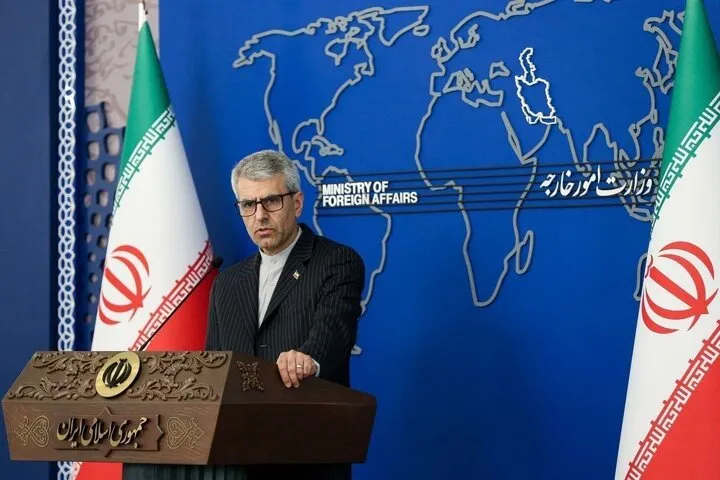
Tehran - BORNA - Speaking during a live broadcast on the state news channel network, Baghaei addressed speculation surrounding the upcoming diplomatic summit in Switzerland. In response to recent media rumors suggesting the high-level meeting in Geneva might be canceled, the spokesperson clarified that the official schedule remains unchanged and the Swiss summit is moving forward exactly as planned.
Baghaei explained that novel ideas regarding the formal execution of the memorandum of understanding have been put on the table. One of the primary proposals under active review is to have the final text signed directly by the presidents of the two countries, noting that from several diplomatic perspectives, such an approach could prove to be more advantageous.
The senior diplomat emphasized that the upcoming Swiss summit stands firm and will serve as the official launching pad for the next phase of comprehensive negotiations aimed at reaching a subsequent, broader agreement. When asked about the logistics of presidential signatures and whether such a process would require an in-person meeting or be handled remotely, Baghaei noted that if the ongoing evaluations conclude favorably, the signatures will be executed remotely.
Addressing questions regarding security and diplomatic safeguards to prevent the United States from converting the Geneva summit into a superficial media spectacle, the spokesperson assured that all necessary diplomatic precautions and operational considerations have been meticulously accounted for. He underscored that Tehran is working to ensure the summit proceeds smoothly, focusing strictly on substantive issues without unnecessary or disruptive side shows.
The spokesperson also clarified the structural dimensions of the Islamabad memorandum of understanding, addressing various leaked or unofficial texts circulating in Western and international media over recent weeks. Baghaei stated that the official document is a concise text spanning roughly one and a half pages and comprising exactly 14 distinct clauses.
The first and second clauses establish the general framework and outline the precise parameters for the upcoming negotiations. The opening sections of the memorandum explicitly underscore the critical requirement for a total cessation of military hostilities across all active war fronts, explicitly encompassing Lebanon.
Baghaei highlighted that the document explicitly reaffirms absolute respect for Iran's national sovereignty. Furthermore, the spokesperson noted that Lebanon is specifically mentioned by name three times within the short text, with strong emphasis placed on ending the war, maintaining Lebanese national sovereignty, and preserving its territorial integrity. He added that these terms are fundamentally incompatible with any foreign military occupation, stating that the Zionist regime's occupation of Lebanese territory must be brought to an immediate end.
The diplomat warned that any continuation of this occupation would constitute a direct violation of the memorandum of understanding, noting that necessary countermeasures will be enacted if the withdrawal does not materialize.
According to the spokesperson, the memorandum commits both parties to engage in continuous negotiations over a 60-day window to secure a final, comprehensive treaty. These critical diplomatic talks are scheduled to officially commence this coming Friday.
Concluding his remarks on the lifting of the maritime blockade against Iran, Baghaei stated that under the terms of the memorandum, the United States is obligated to completely terminate the naval blockade within 30 days. He revealed that the practical implementation of this clause has effectively begun, noting that over the past 48 hours, Iranian commercial vessels have successfully resumed transit, navigating freely and docking at national ports without encountering any external maritime obstructions.
Bilateral Jurisdiction Over the Strait of Hormuz and Financial Asset Unfreezing
Elaborating further on the maritime provisions of the accord, the spokesperson outlined the commitments regarding the Strait of Hormuz. Under this memorandum, Iran has committed to restoring regular maritime traffic through the strategic chokepoint and removing existing operational hurdles within a designated timeframe. Baghaei emphasized that this responsibility falls exclusively under Iranian jurisdiction and will require no participation or intervention from external parties.
The senior diplomat stressed that in accordance with the memorandum, Iran and Oman will collaborate as the two coastal states sovereignly bordering the Strait of Hormuz to determine the future framework and maritime services of the waterway. Whenever necessary, the two nations will exchange views with other regional states while maintaining full respect for the sovereign rights of both littoral countries.
Addressing the issue of frozen Iranian financial assets and Tehran's access to these funds, Baghaei added that the United States has committed to removing all impediments in this regard. While certain technical details have already been negotiated, comprehensive discussions on the remaining aspects will continue moving forward. The spokesperson stressed that the ultimate priority for Tehran is to secure unrestricted access to the assets belonging to the Iranian people, noting that the specific mechanisms the Americans utilize to fulfill this obligation remain an internal US matter so long as the core commitment is honored.
Finally, the spokesperson noted that the text of the memorandum explicitly mandates that following its formal signing, the parties will immediately initiate comprehensive dialogue regarding the lifting of sanctions and the nuclear issue. Iran has not entered into specific nuclear technicalities during this initial phase, and the upcoming 60-day negotiating window will be used to hash out precise details regarding uranium enrichment levels and stockpiles in parallel with the sanctions removal roadmap.
Regarding the scope of sanctions relief, Baghaei concluded that the United States is committed to lifting all forms of restrictions, including United Nations Security Council resolutions, IAEA Board of Governors resolutions, and all unilateral primary and secondary US sanctions, under a structured timeline to be mutually agreed upon during the upcoming rounds of negotiations.
End Article