U.S.-Saudi Nuclear Deal: Opportunities and Concerns
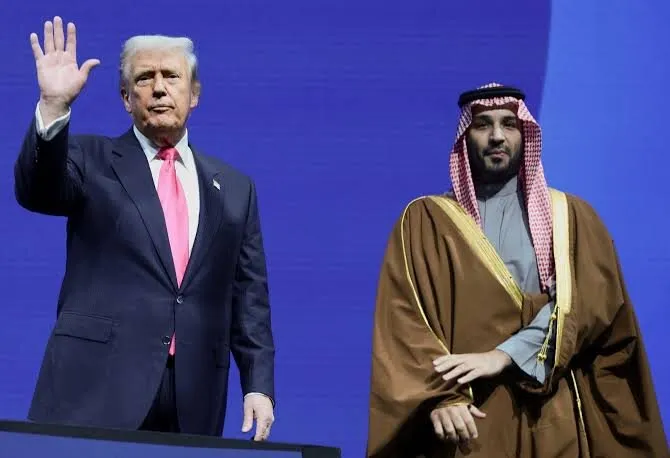
Tehran - BORNA - Separate reports and analyses by The Guardian and CNN have examined the new U.S.-Saudi nuclear agreement, detailing its political, security, and strategic dimensions. Under the 30-year agreement, the United States will use its technology and expertise to help Saudi Arabia establish a civilian nuclear program. The deal positioning American companies as primary players in developing Saudi Arabia's nuclear infrastructure will simultaneously block competitors such as China and Russia from entering the sector.
According to The Guardian, the deal is estimated to be worth tens of billions of dollars and represents the continuation of a plan first introduced under the Biden administration, which had linked U.S. nuclear cooperation with Saudi Arabia to the establishment of formal relations between Riyadh and the Zionist regime. Operation Al-Aqsa Flood and the Gaza war halted the normalization process, but the Trump administration decided to advance the nuclear agreement separately from the normalization initiative.
The Guardian reported that the agreement lays the groundwork for establishing uranium enrichment facilities in Saudi Arabia, though its implementation depends on a two-year joint U.S.-Saudi study regarding the necessity of such a facility. The final decision on granting permission for domestic enrichment will likely fall to the next U.S. president. Most countries using nuclear energy do not enrich uranium domestically and instead import required fuel, as enrichment at higher levels can be utilized for nuclear weapons production. One argument presented by the U.S. administration is that Washington will oversee enriched uranium and spent reactor fuel to prevent military diversion.
Non-proliferation groups have warned for years that such an agreement could put Saudi Arabia on a path toward acquiring nuclear weapons capacity. This comes while the United States is simultaneously engaged in a war with Iran, with one of its stated goals being to prevent Tehran from acquiring a nuclear bomb or enriching uranium at weapons-grade levels. Although the U.S. Department of Energy stated the agreement was signed alongside a bilateral safeguards agreement to provide sufficient oversight, experts warned the new deal lacks certain oversight mechanisms from previous agreements, and Saudi Arabia apparently will not be required to implement the IAEA Additional Protocol.
When the United States signed a similar agreement with the United Arab Emirates, Abu Dhabi agreed to forego uranium enrichment and spent fuel reprocessing, creating what became known as the "gold standard" of U.S. nuclear cooperation. The new agreement with Saudi Arabia does not include such a condition. Opponents argue that granting nuclear capabilities to Saudi Arabia could drive other West Asian nations to pursue similar programs, while the Zionist regime has expressed concern over a potential regional arms race. Democratic members of the U.S. Congress, including Senator Chris Murphy, voiced opposition, warning the deal could spark a regional nuclear race and reduce Iran's incentive to limit its nuclear program. However, opponents face difficulties in blocking the deal, as overriding a presidential veto requires a joint resolution passed by Congress.
In an analysis, CNN described the nuclear agreement as symbolic of Trump's governing and foreign policy style, demonstrating a willingness to bypass international frameworks that formed part of the U.S.-led global order for decades. The Trump administration framed the agreement as a success by strengthening the U.S. nuclear industry, consolidating ties with Saudi Arabia, and adhering to non-proliferation standards. However, critics worry the deal could eventually grant Saudi Arabia higher-level uranium enrichment capabilities, sparking a regional nuclear race. While Saudi Arabia stated it will not pursue nuclear weapons unless Iran does, changes in this dynamic could prompt countries like Egypt or Turkey toward similar programs.
CNN noted that one of the most significant consequences of the agreement will be its impact on potential negotiations with Iran. While the Trump administration claims its war with Iran aims to prevent Tehran from obtaining a nuclear weapon, granting enrichment capabilities to an American ally could increase pressure on the international non-proliferation system. Kelsey Davenport, director for non-proliferation policy at the Arms Control Association, described the deal as reckless and irresponsible, warning its consequences could last for years. John Erath, senior policy director at the Center for Arms Control and Non-Proliferation, stated that removing standard IAEA measures could become a major problem, as those standards are necessary to ensure Saudi Arabia does not move toward nuclear weapons capabilities. Concerns also remain that if Saudi Arabia's power structure changes in the future, the United States will no longer maintain control over the transferred nuclear technology.
End Article