From Extinguishing Kuwait's Oil Fires to Fueling Hostility Against Iran
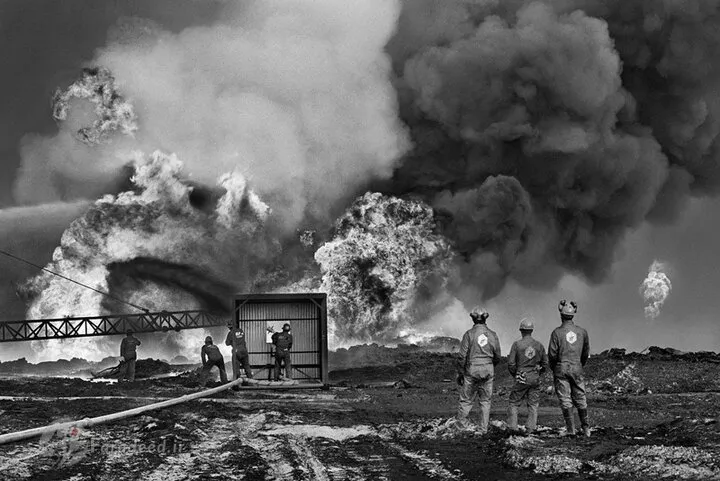
Tehran - BORNA - "The noble people of Iran put out the fire that consumed the government and people of Kuwait, yet today they have become part of the enemy's fire against the Iranian nation."
This sentence by Iranian Foreign Ministry Spokesman Esmaeil Baghaei once again brought back to the spotlight one of the less-narrated chapters of Iran-Kuwait relations; a chapter that dates back to the participation of Iranian experts in extinguishing the fires of Kuwait's oil wells following the Persian Gulf War, and which today, in the shadow of regional security tensions, has been raised as part of Tehran's political discourse in criticizing and protesting the Kuwaiti government.
The Iranian Foreign Ministry spokesman made these remarks in response to reports regarding Kuwait's role in the recent war, particularly the clashes over the past two weeks. Emphasizing the principle of good-neighborliness, he stated that countries that benefited from Iran's assistance in the past should not allow their territory or facilities to be used against Iran.
Oil Well Fires: A Turning Point in Tehran-Kuwait Cooperation
The story began when, following the Iraqi attack on Kuwait and the retreat of Iraqi forces in 1991, hundreds of the country's oil wells were set on fire—a crisis that lasted for months and whose smoke covered a large part of the Persian Gulf region. Between 605 and 732 oil wells and an unspecified number of oil-bearing areas, such as oil lakes, were set on fire by Iraq as part of a scorched-earth strategy during its retreat from Kuwait.
Reports indicate that the Ba'ath party planted more than 10,000 landmines in the areas surrounding Kuwait's oil wells to make fire-extinguishing operations more difficult. This major event was the world's largest environmental disaster up to that time and ranked among the 10 largest events in the global energy sector. The smoke resulting from the oil well fires was so vast that it plunged Kuwait into a terrifying darkness, to the extent that for several weeks, the people of this country did not see sunlight in the sky.
Afterward, to contain this massive blaze, Kuwait sought assistance from specialized companies and teams from various countries. Iran also participated in extinguishing a portion of these wells by sending oil industry experts and firefighting specialists. Iranian experts, who had experience dealing with the damages of the Iran-Iraq War, played an effective role in this operation; an action that was considered an example of regional cooperation at the time.
According to media reports, American experts at that time estimated that extinguishing Kuwait's oil wells would require at least 2 years in the shortest timeframe, attempting to persuade Kuwaiti authorities to accept this timeline so they could proceed with extinguishing the oil wells without the participation of other countries. However, due to concerns from other nations regarding the vast volume of pollution spread across the water, air, and land, companies from around the world offered their participation to the Kuwaiti government in extinguishing the oil wells. Following protests by the Kuwaiti people over the slow performance of American companies, the extent of the destruction, and the pressure exerted by Kuwaiti officials on American firms, they were ultimately forced to cooperate with other companies and their experts.
Through negotiations conducted by Iran's then-Minister of Petroleum with Kuwaiti officials, the Islamic Republic of Iran officially declared its readiness to assist the Kuwaiti government in extinguishing and containing the country's oil wells. Finally, by order of the Petroleum Minister, expert teams from the Ministry of Petroleum visited Kuwait's oil facilities in April 1991 and presented a plan for rebuilding refineries and containing oil and gas wells. However, due to a lack of awareness regarding the capabilities of Iranian experts, the Kuwaiti government only accepted the participation of Iranian specialists in containing the oil wells (the Al-Awdah Project). Ultimately, the Iranian containment team entered Kuwait on August 4 of that year, and the first well in the Burgan region (one of the world's largest oil reservoirs) was handed over to the Iranian team to be extinguished.
Interestingly, Iranian specialists succeeded in extinguishing this well within a few hours, which received widespread reflection in domestic and international news circles. This event prompted the Kuwait Oil Company to compel American firms to provide necessary facilities and hand over more wells in the Burgan region to the Iranian team.
Specialists from the National Iranian Drilling Company ultimately managed to contain fires in 20 wells among Kuwait's largest oil wells.
Three Decades of Relations: From Cooperation to Dispute
Following the end of the Persian Gulf War, Tehran and Kuwait made efforts to maintain their political and economic ties, and Kuwait was one of the few Arab states in the Persian Gulf region that kept dialogue channels open with Iran. However, with the U.S. invasion of Iraq in 2003 and the expansion of Washington's military presence in the region, Kuwait became one of the main hubs for the deployment of U.S. forces—an issue that Tehran has consistently viewed as one of the most critical challenges in bilateral relations.
In subsequent years, although diplomatic ties and economic cooperation continued, differences of opinion regarding regional security arrangements and the U.S. military presence remained unresolved.
The Recent War and Tehran's Heightened Sensitivity
With the outbreak of the recent war, the potential use of military bases and facilities of certain regional countries for operations against Iran was raised once again.
Iranian officials emphasized that using the territory of neighboring countries for military actions against Iran contradicts the principles of good-neighborliness. Within this framework, Baghaei also recalled Iran's role in extinguishing Kuwait's oil well fires, criticizing the country's "ingratitude" and Kuwait's action in allowing the United States to use its territory to conduct military actions against Iran.
The Wall Street Journal's Claim and Kuwait's Reaction
Amid this tense atmosphere, The Wall Street Journal claimed in a report that Bahrain and Kuwait covertly participated in airstrikes against certain military targets inside Iran.
Citing informed sources, the newspaper claimed that the attacks conducted earlier this month targeted Iran's drone and missile depots as well as other military centers, marking the first direct action by these two countries against Iran.
Kuwait, however, denied this claim. Kuwait's Ambassador to Washington, Al-Zain Al-Sabah, responded to The Wall Street Journal report in a letter, stating that her country did not participate in any military operation against Iran and has not permitted the use of its territory, airspace, or waters for offensive operations against Iran.
A Historical Memory Amid a New Dispute
The Foreign Ministry spokesman's reference to extinguishing Kuwait's oil well fires was not merely the recollection of a historical event, but a political message regarding the necessity of mutual respect, particularly neighborly principles.
From Tehran's perspective, Iran has stood by its neighbors during critical junctures and expects this history to be taken into account in their political and security conduct today. Although Kuwait emphasizes that its official policy is to prevent the use of its territory for military action against other countries, the reality on the ground reflects otherwise.
Thus, relations between Iran and Kuwait continue to fluctuate between two distinct images: from cooperation in extinguishing oil well fires in 1991 to current political and security disputes that have once again turned the role of Persian Gulf states in regional equations into a contentious topic.
End Article