Iran significantly enhancing missile capabilities, Malaysian defense outlet reports
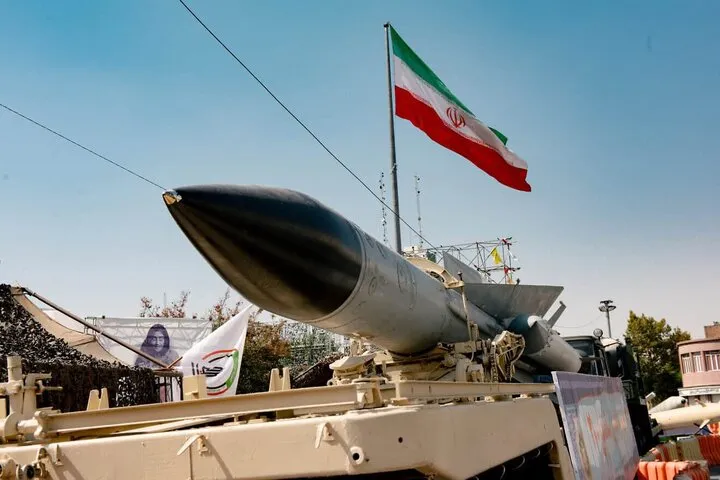
Tehran - BORNA - The integration of specialized navigation systems enhances the precision of Iranian missile strikes while boosting resistance against electronic warfare targeting defense networks such as Patriot, THAAD, and Arrow.
DSA noted that Iranian engineers utilized imported components and modified commercial technologies to achieve these advancements. While recovered Controlled Radiation Pattern Antenna (CRPA) elements bear a strong resemblance to Chinese commercial models, imagery analyzed by experts does not confirm direct Chinese government involvement or a formal technology transfer agreement.
Tactical specifications and regional operational reach
The solid-fueled Kheibar Shekan missile features a high-maneuverability warhead and an estimated operational range of 1,450 kilometers (900 miles), allowing the Islamic Revolutionary Guard Corps (IRGC) Aerospace Force to target strategic positions across West Asia.
"The addition of satellite-guided correction and anti-jamming capabilities helps mitigate accumulated inertial navigation errors during flight," DSA stated, noting that the upgrades enhance the weapon's capacity to strike airbases, command hubs, radar stations, logistics centers, and air defense batteries.
Open-source estimates indicate that satellite-guided Iranian missiles historically maintained precision within tens of meters. Consequently, incremental accuracy improvements yield a disproportionately high military impact, as targeting individual radar arrays, hardened bunkers, or runway intersections demands far greater precision than area-saturation strikes against broad industrial infrastructure.
The missile's maneuvering re-entry vehicle (MARV), capable of altering its flight path during the terminal phase, further complicates interception efforts for host defense systems.
Evolving penetration tactics against Western air defenses
DSA emphasized that while advanced guidance technologies do not automatically guarantee penetration through multi-layered air defenses, coordinated salvo launches, trajectory shifts, and saturation tactics enable a higher percentage of warheads to breach heavily protected airspace.
Images of recovered Kheibar Shekan debris published on August 4 and 5 indicate that Tehran successfully integrated a CRPA satellite navigation array with a maneuvering warhead.
Analysts characterized the recovered debris as representing evolutionary rather than revolutionary technological progress. Nonetheless, the findings demonstrate how real-world combat operations, commercially available navigation technologies, and regional dynamics continue to enhance Iran's ability to challenge Western-developed air and missile defense networks.
Iran first unveiled the Kheibar Shekan missile in February 2022, subsequently developing and upgrading the platform specifically to counter modern missile defense capabilities.
End Article