Caspian Sea shrinking: 630 cubic kilometers of water lost in three decades
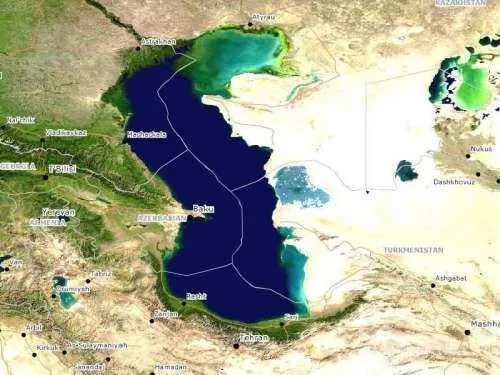
Tehran - BORNA - Sahar Tajbakhsh said at a ceremony marking National Caspian Sea Day that the decline cannot be attributed solely to reduced rainfall. She cited a 2026 study showing a significant downward trend in annual precipitation across the Caspian basin from 1991 to 2024.
She said increased air and water temperatures, rising humidity, and the atmosphere's greater capacity to hold water vapor are major factors driving evaporation. Studies indicate that evaporation driven by warming can explain a significant portion of the Caspian's volume loss.
The Volga River, which supplies the bulk of water entering the Caspian, is also a key factor. Long-term average inflow is estimated at about 253 cubic kilometers per year, but recent years have seen lower figures — dropping to about 232 cubic kilometers in 2024.
Tajbakhsh said the decline results from the interaction of three main factors: climate change, changes in river inflow, and natural factors, alongside human activities such as water management, dam construction, and agricultural water use.
She warned that the trend is not limited to water level reduction. The retreating shoreline is reducing wetland areas, increasing salinity in some regions, threatening aquatic ecosystems, and creating serious problems for shipping, fisheries, and coastal infrastructure.
Climate models project significant further declines in the coming decades, with various studies suggesting drops of several meters, and in some scenarios up to 8 to 14 meters, by the end of the century.
Tajbakhsh emphasized the need for continuous monitoring of meteorological, hydrological, and oceanographic conditions in the Caspian, using satellite data and numerical models. A joint regional monitoring system for water levels, evaporation, temperature, and river inflows is essential for future management of the sea.
She said changes in the Caspian are not merely an environmental issue for Iran but directly affect security, fisheries, shipping, ports, tourism, coastal management, and economic development in northern provinces.
End Article