Report: Iran adapted war tactics as US interceptor stocks dwindled
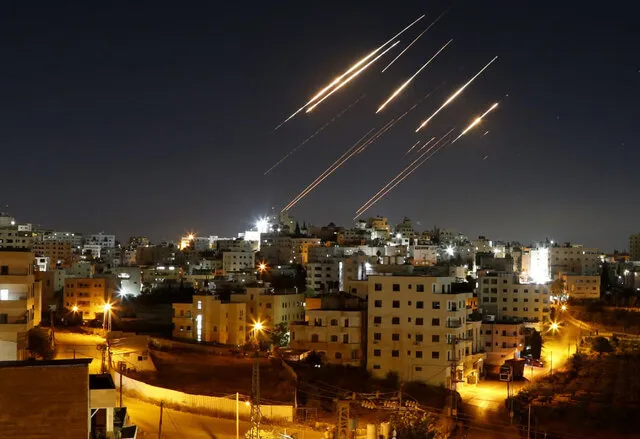
Tehran - BORNA - The New York Times said in a report on Tuesday that during five days of intense attacks last month, Iran launched waves of drones and missiles against US forces at three bases in Jordan. The attacks were designed to overwhelm American air defenses, including by using missiles capable of changing course unexpectedly.
On July 17, an Iranian missile penetrated those defenses and struck prefabricated housing units at a US base, killing three American soldiers and injuring more than 100 others. Pentagon officials also acknowledged that additional troops were wounded and several aircraft were damaged during attacks in Jordan that week.
“We shot down almost all the missiles,” US Secretary of State Marco Rubio claimed after the deadly strike. “One leaked through.”
The attacks have highlighted two major developments in the US aggression: Iran’s growing ability to adapt its tactics and exploit weaknesses in US air defenses, and the rapid depletion of American interceptor missiles.
Citing two people briefed on US stockpile levels, The New York Times said that the Pentagon has used more than 1,500 Patriot interceptors during the war and has fewer than 1,700 remaining. The United States produced roughly 600 Patriot interceptors throughout 2025.
On one day during the deadly week in Jordan, US forces fired about 50 Patriot interceptors, each costing approximately $4 million, according to U.S. officials.
Iran’s tactics have increasingly drawn lessons from other conflicts, particularly the war in Ukraine, where Russia has used combinations of ballistic and cruise missiles followed by drone attacks to overwhelm air-defense systems.
“The Iranians are making it more difficult on air defenses when you have a range of both missiles and drones coming in,” said Seth G. Jones, president of the defense and security department at the Center for Strategic and International Studies.
The pressure on US defenses comes despite earlier Pentagon claims that Iran’s missile capabilities had been severely degraded. Defense Secretary Pete Hegseth alleged in April that Iran’s missile program had been “functionally destroyed,” with its launchers and missiles heavily depleted.
Experts say the US administration initially expected the war to be relatively short and did not anticipate the extent to which it would consume American missile-defense stocks.
Vali Nasr, a professor at Johns Hopkins University’s School of Advanced International Studies, said Iranian leaders had been preparing for such a situation since the June 2025 12-day war, when they observed how quickly Israeli and US forces used up ballistic-missile interceptors against Iranian attacks.
Muwaffaq Salti Air Base in Jordan, where the deadliest recent attacks occurred, had become a major US military hub. American forces previously stationed in Kuwait, Bahrain, Qatar and the United Arab Emirates were moved to Jordan before and during the war because the location was considered less vulnerable to Iranian drone and ballistic-missile attacks.
Following the July 17 strike, US commanders reinforced air defenses in Jordan and other locations across the region.
Iran has also adapted its tactics in other parts of the war. In April, the Iranian Armed Forces shot down a US F-15E fighter jet over southern Iran using a surface-to-air missile. US officials said Iranian drones operating in the area provided commanders with information about the aircraft’s location, speed and direction.
US officials said President Donald Trump raised concerns with War Secretary Pete Hegseth in late July over dwindling weapons supplies.
At the same time, Trump recently halted planned bombing raids against Iran, claiming that Tehran and other regional countries had requested a pause after “the perimeters of a deal” had been reached.
Saudi officials reportedly warned that intensified US attacks could trigger Iranian retaliation against energy infrastructure in the Persian Gulf.
The reported plans emerged amid continued tensions following Iran’s resistance to US pressure tactics and military aggression, with Iranian officials repeatedly warning that any new attack by Washington or Tel Aviv would trigger a strong response.
Iran has also sought to protect its military and strategic assets by dispersing personnel and facilities and relying on heavily fortified underground locations, making it more difficult for US and Israeli forces to identify and destroy key targets.
End Article