Iran targets 12,000 MW renewable energy capacity by year-end
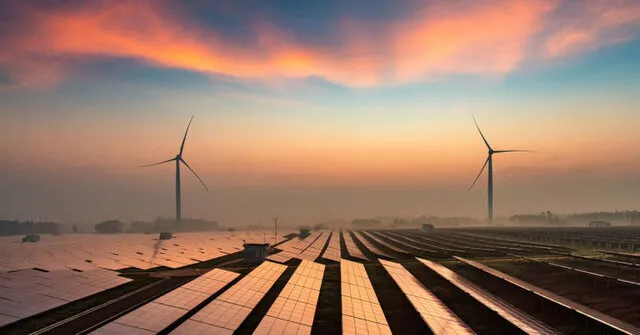
Tehran - BORNA - Iran's power imbalance stems from years of underinvestment and capacity growth failing to keep pace with rising demand. Under these circumstances, expanding renewable energy infrastructure has emerged as a primary pathway to boost generation capacity and alleviate the energy deficit.
A key advantage of renewable power plants compared to large fossil-fuel plants is decentralized generation near consumption points. While fossil-fuel electricity requires transmission over long distances, solar systems can be installed directly on residential, commercial, industrial, and agricultural rooftops, turning demand centers into production sites.
Surge in capacity and regional ranking
Iran’s renewable capacity has grown significantly over the past two years, expanding over 4.5-fold from approximately 1,250 MW through joint contributions from the private sector, government, and public participation.
Official statistics show that renewable capacity has crossed 5,400 MW and is projected to reach 7,000 MW by the end of summer. This rapid growth ranks Iran third in Asia for renewable energy development, behind only China and India.
Currently, over 900 active renewable projects and construction sites are operational across all 31 provinces, turning the entire nation into an active construction zone for clean energy. Network studies have established phased expansion targets: advancing from the current 5,400 MW to 7,000 MW, then to 12,000 MW in the short term, with medium-term projections targeting 20,000 to 30,000 MW as transmission grid capabilities expand.
Mohsen Tarztalab, head of the Renewable Energy and Energy Efficiency Organization of Iran (SATBA), confirmed that development is progressing rapidly toward the 12,000 MW mark by year-end. He added that the 14th administration’s broader strategy targets 30,000 MW in total renewable capacity, comprising 25,000 MW of solar power and 5,000 MW of wind power.
Water conservation and economic efficiency
Beyond increasing electricity supply, renewable energy expansion delivers substantial environmental and economic benefits. Estimates indicate that every megawatt of solar capacity generates between 1,500 and 2,000 megawatt-hours of electricity annually while preventing hundreds of tons of carbon dioxide emissions and conserving vital water resources.
Comparative generation costs also favor renewables. Considering water consumption and carbon emissions, electricity generation from fossil-fuel plants costs approximately 8 to 11 cents per kilowatt-hour (kWh), whereas renewable energy costs are estimated at 4 to 5 cents per kWh.
As technology costs continue to decline globally, renewables remain one of the most economical and cost-effective methods for power generation. Overall, Iran's expansion of renewable capacity reflects a coordinated effort to boost generation, resolve power imbalances, conserve water, reduce pollution, and enhance national energy security.
End Article