Newsweek: Iran seeks to impose its terms with upper hand against US
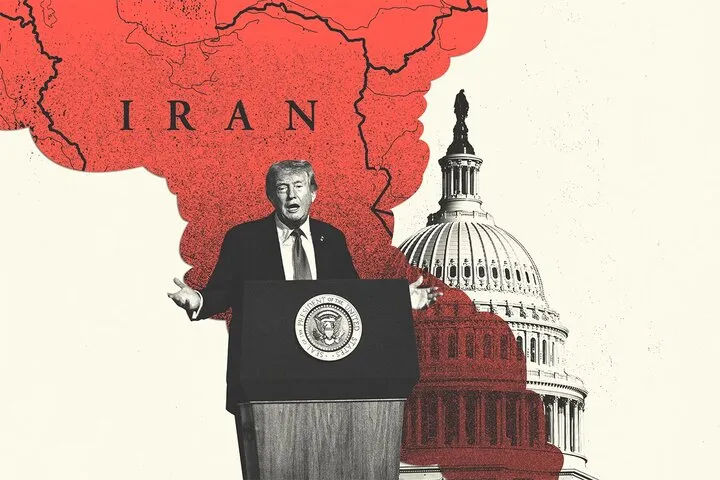
Tehran - BORNA - The American magazine wrote that amid reports of growing frustration in the White House, Iran maintains a steadfast position, demanding concessions that could bring profound changes to the region.
Alireza Taghavinia, a Tehran-based security analyst, told Newsweek: "Trump imposed this illegal war on Iran, but the Iranians stood firm and resilient, and so far they have defeated the United States."
According to the report, this perception has led Iran to view the war not merely as a struggle for survival but as an opportunity to turn the tables on a superpower and impose its key objectives.
US military withdrawal
The first objective is to prevent another attack on Iran. Taghavinia said: "Today, the first concern for every Iranian is to ensure that Iran will not be attacked again and that war will be permanently removed from Iranian soil."
In the absence of a shift in nuclear doctrine, Iran's main focus for strengthening its security is the withdrawal of US forces from the region, particularly from positions near Iranian territory, Newsweek reported.
"The security balance in the region must first shift in Iran's favor, and the source of the threat — US military presence around Iran — must be eliminated," Taghavinia said. "Iran wants the shadow of war to be permanently lifted from its land and believes that as long as the US remains in the Persian Gulf, the shadow of war and threat will persist."
According to the report, US bases in the Gulf have suffered extensive damage from Iranian missile and drone strikes, and the vulnerability of these facilities has led the US to consider relocating its operations further west.
The memorandum signed between Tehran and Washington in June addressed this issue, stipulating that the US would withdraw its forces from near Iran within 30 days of a final agreement. However, no final agreement was reached, and fighting resumed last month.
War reparations
The second objective is to secure compensation for damage to Iran's military and civilian infrastructure.
Taghavinia said: "Iran seeks reparations and considers itself the victor of the war, because it was able to defeat the US, neutralize Trump's objectives, and gain control of the Strait of Hormuz."
He added: "The damages Iran has suffered as a result of this war must be compensated. If the US does not pay reparations, the Arab sheikhdoms that are wealthy and supported the US should pay."
According to Newsweek, this demand has angered Trump, with the US president demanding reparations from Iran in return on his Truth Social platform.
Consolidating control over the Strait of Hormuz
Newsweek identified Iran's third objective as consolidating its leverage over the Strait of Hormuz — a vital waterway through which about 20 percent of the world's oil passed before the war.
Taghavinia said: "Iran's achievement in the war — control over the Strait of Hormuz and generating revenue from this waterway — must be recognized, and there is national consensus on this issue in Iran."
A former US Navy officer described Iran's ability to restrict passage through the strait as "in some ways a more powerful weapon than a nuclear bomb."
This pressure, relying on Iran's missiles, drones, and geographic position, has imposed a heavy cost on the global economy. Brent crude prices exceeded $110 per barrel in May and are once again approaching that level.
The Trump administration has authorized extensive withdrawals from the US Strategic Petroleum Reserve to contain prices, with reserves now at their lowest level since 1983, according to reports. Newsweek reported that polls show the crisis has further reduced public support for the war, rather than boosting support for Trump.
Iran and Oman have reportedly discussed the possibility of collecting a "voluntary" fee from countries whose vessels transit the Strait of Hormuz.
Enrichment rights and sanctions lifting
The two final objectives, according to Newsweek, are interconnected and predate the war.
Taghavinia said: "Iran's nuclear rights must be recognized by the world, and Iran must be accepted as a normal and powerful actor in the world. US sanctions must be lifted. If the US and its allies intend to transit the Strait of Hormuz, they must submit to Iran and lift the sanctions."
With Iran's nuclear program returning to the center of negotiations to end the war, Iranian officials have emphasized that they will maintain the right to enrich uranium at lower levels.
What has Iran achieved so far?
Newsweek wrote that beyond raising the cost of war through regional strikes and leveraging the Strait of Hormuz, perhaps Iran's greatest achievement is breaking long-held perceptions of the balance of power in West Asia.
According to the report, countries including Saudi Arabia and the UAE are reassessing their evaluation of US security commitments and have turned to both military deterrence and diplomacy and coalition-building to defend against Iranian strikes, while Washington continues to relocate some of its equipment to more distant locations in occupied Palestine and Jordan.
Amir Hossein Vazirian, a Tehran-based analyst, said: "This is a victory for Iran."
According to Vazirian, what has changed recently is that Iran has moved away from a largely reactive position — as seen in last month's preemptive strikes on US positions in Jordan before Trump's threat of widespread bombing was ultimately deferred in favor of diplomacy.
He also referred to the June letter of 85 officials, which reportedly called for moving beyond an "eye-for-an-eye" strategy to a "head-for-an-eye" approach.
Vazirian said: "The essence of the matter has changed. Unlike eye-for-an-eye, Iran's new strategy is based on 'head-for-an-eye.' Regardless of how credible or practical this strategy is, it reflects the perception Iran has of its strong position in this war."
End Article