The Atlantic: Iran is now the dominant power in West Asia
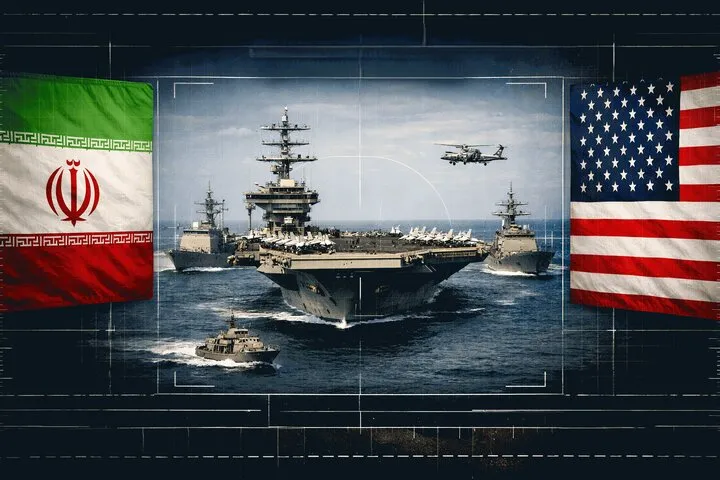
Tehran - BORNA - In a report published Sunday, the American magazine pointed to Iran’s military capabilities and said that for years Tehran had faced a balance of power in West Asia that worked against it.
“The region was dominated by a hostile American superpower, a nuclear-armed Israel and important local actors such as Egypt, Saudi Arabia and the United Arab Emirates that were strategically and economically aligned with the United States,” the magazine wrote. “But from now on, Iran is the preeminent power in West Asia.”
The Atlantic said Iran now finds itself in fundamentally different circumstances after confronting the United States and Israel and withstanding attacks carried out using some of their most advanced weapons.
“Iran has faced the United States and Israel, endured the blows of their most sophisticated weapons and emerged more resilient than before,” the report said.
As a result, the magazine argued, Iran has — with the help of Washington’s own actions — fundamentally altered the power structure of West Asia and the Persian Gulf.
“The dominant power in the region from now on will be Iran, not the United States or Israel,” it said, adding that neighboring countries are already adapting to the new reality and that more distant powers will eventually do the same.
‘Iran does not need a deal with the United States’
The Atlantic also argued that Iran’s military and political position, as well as its resistance to US and Israeli attacks, has undermined assumptions that Tehran would eventually have to reach an agreement with Washington.
“Iran does not need a deal with the United States,” the magazine wrote.
It said the widespread assumption that a weakened and impoverished Iran would ultimately have to accommodate US power, reopen the Strait of Hormuz and address its severely damaged economy had proved wrong.
“Iran has made clear for months that control of the strait is not negotiable,” the report said.
The magazine also rejected what it described as a recurring narrative from the Trump administration and media outlets that Iranian officials were unable to make decisions and constantly shifted their positions.
“That idea is meaningless,” it wrote.
According to The Atlantic, Iran has made no concessions to Washington and instead exposed what it called the United States’ Achilles’ heel through retaliatory strikes against US facilities and bases in the region and the Persian Gulf.
The magazine said Persian Gulf states immediately understood the significance of those attacks and that US President Donald Trump did as well.
It said Trump halted attacks on Iranian energy targets, ordered Israel — despite its reluctance — to do the same, and soon stopped broader attacks without securing any concessions from Tehran.
“Since then, despite numerous threats, Trump has not once ordered another strike against Iran’s energy infrastructure,” the report said.
The Atlantic: June memorandum consolidated US setback
The Atlantic also addressed the memorandum of understanding signed between Tehran and Washington in June, arguing that the agreement reflected the new balance of power.
Although the memorandum had been drafted in a way that preserved as much face as possible for the United States, the magazine described it as a clear victory for Iran.
According to the report, the memorandum stated that neither the Islamic Republic of Iran nor any other country would establish arrangements for the safe passage of commercial vessels through the Strait of Hormuz.
It added that Iran, through talks with Oman and without intermediaries or other participants, would determine the management of the strait in accordance with applicable international law and the sovereign rights of coastal states.
The Atlantic said the memorandum therefore consolidated the setback Washington had suffered in March, when Trump appeared to realize that the United States either could not or would not risk further attacks on regional energy infrastructure.
US weapons shortages raise risks of renewed attacks
The magazine also pointed to shortages in US weapons inventories, arguing that they further increase the risks associated with any large-scale renewed attack on Iranian infrastructure.
According to the report, the United States would have to deploy more crewed aircraft within range of Iranian air defenses while having relatively few interceptors available to protect Persian Gulf countries and its own military bases in the region.
The risks of US casualties, as well as damage to regional energy infrastructure, would therefore be high, The Atlantic said.
‘US should now worry about something even more important’
The magazine concluded that Washington has spent decades worrying about what Iran might do if it acquired nuclear weapons, but now faces what it described as an even more consequential reality.
“The United States should now worry about something even more important: an Iran that has defeated the United States, no longer fears an American attack and controls access to the Persian Gulf,” The Atlantic wrote.
“Nuclear weapons alone could never have given Iran such power. The failed US-Israeli war against Iran has given Iran that power.”
End Article