40th Islamic Unity Conference opens in Tehran
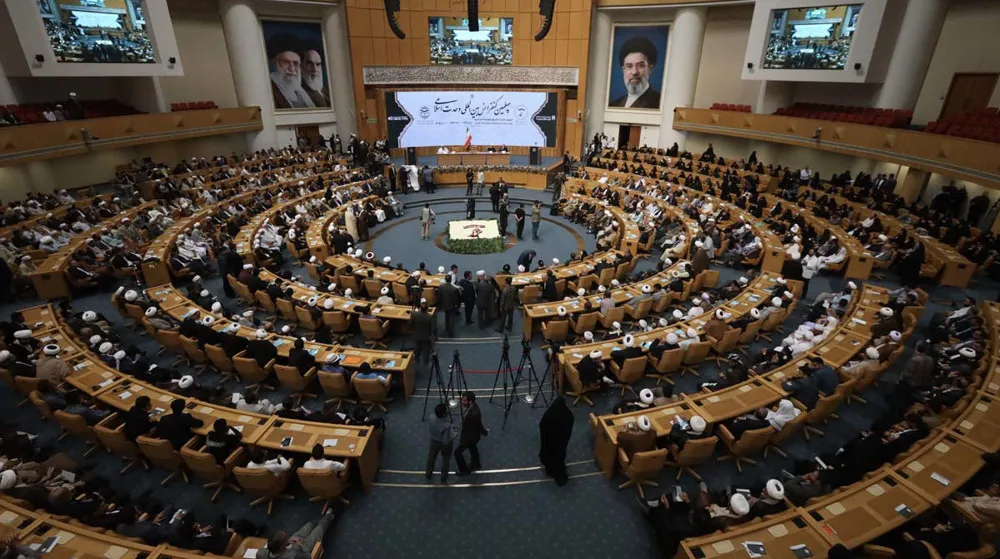
Tehran - BORNA - The conference, held at the Tehran Summit Hall, has brought together participants from around 40 countries, including Iraq, Pakistan, Turkey, Lebanon, Afghanistan and Persian Gulf states, as well as foreign ambassadors based in Tehran and representatives of senior religious authorities.
The gathering is being held under the theme “Islamic Unity in the Thought of the Martyred Imam, Ayatollah Seyed Ali Hosseini Khamenei,” with discussions focusing on strengthening solidarity among Muslim countries and developing practical approaches to greater cooperation across the Islamic world.
Addressing the opening ceremony, Hamid Shahriari, secretary-general of the World Forum for Proximity of Islamic Schools of Thought, said developments over the past year had underlined the need for greater unity among Muslim countries.
Referring to the recent war against Iran, Shahriari described the conflict as more than a military confrontation, arguing that it represented a broader “civilizational confrontation” with Western hegemony and unilateralism.
He said the United States opposed the emergence of a strong Iran because Tehran’s growing scientific, military, economic and technological capabilities could provide a model for other Muslim and developing countries.
Shahriari also referred to the attack on the Shajareh Tayyebeh school in Minab, criticizing what he described as the silence of Western media over the deaths of students and teachers.
He said US policies of maximum pressure had failed to achieve their objectives over the past four decades, pointing to Iran’s advances in missile and drone technology and the performance of its Armed Forces during the recent conflict.
The Iranian official further argued that regional countries had increasingly concluded that foreign military presence does not provide sustainable security.
“Security can only be ensured by the countries of the region themselves,” Shahriari said, adding that expanding regional engagement had helped strengthen solidarity and promote the discourse of Islamic unity over sectarian division.
He also said statements and initiatives emerging from countries including Iran, Saudi Arabia and Turkey contained significant areas of common ground that should be preserved and developed.
According to the conference organizers, this year’s event is being held in a decentralized format for the first time.
Four specialized sessions are scheduled to take place in the Iranian provinces of West Azarbaijan, Kurdistan, Golestan and Khorasan Razavi, with discussions focusing on different aspects of Islamic unity.
Additional programs include academic meetings with senior seminary scholars in Qom and Mashhad, the unveiling of eight new books on rapprochement among Islamic schools of thought, and two specialized panels on “the study of Takfiri movements” and “the role of unity in the new Islamic civilization.”
The conference is intended to strengthen cooperation among Muslim scholars and intellectuals, expand networks among elites across the Islamic world and explore practical mechanisms for greater unity among Muslim countries.
End Article