Five flashpoints that could ignite World War III
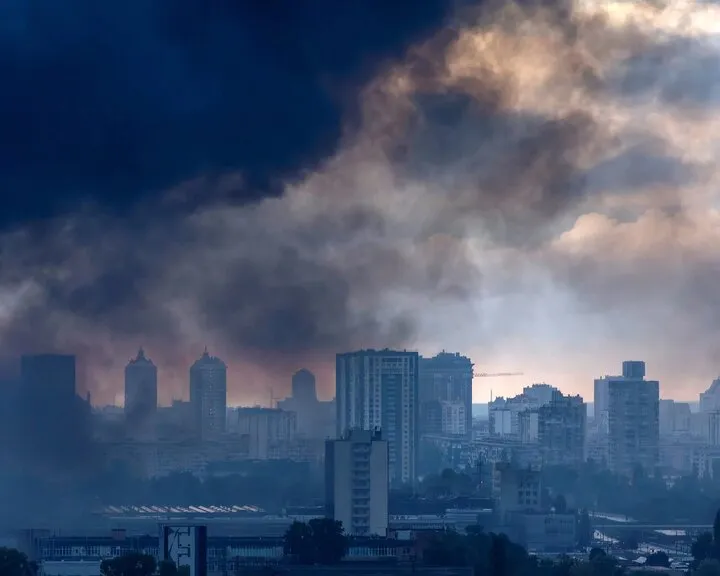
Tehran - BORNA - World War III, the newspaper argued, may not begin with a single dramatic explosion. Much like World War II, it could emerge from an accumulation of regional conflicts that gradually become intertwined.
In an article for The New York Times, columnist Bret Stephens wrote that the world has for several years been confronting a series of conflicts and crises ranging from the war in Ukraine and China’s territorial claim over Taiwan to the war against Iran and North Korea’s military activities, alongside political disarray in the West, military unpreparedness and growing economic fragility.
“The question is not whether the war has begun, but how far we are from the final storm,” the article argued.
Stephens said his argument was based on the origins of World War II, which he noted did not simply begin with Germany’s invasion of Poland on Sept. 1, 1939.
Instead, he wrote, it emerged from “an accumulation of regional wars and crises” beginning with Japan’s invasion of Manchuria in 1931, which gradually merged into a single global conflict.
According to Stephens, the convergence of the ambitions of authoritarian governments, combined with divisions and hesitation among democracies, ultimately produced catastrophe. He also pointed to changes in military technology and tactics that initially gave authoritarian states an advantage in offensive warfare, as well as their greater willingness to inflict and endure levels of brutality and suffering that their opponents were initially reluctant to match.
Ukraine and Middle East conflicts increasingly intertwined
Stephens identified the growing connection between the conflicts in Ukraine and the Middle East as one of the principal warning signs.
He wrote that Russia has expanded its threats toward Moldova, Poland and Germany, while the war between Hamas and the Israeli regime widened to involve Hezbollah, Yemen’s Ansarullah movement and Iran.
The article also noted that the use of missile interceptors in the Middle East has affected weapons stockpiles available for Ukraine.
Stephens further claimed that Russia, China, North Korea and Iran have increasingly developed into what he described as a military alignment.
He wrote that North Korea has supplied Russia with ammunition and troops, China has provided electronic components used in drones, and Russia has supplied Iran with targeting intelligence. He also argued that Moscow could potentially support China with submarines in the event of a conflict over Taiwan.
Deepening divisions inside the West
Another warning sign cited in the article is the widening political divide between US President Donald Trump and Washington’s European allies.
Stephens pointed to Trump’s disputes with European governments, what he described as irrational tariffs on Canada, and Canada’s own defense weaknesses and strategic engagement with China as evidence of declining cohesion across the West.
“Trump complains about the weakness of our allies. The allies complain about the bullying, capriciousness, immaturity, dishonesty and incompetence of the American president. Both sides are right,” Stephens wrote.
He cited the latest US tariffs against Canada as an example, describing them as politically ill-considered, economically self-defeating and strategically weak.
War against Iran exposed US vulnerabilities
The article also argued that the war against Iran exposed vulnerabilities in the United States, particularly its sensitivity to military casualties and economic pain.
Stephens wrote that this sensitivity gave Iran an advantage during the conflict.
He also pointed to lessons from the war in Ukraine, arguing that some advanced US military equipment is becoming less effective in an environment increasingly shaped by artificial intelligence-driven drone warfare.
According to the article, tanks supplied to Ukraine have in some cases been left unused, while US War Secretary Pete Hegseth has moved to eliminate a drone unit. Stephens also pointed to the relatively small size of the US naval fleet, weaknesses in the country’s shipbuilding industry and Democratic opposition to a military budget bill.
The US-Israeli war against Iran, he argued, exposed not only shortages of ammunition but also Washington’s pronounced sensitivity to military casualties.
Global economic fragility adds another layer of risk
The condition of the global economy was another major concern highlighted in the article, with Stephens arguing that the war against Iran has further aggravated existing pressures.
While the world is not facing a repeat of the Great Depression of the 1930s, he pointed to several warning signs, including the potential bursting of an artificial intelligence bubble, instability surrounding the Japanese yen, sell-offs in US Treasury securities, America’s roughly $40 trillion national debt and the possibility that Treasury bond buyback efforts could fail.
Stephens argued that economic pressure can alter the behavior of political systems in ways that make conflict more likely.
“In periods of economic strain, democracies become more risk-averse while dictatorships become more willing to take risks,” he wrote, arguing that this dynamic can further intensify international confrontation.
West ‘drifting toward the storm’
Stephens ultimately argued that these trends should not be viewed in isolation.
According to the New York Times columnist, the simultaneous accumulation of military conflicts, weakening alliances, technological changes in warfare and economic instability bears uncomfortable similarities to the conditions that preceded earlier global conflicts.
He concluded that the West is “drifting heedlessly toward the storm,” warning that the convergence of these factors increases the risk that today’s regional wars could eventually develop into a full-scale global conflict.
End Article