Leader urges regional rulers to identify real enemy, warns against divisions
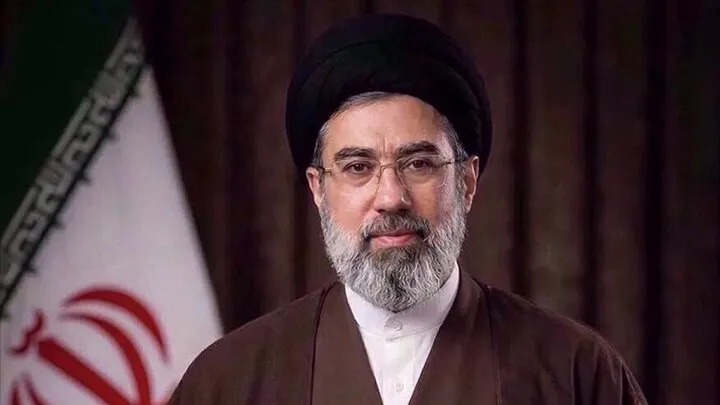
Tehran - BORNA - In a message issued on the occasion of Islamic Unity Week and the birth anniversaries of Prophet Muhammad and Imam Ja’far al-Sadiq, the Leader said adversaries of Islam seek to magnify differences among Muslims in order to weaken the Islamic Ummah and ultimately dominate it.
He said unity among Muslims, mutual defense in the face of hostile forces, and greater cooperation in material and spiritual fields are essential, particularly at a time when, he said, the United States has shed the deceptive appearance surrounding its policies and openly demonstrated its hegemonic objectives.
“The criminal rulers of the United States and the illegitimate Zionist system are sworn enemies of Islamic unity and of the entire Islamic Ummah, including the peoples of West Asia and North Africa,” the Leader said, addressing rulers of Muslim countries. “Therefore, recognize your real enemy, understand its plan and confront it.”
Ayatollah Khamenei also pointed to what he said was the relatively successful realization of the Islamic principle of unity in Iran and once again urged all Iranians to prevent any form of division from emerging among them.
The Leader began his message by congratulating the Iranian people and the wider Islamic Ummah on the birth anniversaries of Prophet Muhammad and Imam Ja’far al-Sadiq.
He said the life of the Prophet and his successors offers lessons in guidance and devotion, knowledge and affection, faith and struggle, individual and social ethics, honesty and trustworthiness, dignity, knowledge and action, compassion and firmness, justice, unity and brotherhood.
“The more these lessons are learned and put into practice, the more attainable the heights of prosperity and happiness become for humankind,” he said.
Ayatollah Khamenei said Islam and Muslims have reached a decisive stage after passing through numerous periods of hardship and upheaval throughout history.
“Today, Muslims can play a highly influential and history-making role,” he said. “Today, the prospect of the ultimate triumph of truth over falsehood, and of Islam over disbelief, has become far more tangible than in previous eras.”
Muslim unity a strategic principle, not a temporary tactic
The Leader said the first prerequisite for achieving that objective is unity among Muslims.
“Muslim unity in confronting global forces of disbelief is a Quranic strategy and an authentic teaching of pure Muhammadan Islam; it is not a superficial or temporary matter,” he said.
He explained that unity does not require the elimination of all differences, but rather means placing the common ground shared among Muslims at the center of relations within Islamic societies.
Differences, he said, should be discussed through reasoned argument and within the framework of brotherhood, cooperation and peaceful interaction.
Ayatollah Khamenei cited the Quranic principle describing believers as “firm against the disbelievers and compassionate among themselves,” saying it should guide the thought, words and actions of Muslims when confronting hostile forces.
He warned that whenever either part of that principle is neglected, Muslims lose part of the dignity and strength to which they are entitled.
Unity Week rooted in Islamic Revolution
The Leader said the principle of unity has been among the fundamental messages of the Islamic Revolution.
He recalled that the first initiative associated with Islamic Unity Week dates back to March 1978, during the struggle against the Pahlavi government, when the late Leader of the Islamic Revolution, while in exile in Iranshahr, proposed the idea and it was welcomed by both Shia and Sunni Muslims.
Following the victory of the Islamic Revolution, he said, Unity Week was formally established through an initiative by Imam Khomeini.
“By the grace of Almighty God, unity among the Muslim people has provided a successful example within the Iranian nation, and the conspiracies of the enemies have not been able to seriously undermine it,” he said.
Enemies seek to turn differences into divisions
Ayatollah Khamenei warned, however, that adversaries are constantly seeking opportunities to undermine that unity.
“What gives them hope is the magnification of differences,” he said.
The Leader said religious and doctrinal differences are only one of the areas adversaries seek to exploit, adding that racial, cultural, social, economic, political and geographical differences can likewise be turned into pretexts for division among Muslims in Iran and elsewhere.
He said the ultimate objective is to fragment the Islamic Ummah, erode its strength and create an opportunity for domination.
Referring to the Quranic injunction, “Do not dispute, lest you lose courage and your strength depart,” Ayatollah Khamenei said anyone whose actions create discord among Muslims ultimately serves the objectives of Islam’s enemies, whether knowingly or unknowingly.
He said the intentions of hostile powers are particularly evident today.
“America, at the forefront of the world’s oppressive powers, has removed the deceptive and superficial masks from the ugly face of its colonial, arrogant and domination-seeking objectives, taken off its deceptive velvet gloves and shown its bloodstained claws to the entire world,” he said.
‘What if Muslims stood as one?’
The Leader called on Muslims to carefully assess recent developments and consider the consequences of disunity.
“If Muslims had stood as one united hand, firmly closing their fist, would the Palestinian nation have been left so defenseless against the oppression and crimes of the occupiers?” he asked.
“And if the nations and governments along the Persian Gulf had established their unity under the banner of Islam, would corrupt and rootless elements have dared to covet their lands and assets from thousands of kilometers away?”
Ayatollah Khamenei then addressed the rulers of Muslim countries directly.
“My repeated and emphatic recommendation to the rulers of Islamic countries, particularly the countries of West Asia and the Persian Gulf, is this: recognize your real enemy, understand its plan and confront it,” he said.
“The remedy for the problems of the Islamic Ummah is unity, friendship and cooperation in the path of goodness.”
He said US leaders and the Israeli regime are sworn enemies of such unity and cooperation.
“They are not merely enemies of the Islamic Republic, the Iranian nation and the great Islamic Resistance Front,” the Leader said. “They are hostile to the entire Islamic Ummah, including the peoples of West Asia and North Africa.”
Ayatollah Khamenei added that even rulers of regional states cooperating with Washington and Israel are not exempt from that hostility, pointing to public insults and derogatory remarks directed at some Muslim leaders by Western officials in recent years.
Mutual defense and cooperation key to Islamic strength
The Leader said unity and avoidance of internal conflict constitute the first lesson of Islam regarding relations with friends and enemies.
“The second lesson is defending one another against hostile forces, and the third is cooperation and synergy across the various dimensions of Muslims’ material and spiritual lives, including wealth, security, science and progress,” he said.
He said the ultimate outcome of this process would be the emergence of a “new Islamic civilization.”
“Unity among Muslims is therefore the principal foundation for achieving a dignified and powerful Islamic civilization,” he said.
Ayatollah Khamenei said this vision has already been realized to an acceptable degree in Iran.
“I once again advise every member of the nation not to allow any division whatsoever to emerge among them,” he said.
The Leader concluded his message by expressing hope that Muslim societies would increasingly progress toward dignity and development by adhering to divine teachings.
He prayed for God’s mercy and blessings to encompass Islamic societies and for Muslim nations to continue advancing toward greater strength and prosperity.
End Article