CFR experts: Iran war reshaped regional security, raised risk of strategic defeat for US
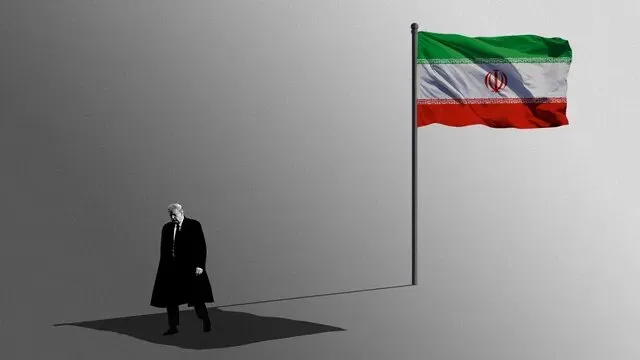
Tehran - BORNA - In an analysis titled “The Iran War at Six Months: A Region—and Its Relationship With the U.S.—Transformed,” CFR experts examined how the conflict has affected US influence in the Middle East, regional security arrangements, Turkey’s position, US-Israeli relations and the information environment surrounding the war.
The assessments present differing views on the conflict, but several point to major changes in the regional order since the United States and Israel attacked Iran on Feb. 28.
Trump’s miscalculation and risk of strategic defeat
Steven A. Cook, CFR’s senior fellow for Middle East and Africa studies, said US President Donald Trump had expected Operation Epic Fury to secure victory within four to six weeks and has since turned to economic pressure in an effort to salvage the campaign.
Cook said Trump failed to anticipate Iran’s willingness to resist US military power, calling that calculation a major mistake.
Six months later, he noted, navigation through the Strait of Hormuz remains severely restricted, US partners on the western shores of the Persian Gulf have become more vulnerable to Iranian attacks, and Tehran has greater incentives than before the war to move toward weaponizing what remains of its nuclear program.
If those trends are not reversed, Cook said, they would amount to a strategic defeat for Washington.
Trump has now shifted his attention toward what his administration calls Operation Economic Outcast, betting that intensified economic pressure could either weaken the Iranian leadership sufficiently to force it back to negotiations or ultimately contribute to political change in Iran.
Cook, however, questioned whether the US president is once again overestimating Washington’s ability to translate pressure into political results.
He argued that economic warfare, much like conventional warfare, produces uncertain outcomes. Having entered the conflict expecting a quick victory, Trump now faces the possibility of failure alongside growing questions among regional governments about Washington’s ability and willingness to guarantee their security.
The assessment echoes another recent CFR analysis that said the United States now has few attractive options: further military escalation risks Iranian attacks on US bases and regional partners, while greater economic pressure could require a confrontation with China and expose Washington to economic retaliation.
Turkey could emerge stronger regardless of outcome
Henri J. Barkey, an adjunct senior fellow for Middle East studies at CFR, argued that Turkey could be among the major geopolitical beneficiaries of the conflict regardless of who ultimately prevails.
Turkish President Recep Tayyip Erdogan has long sought to establish Turkey as a major regional and global power, and Barkey said the Iran war has provided Ankara with an opportunity to expand its influence across the Middle East.
A US defeat, he argued, would strengthen Turkey’s position as a regional counterweight and increase the value of Ankara’s military and diplomatic power.
Barkey pointed in particular to the Mecca Joint Defense Agreement signed by Pakistan, Saudi Arabia and Turkey on Aug. 7, saying the accord illustrates the growing regional demand for Turkish involvement in security affairs.
The agreement formally brings Turkey into a regional security arrangement and, according to Barkey, could help Ankara overcome longstanding distrust between Turkey and Persian Gulf states.
He also argued that the war could accelerate a reduction in the US military presence in the region.
A decline in Washington’s regional influence — and a corresponding reduction in Israeli influence — would advance Erdogan’s long-term objectives, Barkey said.
Even a US victory over Iran could benefit Turkey economically and strategically, he argued, although to a lesser degree, by weakening one of Ankara’s principal regional competitors and opening new economic opportunities.
Military cooperation deepens, but US-Israel political differences persist
Elliott Abrams, a CFR senior fellow who served as US special representative for Iran during Trump’s first term, focused on the changing relationship between Washington and the Israeli regime.
Abrams said the war has significantly deepened military cooperation between the two sides.
Dozens of US Air Force aircraft are now based in the occupied territories, US and Israeli forces share targeting intelligence concerning Iran, and American aerial refueling aircraft have supported Israeli combat jets, according to his assessment.
Abrams characterized the level of military integration as exceptionally extensive.
Yet deeper military cooperation has not eliminated political disagreements.
He pointed to disputes over Gaza, Lebanon, Syria and Iran itself as continuing sources of friction.
One particularly important difference concerns the ultimate objective toward Tehran. According to Abrams, Washington currently seeks changes in Iran’s behavior, particularly concerning its nuclear program and the Strait of Hormuz, while Israel views regime change in Iran as the preferred outcome.
That divergence means any future US-Iran compromise, including arrangements similar to the memorandum of understanding reached in June, could remain a source of disagreement between Washington and Tel Aviv.
Abrams also noted that public support for Israel has fallen among both major US political parties, although he said it remains difficult to determine how much of that decline is attributable specifically to the Iran war rather than the Gaza conflict or other issues.
War creates a new information and security challenge
Farah Pandith, a CFR senior fellow specializing in countering violent extremism, focused on the longer-term consequences of the war in the information environment.
She argued that the conflict has given Iran and its allies new opportunities to reach audiences online, particularly younger users, through videos, images, memes and social media messaging.
According to Pandith, Iran has spent the past six months building an effective online narrative around the conflict, US and Israeli policies and longstanding regional grievances.
She warned that the consequences of this information campaign could persist even after military hostilities end, because the enormous volume of material generated during the conflict can continue circulating and influencing audiences for years.
Her assessment focuses particularly on the possibility that online radicalization could encourage individuals without formal organizational ties to engage in violence.
Pandith argued that Washington remains inadequately prepared for this dimension of the post-war security environment.
Six months later, regional order looks different
Taken together, the analyses suggest that the consequences of the Iran war now extend well beyond the immediate military confrontation.
Before the conflict, Cook noted separately in a CFR discussion, commercial navigation through the Strait of Hormuz was functioning normally, Iran’s Persian Gulf neighbors faced a different level of military risk, and Tehran had fewer incentives to move toward a nuclear weapon.
“All of those things have changed as a result of the war,” Cook said.
The CFR assessments also point to a broader redistribution of regional power: Turkey is seeking a larger security role, Persian Gulf governments are reassessing their defense arrangements, US-Israeli military integration has deepened even as political disagreements persist, and the reliability of Washington’s traditional security role is increasingly being questioned.
For Cook, the central issue is whether the United States can reverse the consequences of a war Trump originally expected to win quickly.
If it cannot restore navigation through the Strait of Hormuz, reduce the vulnerability of its regional partners and prevent further nuclear escalation, he argues, Washington may emerge from the conflict having demonstrated overwhelming military power but suffered a strategic defeat.
End Article