Amid wars and crises, SCO summit to open in Bishkek with Putin, Xi, Pezeshkian
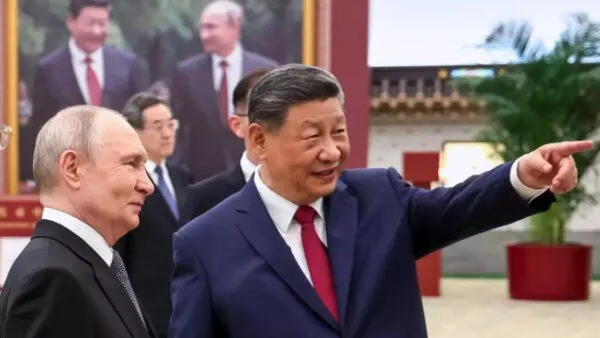
Tehran - BORNA -The leaders of Iran, India and Pakistan will also attend the summit, held as tensions rise between several bloc members and the West over wars, sanctions and trade disputes. Moscow and Beijing intend to use the gathering to reinforce their vision of a "multipolar world" and present the SCO as a regional counterweight to the West.
25th anniversary marked by 12 leaders
Xi arrived in Bishkek on Sunday ahead of Monday's summit. His delegation includes his wife, Peng Liyuan; Cai Qi, member of the Communist Party's Politburo Standing Committee and director of the party's General Office; and Foreign Minister Wang Yi, a Politburo member.
Leaders confirmed to attend the summit, hosted by Kyrgyz President Sadyr Japarov, include Putin, Iranian President Masoud Pezeshkian, Indian Prime Minister Narendra Modi and Pakistani Prime Minister Shehbaz Sharif.
The SCO comprises Belarus, China, India, Iran, Russia, Kazakhstan, Kyrgyzstan, Uzbekistan, Pakistan and Tajikistan. Roughly 12 heads of state and government are gathering in Bishkek to mark the bloc's 25th anniversary. The plenary session will be chaired by Japarov, with Putin, Xi, Pezeshkian, Modi and Sharif in attendance.
Meeting with Iran's president
Kremlin aide Yuri Ushakov said Friday that Putin will hold bilateral meetings on the sidelines of the summit with Pezeshkian, Xi and several other leaders.
The summit takes place four and a half years after the start of Russia's war in Ukraine, and six months after the direct confrontation between Washington and Tehran. During the Ukraine war, Russia and Iran — both under heavy Western sanctions — deepened their military and economic cooperation. US President Donald Trump has warned Moscow and Beijing against arming Iran.
The Putin-Pezeshkian meeting comes days after an unusual visit to Moscow by CIA Director John Ratcliffe, amid speculation in Washington that he discussed Ukraine and Iran with his Russian counterparts. In response, Washington this month imposed secondary sanctions on Iran's partners in the gold, technology, aviation and shipping sectors and threatened to sanction Tehran's allies. China, Iran's largest oil buyer, said it would "resolutely defend its interests."
From economic to political cooperation
The SCO was originally established as a framework for economic and security cooperation in Central Asia but has taken on a more political character in recent years under Moscow and Beijing's leadership. Beyond its member states, the bloc now includes 15 "dialogue partners," including Turkey, Saudi Arabia and Qatar, and two observer states, Afghanistan and Mongolia.
The bloc says it represents nearly 40% of the world's population and 25% of global GDP. Although its founding charter states the organization is "not an alliance directed against other states," Putin and Xi have repeatedly used its platform to deliver anti-Western remarks. The two leaders often use SCO gatherings to display unity and present their vision of a multipolar world as a counterweight to US hegemony.
At last year's summit, Putin said the West had "provoked the war in Ukraine," while Xi criticized what he called "acts of intimidation" amid tensions with Washington. At that summit, held in Tianjin, China, participating leaders reaffirmed their commitment to respecting sovereignty and non-interference in states' internal affairs.
End Article