SCO summit seen as launchpad for Iran-China partnership in postwar era
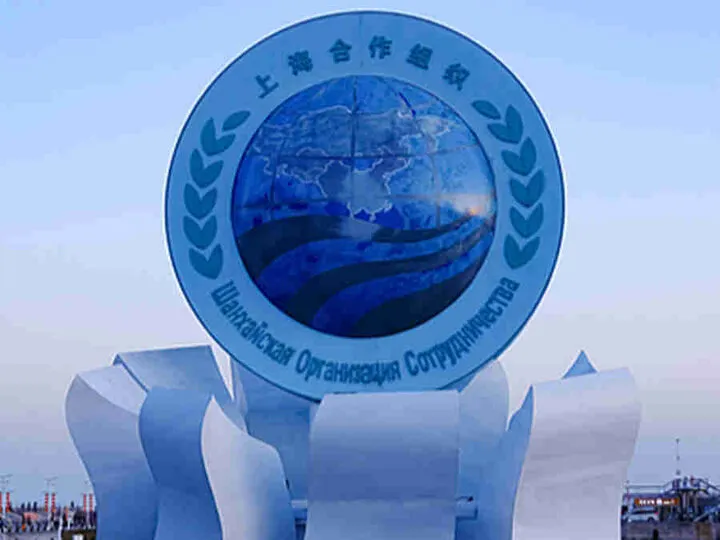
Tehran - BORNA - Fifty-five years ago around this time, Iran and China formally established diplomatic relations. A relationship rooted in the ancient Silk Road has since grown into one of the most stable and strategic partnerships linking West and East Asia. Against that backdrop, this year's SCO summit will be held Aug. 31-Sept. 1, 2026, in Bishkek, the Kyrgyz capital — a coincidence that could create a valuable window for bilateral meetings among member states, including Iran and China.
Postwar Iran brings new credibility to SCO
Having emerged from a full-scale war, Iran presents a more assertive face than before. The war experience, though costly, demonstrated that Iran, relying on domestic capacity and national resolve, can withstand the world's most powerful military force — an outcome aligned with one of the SCO's central goals: countering unilateralism, interventionism and coercion. That experience, the analysis argues, has lent Iran considerable credibility within the organization on that front.
Iran's unique advantages make it a strategic Belt and Road partner
Iran's vast oil and gas reserves, its position as a natural east-west and north-south corridor, its control of the northern Persian Gulf coast and the Strait of Hormuz, its large number of land and sea neighbors, and its historic ties to the Silk Road give it distinct advantages as a partner for China's Belt and Road Initiative. China, the world's second-largest economy, Iran's largest trading partner and a leading industrial power, could play a central role in rebuilding war-damaged infrastructure and Iran's major development projects in the postwar period.
'Look to the East' policy and Ghalibaf appointment aim to boost Tehran-Beijing ties
Iran's martyred Leader, Ayatollah Sayyed Ali Khamenei, had consistently urged successive governments to pursue a "Look to the East" policy, with particular emphasis on China as Iran's largest trading partner and a reliable partner for friendship and cooperation. In that context, the recent appointment of Mohammad Bagher Ghalibaf as Iran's special representative for China affairs is described as a clear signal and a strategic move meant to drive forward comprehensive Tehran-Beijing relations.
China seen as trusted mediator for new regional order
According to CGTN, China's successful mediation between Tehran and Riyadh in 2023 demonstrated its capacity to serve as a key architect of peace in the Middle East. That role, the analysis suggests, could be even more relevant in the postwar period, given tensions between Iran and Persian Gulf states arising from US use of their territory in the war against Iran. Iran has said it seeks to maintain friendly and respectful relations with all countries in the region, and China — trusted and respected across the region — is positioned as a leading candidate to help repair those relations and shape a new regional order, serving not merely as a mediator but as a facilitator of sustained, confidence-building dialogue among all parties.
Postwar reconstruction offers golden opportunity for Chinese firms
The war caused heavy damage to Iran's transportation, energy, oil and petrochemical, industrial and rail infrastructure, creating what the analysis describes as a unique opportunity for Chinese companies. Iran, in turn, needs oil sales to finance reconstruction — complementary capacities envisioned under the 25-year cooperation agreement. For China, the partnership offers secure energy access, an overland corridor through Asia, and access to a market of 90 million people for its industrial and technology goods. Effective implementation of the agreement, the piece argues, could provide a comprehensive roadmap for long-term cooperation in energy, industry, mining, agriculture and technology.
Despite the latest round of US sanctions on Iran, China's Foreign Ministry has stated its position clearly: Beijing firmly opposes unilateral and illegal sanctions, and China-Iran cooperation is conducted within the framework of international law and should not be disrupted. That stance, the analysis notes, is described as one of the key pillars supporting bilateral cooperation under external pressure.
Rail development, desertification control and renewable energy open new avenues for cooperation
Despite new US sanctions on Iran, Washington's pressure on allied countries to join what Tehran calls an "economic terrorism" campaign, and heavy US interference in maritime trade through Iran's southern ports, President Masoud Pezeshkian recently announced that the number of Chinese freight trains entering Iran has increased from one to three per week, with additional routes reportedly under development to expand Iran's foreign trade options. This, the analysis says, shows Iran will continue advancing trade and economic cooperation with China given its extensive access advantages.
Iran also needs to develop rail transport and modernize its passenger and freight rail fleet to serve as a north-south and east-west corridor — an opening for broader cooperation with Chinese rail companies, including in high-speed rail. Desertification across large parts of Iran is described as a serious challenge, one where Chinese technical and scientific expertise could offer significant help.
The entry of high-quality Chinese electric vehicles into the Iranian market has reportedly been well received. Iran, despite vast wind and solar energy potential, continues to face electricity shortages. Investment by reputable Chinese firms in wind and solar power plants in Iran could help address that shortage while also supporting the growth of the EV market and Chinese manufacturing operations in Iran — potentially positioning Iran as a regional hub for electric vehicle production alongside meeting domestic demand.
Beyond its role in promoting peace and stability, China has developed some of the world's most advanced defense and deterrence industries. Iran's recent war experience showed that, alongside strengthening domestic capabilities, the country also needs to import defense equipment from strategic partners — conventional defense cooperation described as another potentially important dimension of the two countries' broader roadmap.
Tourism seen as a people-to-people bridge and steady income source
As Chinese incomes have risen in recent decades, outbound Chinese tourism has surpassed 100 million travelers a year. Iran, with its historical, archaeological, cultural and natural attractions, is described as a potentially appealing destination for Chinese tourists, with Iranian authorities reportedly aiming, over the medium term, to attract "one percent" of Chinese tourists — a goal seen as both a significant revenue source and a bridge for people-to-people understanding between the two countries.
SCO viewed as platform for new world order
With China and Russia holding permanent UN Security Council seats, representing roughly half the world's population and a quarter of global GDP, and counting four nuclear-armed states among its members, the SCO has become one of the most influential international bodies shaping the emerging world order, according to the analysis. Iran and China, drawing on complementary capacities and strong political will, are described as capable of offering a successful model of economic and security cooperation within the SCO framework.
Iran and China's joint membership in the SCO and BRICS is said to not only provide a platform for multilateral cooperation but also to strengthen coordination on international positions and promote multilateralism, a new global order and global governance — an initiative closely associated with Chinese President Xi Jinping — extending their coordinated voice across both key emerging-world institutions.
Structural challenges and the outlook for cooperation
The path toward this vision, however, is not free of structural and practical obstacles. The most significant, the analysis says, remains the financial and banking system: US secondary sanctions — despite Beijing's explicit opposition to unilateral sanctions — have made many major Chinese banks cautious about transacting with Iran, increasing reliance on barter-based settlement mechanisms that slow the pace of large-scale cooperation.
Second, uneven implementation speed has turned the 25-year agreement, despite its considerable potential, into a long-term document with relatively slow progress in non-oil sectors — partly attributed to Iran's lack of clear legal and regulatory infrastructure for attracting foreign investment, as well as shifting domestic priorities on both sides. Despite these obstacles, the analysis concludes that strong political will on both sides, combined with the SCO's capacity to offer alternative mechanisms — such as settlement in national currencies and transit corridors independent of Western-dominated sea routes — could make these challenges manageable and smooth the path for deeper strategic cooperation between the two countries.
End Article