New York Times: Trump has hit a dead end in Iran war
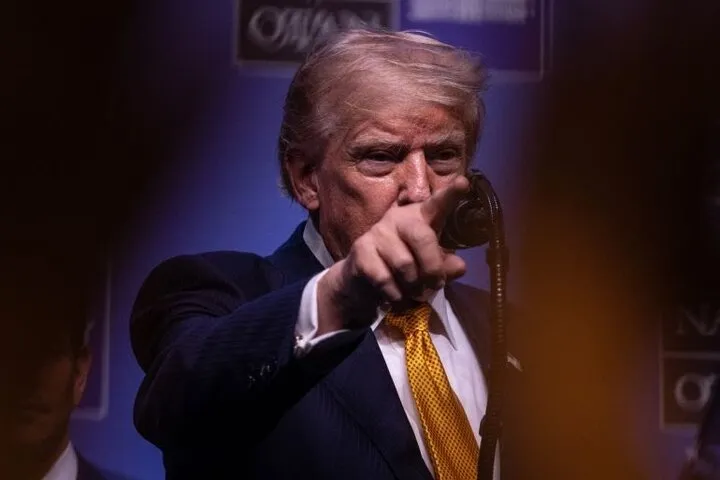
Tehran - BORNA - With clashes over the Strait of Hormuz escalating again, Trump has once more shifted his hopes away from a decisive military outcome and toward mounting internal pressure on Iran — an approach he had also embraced when the war began six months ago.
According to The New York Times, Trump wrote on social media Tuesday night, hours after a new round of US attacks and Iran’s response, that he did not care whether Iran signed an agreement and again repeated his assertions that the United States had achieved “complete control” over the Strait of Hormuz.
His comments came after another 24-hour period in which a familiar pattern of wartime rhetoric re-emerged, ranging from declarations that Iran had been defeated militarily and economically to threats of devastating attacks.
By Wednesday morning, Trump had returned to social media and even suggested renaming the Strait of Hormuz the “Trump Strait.”
Some foreign-policy analysts cited by the newspaper said the latest escalation has exposed a central problem in Trump’s handling of the war: his options are running out.
Matthew Bartlett, a Republican strategist and former State Department appointee during Trump’s first administration, said the US approach had become increasingly repetitive.
“The strategy, both rhetorically and militarily, has become a repetition of the same actions,” he said. “It is genuinely shocking that the United States appears to have entered this conflict without a plan for engagement, victory or exit.”
Bartlett said Trump’s renewed calls for political change in Iran were another sign of the absence of a coherent strategy, arguing that when options are exhausted, the administration simply returns to the beginning of the same cycle.
The New York Times wrote that despite Trump’s aggressive tone, Iran has also demonstrated that it still possesses significant means of pressure.
Trump had predicted that the war would end within weeks, but six months later there is still no clear path toward ending the conflict.
According to the newspaper, Iran has shown that even with more limited conventional military capabilities, it can still disrupt the global economy by exploiting its geographic position around the Strait of Hormuz.
Michael Froman said the central challenge for Washington is one of “asymmetric warfare” — a situation in which even a state facing one of the world’s most powerful militaries can use limited capabilities strategically enough to prevent the United States from fully achieving its objectives.
Trump has also sought in recent weeks to shift some of the focus away from military operations and toward intensifying economic pressure on Iran.
Washington has imposed a naval blockade on Iranian ports and expanded sanctions in an effort to increase economic pressure. The Trump administration is also relying on what it has called an “Economic Victory Day” campaign aimed at severing Iran’s remaining economic channels.
The policy is intended to pressure countries that continue trading with Iran or help Tehran circumvent US sanctions, particularly China and Russia.
International analysts, however, have argued that the campaign is unlikely to succeed because Iran’s partners have developed independent mechanisms to bypass US restrictions.
The New York Times also acknowledged that there has so far been little sign that those countries are willing to comply with Washington’s demands.
China continues to purchase Iranian oil and provide raw materials and technology that support Iran’s economy and military capabilities. Russian President Vladimir Putin also said this week that Moscow would continue supporting Iran and helping it defend its national interests.
Inside the United States, Trump is also confronting the political costs of the war, particularly its economic consequences ahead of the midterm elections.
Despite repeated threats, he has remained hesitant to resume large-scale bombing of Iran.
Khaled Elgindy, a senior fellow in the Middle East Program at the Quincy Institute and an instructor at Georgetown University’s Center for Contemporary Arab Studies, said Trump’s aggressive social-media rhetoric appeared aimed at preserving political appearances amid a stalemate that has become increasingly costly for both the president and the Republican Party.
“Part of this performance is simply for his political base, regardless of whether what he says is true,” Elgindy said.
“I don’t think there is much strategy behind it, other than Trump trying to use the power of words to create the reality he wants.”
End Article