Conclusion of BRICS 2026: Emphasis on a Multipolar Order, Independent Economy, and De-escalation
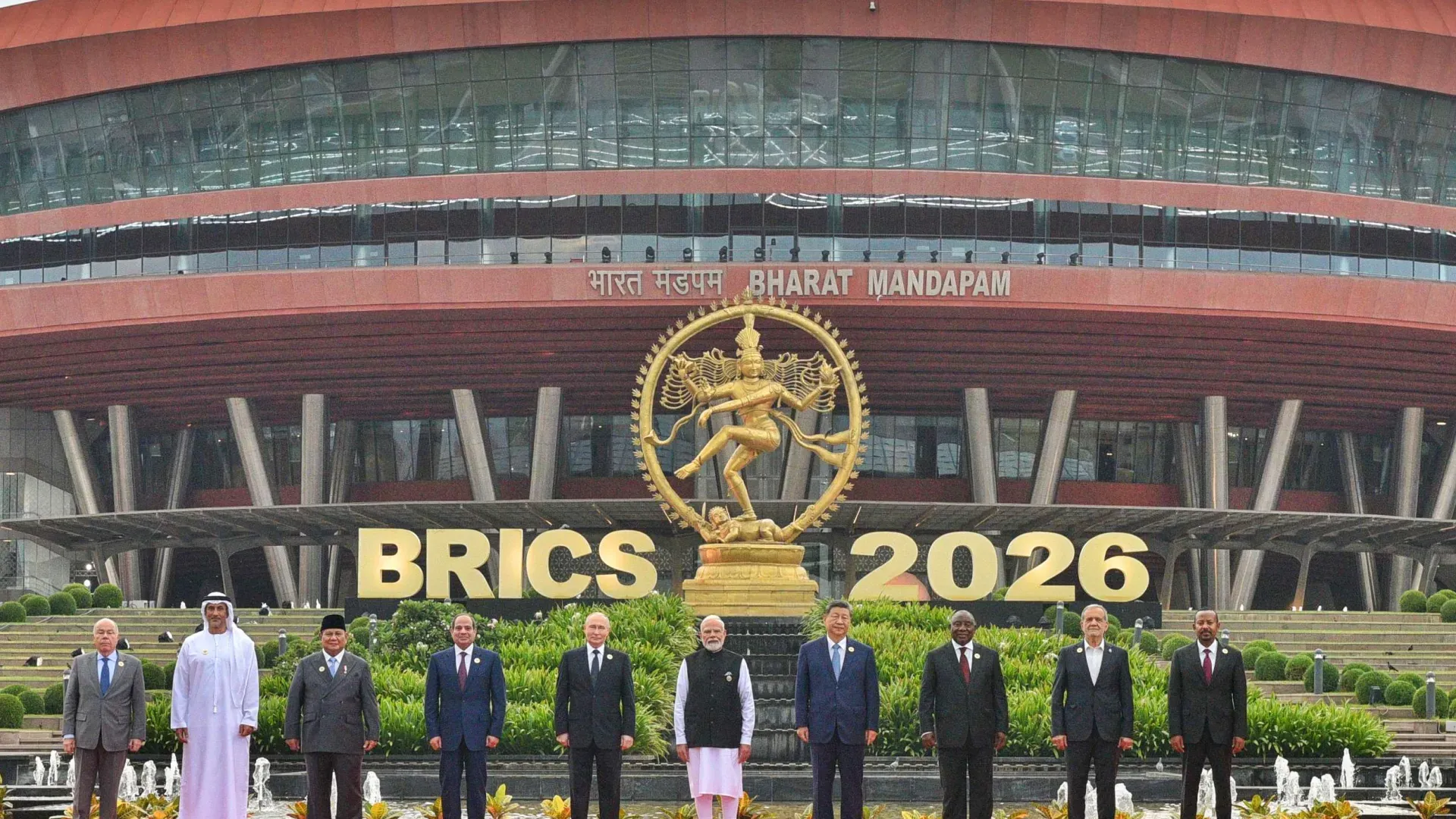
Tehran - BORNA - Iranian President Masoud Pezeshkian, during his three-day visit to New Delhi, delivered a speech at the 18th summit and the BRICS Plus economic session, while also holding bilateral talks with several counterparts, including Indian Prime Minister Narendra Modi, the leaders of South Africa, Malaysia, and Ethiopia, and the Crown Prince of Abu Dhabi.
On the sidelines of the summit, Pezeshkian met with a group of Indian religious representatives, intellectuals, and business leaders at his residence. A notable side event featured an exhibition of paintings collected from children across India, displayed in support of the children of Minab who were martyred during the 40-day war by the US-Zionist enemy.
Official photo sessions with core BRICS leaders, a group photo with representatives of invited nations and BRICS Plus organizations, and a ceremonial tree-planting ceremony were among the other highlights of the summit in New Delhi.
This visit marked the first trip by an Iranian president to India in seven years, holding the potential to initiate deep and extensive cooperation across political, economic, and cultural spheres given the strong commonalities between the two nations.
A key highlight of the trip was President Pezeshkian's meeting with Sheikh Khaled bin Mohamed bin Zayed Al Nahyan, Crown Prince of Abu Dhabi, held against the backdrop of the US-Israeli war in the Persian Gulf and ongoing naval blockades. A senior Iranian official described the meeting between the president and the Abu Dhabi Crown Prince as taking place in a "calm and constructive" atmosphere.
BRICS now encompasses a broader coalition of emerging economies, with leaders emphasizing an increased role for the Global South in international decision-making. Statements from core BRICS leaders underscored a collective push toward independent global governance and a departure from unilateralism.
Narendra Modi: Reforming Global Order and Countering "Pyramid of Privileges"
The Indian Prime Minister highlighted that the world faces escalating geopolitical tensions, supply chain disruptions, and climate crises. Modi called for the reform of international institutions—particularly the United Nations and global financial architectures—and an increased voice for the Global South. He also warned against the "weaponization of technology and critical minerals" and urged cooperation in AI, health, energy, food security, and digital infrastructure.
Vladimir Putin: BRICS as a Pillar of a Multipolar Order
The Russian President framed BRICS as a vital instrument in shaping a multipolar world order, stressing the need to transition political cooperation into practical economic ties. From Moscow's perspective, technology, investment, infrastructure, trade, and payment mechanisms are the foremost areas for future BRICS collaboration. Putin also emphasized expanding economic relations between Russia and India to boost bilateral trade.
Xi Jinping: "Greater BRICS" and Economic Independence
The Chinese President called for strengthened economic, political, and security cooperation among members, asserting that the block must evolve into a practical platform for the Global South's development. Xi proposed initiatives including a BRICS open-source AI zone, collaboration in special economic zones, and a services trade forum. China also stressed supply chain stability, a more integrated market, and an active BRICS role in global affairs.
Masoud Pezeshkian: Expanding Trade and Iran's Active Role
The Iranian President underscored the increased use of national currencies in intra-BRICS trade and the strengthening of economic cooperation. Pezeshkian stressed that BRICS should not merely remain a consumer of technology, but actively participate in knowledge production, technology creation, and the setting of digital economy standards. On the sidelines, Pezeshkian's meetings with member state officials, including those from India and the UAE, drew significant attention.
The summit was heavily influenced by the US-Israeli war against Iran, prompting members to emphasize restraint, de-escalation, and diplomatic solutions—a consensus achieved with the backing of Iran and the UAE, marking one of the summit's key diplomatic outcomes.
End Article