Araghchi details 7-day plan to reopen Strait of Hormuz conditioned on US compliance
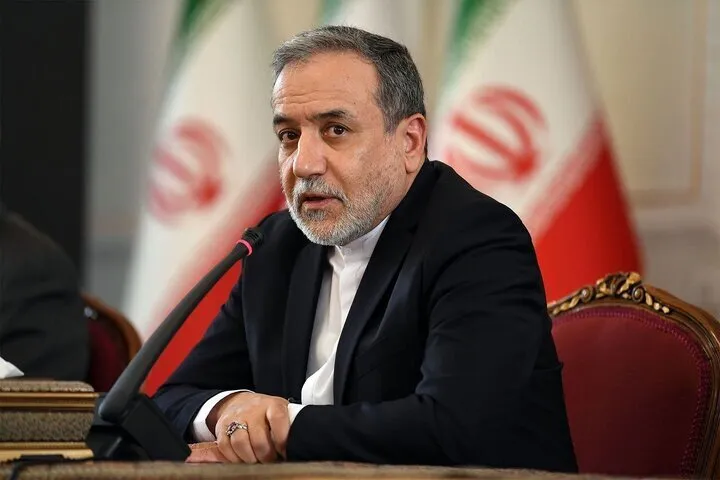
Tehran - BORNA - Speaking at a press conference at United Nations Headquarters in New York on Friday, Araghchi announced that the initiative, communicated to the United States via Qatari mediators, sets out a phased roadmap for de-escalation in the strategic waterway.
"The seven-day timeline begins the moment the United States accepts this plan. If that occurs tomorrow, implementation will start then," Araghchi told correspondents. "If the required steps are taken, we believe the process can be finalized within four to five days, allowing the Strait of Hormuz to reopen on the sixth day, with the United States entering for the final agreement on the seventh day."
Araghchi noted that the reciprocal actions required of Washington have already been communicated in detail and remain rooted in the provisions of the Islamabad memorandum.
Outlining Tehran’s foreign policy principles, Araghchi reaffirmed Iran’s adherence to international law and diplomatic dialogue, referencing the Joint Comprehensive Plan of Action (JCPOA) negotiations and ongoing engagement over the past two years. In contrast, he stated that Washington and the Israeli regime had chosen "aggression, threats, assassinations, economic warfare, and blatant disregard for the UN Charter."
The top Iranian diplomat reported that the military campaign against Iran resulted in more than 5,000 deaths, including hundreds of women and children. He characterized the assassination of the late Leader of the Islamic Republic and senior civil and military officials as a flagrant violation of international law.
Araghchi detailed documented strikes against civilian infrastructure, including the killing of over 168 students and teachers in Minab, cluster munition strikes on a stadium in Lamerd, 2,000-pound bombings of residential areas in Kish, and a missile strike targeting a wedding ceremony in Sirik. He criticized addresses delivered by the US president and the Israeli prime minister at the UN General Assembly for attempting to invert the positions of aggressor and victim, while denouncing US sanctions as collective punishment, economic terrorism, and a direct breach of the International Court of Justice’s provisional measures of October 3, 2018.
Dismissing renewed Western allegations regarding Iran's nuclear program as politically motivated, Araghchi called claims that Tehran is on the threshold of nuclear weapons capability a "big lie" repeated since 2003. He underlined that Iran has been a dedicated signatory to the nuclear Non-Proliferation Treaty (NPT) since 1970 under comprehensive IAEA safeguards, arguing that Washington cannot credibly champion non-proliferation while simultaneously targeting inspected civilian facilities.
Addressing maritime security, Araghchi pointed out that the Strait of Hormuz operated normally until February 28, 2026, and that prevailing disruptions stem directly from foreign military operations. "One cannot bomb a country, threaten it with annihilation, impose maritime blockades and coercive measures, and expect maritime traffic to return automatically to normal," he remarked. He also held accountable regional governments that facilitated aggression by making their airspace, military installations, and logistical assets available to foreign forces.
Recalling the Islamabad MoU signed on June 17 through Pakistani and Qatari good offices, Araghchi noted that under Article 5, Iran had committed to facilitating safe maritime transit. Subsequent technical talks with Oman had successfully restored traffic to approximately 60 percent of pre-war levels within two weeks, before unilateral US strikes derailed the mechanism.
Concluding his address, Araghchi stated that the diplomatic track remains open, provided credible guarantees against renewed aggression are secured. "The United Nations was established to prevent the 'law of the jungle' from replacing international law. The UN Charter is not optional, sovereignty is not conditional, diplomacy does not mean surrender, and peace cannot be built upon threats of annihilation," he said.
End Article