From Sky to Sea: Captured US Drone Hands Iran Blueprints for Autonomous Submersibles
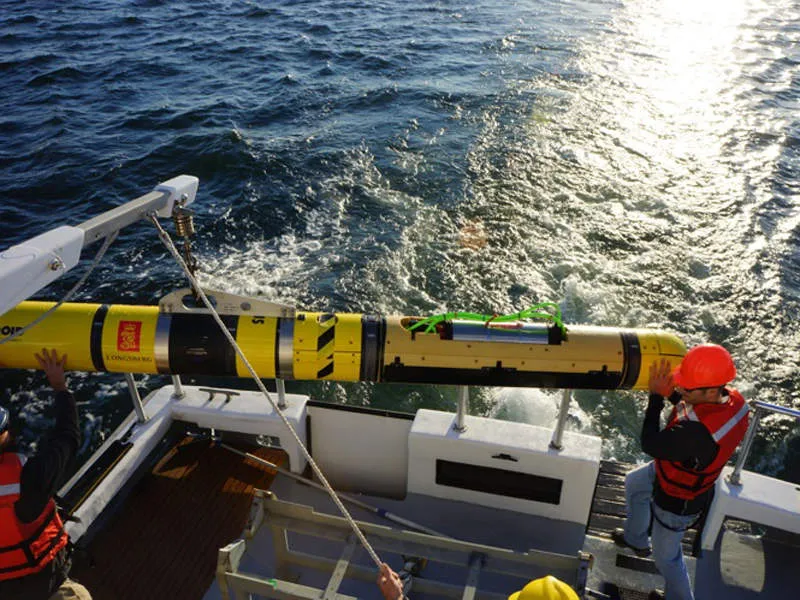
Tehran - BORNA - The Islamic Revolution Guards Corps (IRGC) Navy’s capture of an American Remus 600 unmanned underwater vehicle (UUV) in the Strait of Hormuz—coming in the wake of the earlier interdiction of Anduril’s large-displacement Dive-LD platform—marks a pivotal intelligence and technological inflection point in the Persian Gulf’s underwater theater. With Western surface combatants kept at greater stand-off distances due to regional coastal defense missile and drone umbrellas, the United States has increasingly relied on autonomous underwater systems to map shipping channels, identify seabed obstacles, and perform mine countermeasures (MCM) in the strategic waterway. However, the successive loss of these assets has inadvertently delivered the Pentagon’s sub-surface operational concepts and sensitive hardware directly to Iranian defense specialists.
At the operational level, the immediate value of the captured Remus 600 lies within its non-volatile mission memory and onboard logs. Extracted telemetry and navigational records reveal the exact sub-surface transit corridors prioritized by the US 5th Fleet for potential commercial escort routes, as well as the acoustic signatures and search algorithms programmed to detect, classify, and neutralize Iranian naval mines. By analyzing how Western automated target-recognition software interprets sea-bottom topography and ordnance profiles, Iranian engineers gain the precise baseline needed to develop advanced acoustic decoys, signature-reduction coatings, and counter-sonar camouflage that degrade Western mine-clearing assets.
Beyond immediate mission intelligence, the technological windfall from reverse-engineering the Remus 600 complements the earlier acquisition of the heavy, deep-diving Dive-LD. While the multi-ton Dive-LD represents long-endurance, ocean-depth reconnaissance capabilities, the modular Remus 600 (designated in US service as the Mk 18 Mod 2 Kingfish) serves as the Western benchmark for tactical littoral operations. Merging the technical architecture of both vehicles provides Iranian defense industries with a qualitative leap across key sub-surface disciplines.
Chief among these is the miniaturized Synthetic Aperture Sonar (SAS) payload. High-frequency SAS systems process acoustic returns to generate photographic-quality seabed imagery with resolutions as fine as a few centimeters at ranges exceeding several hundred meters. Replicating the physical transducer arrays and digital beamforming algorithms from the Remus 600 equips domestic research centers with the foundational technology required to field indigenous high-resolution submersibles capable of detecting buried or tethered objects in turbid coastal waters.The vehicle’s sub-surface navigation architecture provides an equally significant leap forward. Because GPS satellite signals cannot penetrate seawater, the Remus 600 relies on tightly integrated sensor fusion, pairing an inertial navigation system (INS) with Doppler Velocity Logs (DVL) and acoustic transponders to measure sea-bottom speed and maintain centimeter-level navigational accuracy across dozens of nautical miles without surfacing. Replicating these embedded filtering algorithms and signal-processing boards will resolve critical dead-reckoning limitations across Iran's indigenous underwater munitions, uncrewed patrol craft, and autonomous torpedo programs.
The vehicle's physical engineering offers practical blueprints for extended sub-surface endurance and stealth. The Remus platform’s high-density lithium-ion battery packs and specialized battery management systems (BMS), which afford up to 70 hours of continuous operations in a compact 12.75-inch-diameter hull, provide direct templates for multiplying the operating radius of Iranian loitering underwater weapons. Coupled with low-RPM brushless direct-drive propulsion, carbon-fiber composite control surfaces, and three-fin hydrodynamic geometries engineered for minimal acoustic and cavitation signatures, the technical lessons drawn from the platform will enhance the acoustic stealth of future Iranian designs.
This convergence of hardware and algorithmic data mirrors the inflection point observed more than a decade ago, when the capture and subsequent reverse engineering of advanced American aerial platforms—including the RQ-170 Sentinel and ScanEagle—laid the groundwork for Iran's rise as an unmanned aerial power. By capturing two complementary classes of American autonomous submersibles in close succession, Tehran is positioned to replicate that developmental trajectory beneath the water, accelerating the deployment of an indigenous autonomous underwater fleet tailored to dominate the littoral bottlenecks of the Persian Gulf and the Sea of Oman.
End Article