Pezeshkian: We will do everything to finalize the Islamabad Memorandum
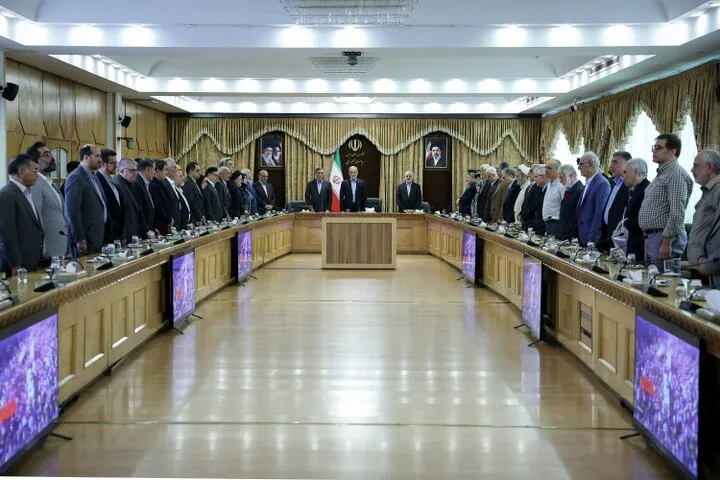
Tehran - BORNA - Speaking at a meeting Tuesday evening with activists from reformist political and social parties, Pezeshkian said: "We will do everything in our power to bring the memorandum to a conclusion, and we will stand firmly in defense of the rights of the Iranian nation. The key point in these circumstances is that the memorandum must now be based on a win-win strategy."
The president said his speech at the UN General Assembly was the product of collective wisdom drawn from both reformist and principlist parties.
"I combined the proposals conveyed to me with my own words, and based on my own conviction, I spoke firmly about the legitimate rights of the Iranian people," he said.
'Flexibility within ourselves, not the other side'
Pezeshkian described flexibility as the foundation of reformism: "The basis of reformism is flexibility within ourselves, not the other side. Therefore, it is necessary to increase empathy among all political capacities in the country and to create and strengthen coordination and cohesion, because fragmentation weakens society."
He urged reformist activists to defend the negotiations publicly: "We must naturally engage in dialogue with society and defend the necessity of the talks. Explaining the benefits and achievements of negotiations is not a sign that we are bowing to enemies — it is a manifestation of transparency. What matters in social dialogue is avoiding conflict and preventing social division and rifts."
He warned that fragmenting society would serve the enemy's goal of bringing about what he called the country's social collapse.
Security Council consensus on negotiations
Referring to what he described as a consensus in the Security Council regarding the negotiations and policies adopted on the Islamabad Memorandum, Pezeshkian said: "The strategy that reached consensus in the Security Council on the negotiations reflects cooperation and empathy and is a major achievement. Twelve of the 13 members of this council defended the decision taken — figures who were aware of and engaged in the war and political issues."
He said that in the memorandum, "no dignity has been lost," adding: "America has been obligated to commitments that must proceed step by step. We have not retreated from our principles in any clause of the Islamabad Memorandum, and as far as we were able, we tried to defend the honor of the Iranian nation based on the principles of wisdom, dignity and expediency."
'No fear of martyrdom in pursuing justice'
Pezeshkian described improving livelihoods as an obligation of Islamic governance, saying he must work toward the prosperity and dignity of all citizens "regardless of gender, religion or political affiliation."
"Justice is realized by respecting the rights of members of society. As a Muslim ruler, we do not have the right to violate or ignore the rights of others because of their affiliations," he said, adding: "In the path of realizing rights and observing justice and fairness, I have no fear of martyrdom, because my concern is serving the people."
Ghaempanah reports on war damage
At the start of the meeting, Executive Vice President Mohammad Jafar Ghaempanah presented a report on the damages and strategic shocks of what he called the "third imposed war," and on the National Unity government's extraordinary measures across political, economic and social spheres, crisis management during wartime, and efforts to increase societal resilience.
The report covered damage assessments in the maritime, aviation, rail and road sectors, fuel infrastructure development, energy grid stability, health and education, governance, Iran's power and standing, and public satisfaction polling on the government's efforts.
Reformist activists support Islamabad Memorandum
Thirteen reformist political party activists — including Mohsen Aminzadeh, Mohammad Hossein Adeli, Lotfollah Meysami, Azar Mansouri, Mohammad Mohajeri, Davoud Heshmati, Hassan Sobhani, Mohammad Hossein Sharifzadegan, Mohammad Ali Abtahi, Ahmad Masjed-Jamei, Seyyed Hassan Rasouli, Fayyaz Zahed and Mohammad Javad Zarif — praised Pezeshkian's "dignified" speech at the UN General Assembly, describing it as behavior rooted in Iran's culture, history and civilization.
They expressed support for the president's firm positions on the Islamabad Memorandum, calling it "an honorable, highly effective and decisive document in the history of Iran's developments."
The activists also raised a range of issues, including livelihoods and economic improvement, the smart use of diplomatic tools to end the war, expanding foreign relations and active diplomacy with neighbors, utilizing cultural capacities in engagement with other countries, media explanation of the Islamabad agreement's achievements, and the need not to neglect future US developments and hostile Israeli actions.
End Article