Nagoya: When sport becomes the language of Iran's public diplomacy
Tehran - BORNA - The full text of the op-ed follows:
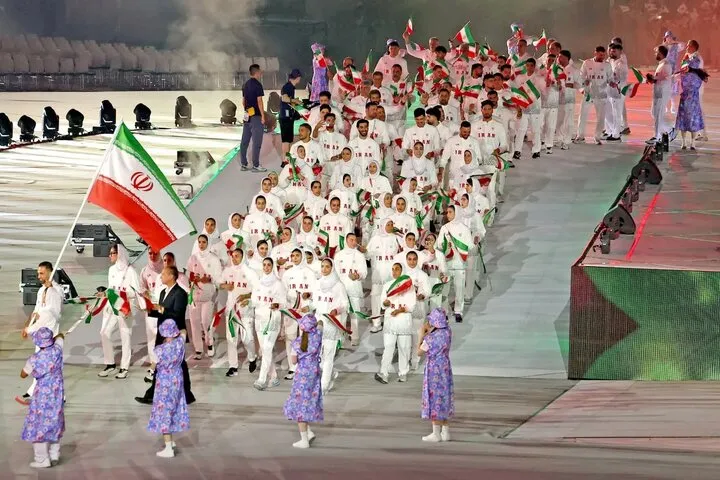
Iran's participation in the 20th Asian Games in Aichi-Nagoya cannot be assessed merely as a sporting event and a series of individual and team competitions. This presence took shape at a time when the country was facing economic pressure, sanctions-related constraints and a series of security crises and tensions. Nevertheless, Iran attended one of Asia's largest multi-sport events with a 522-member delegation, including 305 athletes. In that sense, being there was itself part of the message. Sending a delegation of this size requires planning, coordination among federations, resource management, international logistics and continuous engagement with the Games' organizers. This presence can therefore be seen, alongside the competition results, as a sign that the country's sports structure continued to function under difficult conditions.
But the significance of Nagoya went beyond managing the delegation and the results of the competitions. Sport at this level is an international language — one that communicates through flags, anthems, the presence of athletes and interaction among nations before it needs any translation. The Asian Games provided exactly such a platform: 45 Asian countries took part, and more than 11,000 athletes competed in 43 sports.
In such a setting, the presence of an Iranian athlete is not just the presence of an individual in a competition; it is part of Iran's public diplomacy. Athletes, coaches and even the symbols accompanying the delegation directly share an image of Iran with the public in other countries — an image that can go beyond existing political and media narratives about Iran and focus on the human capacity, culture, identity and social life of Iranians.
"Angels of Minab": Linking sport, memory and identity
Choosing the name "Angels of Minab" for Iran's sports delegation created a particular opportunity for public diplomacy. The Olympic Council of Asia also reflected this name in its official report, in memory of the students of the Shajarah Tayyebah school in Minab who were martyred during the US military aggression on Feb. 28, 2026.
The delegation's name was thus not merely ceremonial; it carried a communicative message to Nagoya: linking sport, collective memory, human suffering and hope for the future.
From a public diplomacy perspective, it matters how a sporting event can become a platform for a human narrative — one conveyed not through official and political language, but through the names of athletes and their presence in competition. Seen from this angle, "Angels of Minab" is an effort to turn a bitter memory into a human and international message: children who rose from among the people remain in the people's memory, and their name accompanies Iran's delegation at a major Asian event.
From the threat of annihilation to a display of continuity
This aspect becomes even more significant when we consider the political and security climate of 2026. On April 7, 2026, referring to the war with Iran, America's warmongering and corrupt president, Donald Trump, said: "A whole civilisation will die tonight, never to be brought back again" — a remark widely reported as a threat against Iran's civilization. Months later, in his speech to the UN General Assembly, he warned of the possibility of "annihilating" Iran if no agreement was reached.
In this context, Iran's presence in Nagoya can be portrayed, on a symbolic and communicative level, as a different image of Iran set against the narrative of annihilation. This does not mean that a sports medal is a military or political response to a threat, but rather that a country in crisis continues to maintain an active and effective presence in international arenas, sends athletes to compete, and displays its national symbols before millions of Asian viewers.
The sporting results of this presence were also significant: Iran finished the Games with 19 gold, 18 silver and 15 bronze medals, for a total of 52, placing sixth in the overall standings. But perhaps more important than the number of medals is the image those medals helped build. In public diplomacy, a country's power is not limited to its economic, military or political capabilities; human capital, culture, sport and the ability to connect with public opinion in other countries are all part of national power.
Nagoya can therefore be seen as a clear example of the synergy between sport and public diplomacy: athletes competed on the field, while their presence simultaneously created an opportunity to introduce Iran, build connections with the Asian community, strengthen sporting ties and convey a human narrative of Iran.
Sport: Iran's common language with Asia
From this perspective, Iran's sports diplomacy in Nagoya was not limited to winning medals. Official meetings, engagement with national Olympic committees, contacts with senior sports officials from Asian countries and heads of international federations, presence in the athletes' village, interaction among athletes and the visibility of national symbols are all part of a network of human and institutional connections that may receive less attention under normal circumstances.
The Nagoya story can thus be framed on three levels.
First, the sporting level: 19 gold, 18 silver and 15 bronze medals and sixth place in the overall standings — a result that reflects the competitive achievement of Iran's delegation.
Second, the managerial and organizational level: a 522-member delegation, including 305 athletes, reflected a considerable degree of planning, coordination, management and logistics for a major international event.
Third, the level of public and sports diplomacy: through the name "Angels of Minab," its flag, anthem, athletes and achievements, Iran presented a narrative of its identity and presence on an international platform — one in which sport becomes a means of connection between nations.
Ultimately, the message of Nagoya may be found not merely in the number of medals, but in the continuity of Iran's presence. At a time when the language of threat spoke of "annihilation" and "erasure," Iran was present on one of Asia's biggest sporting stages, was seen, and connected with the region's public through sport. This is precisely the point at which sport moves beyond pure competition and becomes part of a country's public diplomacy and communicative power.
End Article