Army spokesperson: Iran possesses weapons, readiness for a protracted war
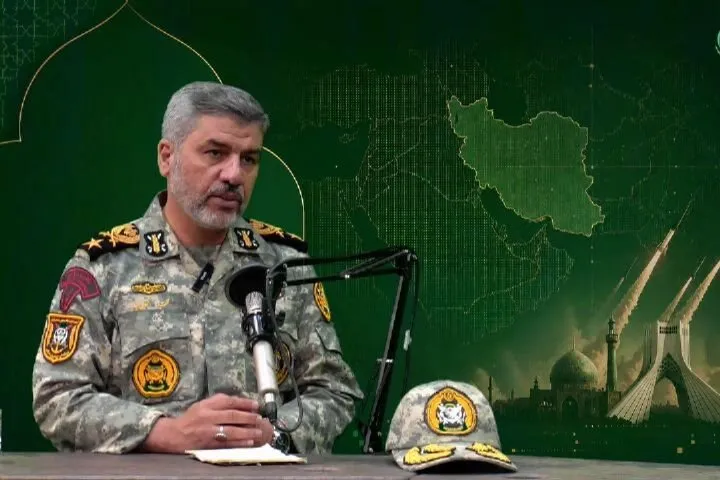
Tehran - BORNA - Speaking in an interview with Radio Goftogoo about the strategic role of weapon stockpiles in national defense, Akrami-Nia emphasized that military hardware and ammunition remain critical components in battlefield calculations. He highlighted the country's trajectory toward defense self-sufficiency following the Islamic Revolution, noting that despite severe arms embargoes, Iran has not relied on foreign sources and has successfully manufactured a significant portion of its required equipment domestically over the past decades. The sanctions, he argued, compelled the nation to strengthen its domestic production capacities, transforming the threat of embargoes into an opportunity to enhance indigenous capabilities and even export conventional military equipment to various countries in recent years.
Domestic production fuels strategic reserves
The spokesperson detailed that the Army currently produces critical equipment, including missiles, drones, and essential components for aircraft, helicopters, and naval vessels, through its own research centers and Self-Sufficiency Jihad organizations, while relying on the Defense Ministry's industries for broader requirements. He stressed that during past conflicts, domestic production continued uninterrupted alongside the deployment of indigenous weapons, preventing any depletion of strategic reserves. Following the establishment of any ceasefire, the military has systematically utilized the opportunity to further bolster these stockpiles and heighten combat readiness. Operating under the fundamental assumption that a war could last for years, Army forces have been structured to maintain both relentless production capacity and adequate battlefield deployment of weapons to ensure robust deterrence. Today, Akrami-Nia noted, the armed forces possess substantial reserves, and the nationwide production infrastructure remains highly active and secure.
Adapting to stand-off warfare and attrition
Reflecting on the impact of recent military experiences on defensive priorities, Akrami-Nia observed that these engagements have identified new operational requirements while boosting institutional confidence. Pointing specifically to US military tactics, he noted that American combat strategies rely heavily on "stand-off" capabilities. Consequently, the Iranian Army has shifted its focus toward developing equipment suited for stand-off warfare, enabling the armed forces to target distant threats effectively. Both the quantity and quality of military hardware have been systematically upgraded to address potential new conflicts, with a concurrent emphasis on strengthening offensive and defensive power. This includes the integration of long-range missiles and drones, alongside robust air defense systems tailored to counter enemy aerial threats—readiness recently demonstrated by the interception of hostile drones near the Strait of Hormuz. Emphasizing the strategic importance of resilient production in a war of attrition, Akrami-Nia concluded that Iran's geographically dispersed and secure manufacturing centers guarantee a continuous supply chain, allowing the highly resilient Iranian armed forces to exploit enemy vulnerabilities in any protracted engagement.
End Article