Araghchi at OIC: Iran will not yield to pressure, remains open to respectful dialogue
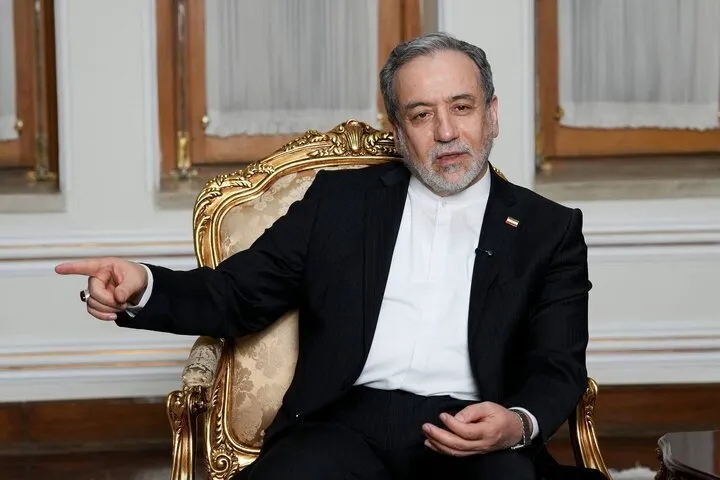
Tehran - BORNA - Seyyed Abbas Araghchi, the Minister of Foreign Affairs of the Islamic Republic of Iran, delivered a speech at the 52nd Session of the Council of Foreign Ministers of the Organization of Islamic Cooperation (OIC), held in the Iraqi capital of Baghdad on October 17-18, 2026.
The full text of the speech is as follows:
In the Name of God, the Compassionate, the Merciful
H.E. Fuad Hussein, Deputy Prime Minister and Minister of Foreign Affairs of the Republic of Iraq,
H.E. Ismail Ould Cheikh Ahmed, Secretary-General of the Organization of Islamic Cooperation,
Excellencies,
Ladies and Gentlemen,
At the outset, I would like to express my gratitude to the government and people of the Republic of Iraq, a neighboring and brotherly country, for hosting this OIC meeting and for their warm hospitality.
I also thank the Secretary-General and the Secretariat of the Organization for the planning and preparation of this summit.
We are pleased to gather in a land that has long been a crossroads of cultures; especially at a time when unity and dialogue in the Islamic world are needed more than ever. The Organization of Islamic Cooperation was founded with the aim of providing a common voice for the Islamic Ummah and strengthening solidarity, cooperation, and the defense of mutual interests. Keeping the path of dialogue open among us is not a sign of weakness, but a responsibility. The charter of our organization is based on principles that reflect those of the United Nations Charter: sovereign equality, territorial integrity, non-interference in internal affairs, peaceful settlement of disputes, and refraining from the threat or use of force. These principles do not belong to any single country or group of countries. They protect us all, but if applied selectively, they lose their value.
Iran has remained committed and steadfast to international law, the UN Charter, and diplomacy. Over the past two years, we have continued to pursue diplomacy. The US chose the opposite path: aggression, threats, assassinations, and economic warfare, with blatant disregard for international law and the UN Charter. Nearly 5,000 people, including hundreds of women and children, were martyred during the US and Israeli military aggression. In flagrant violation of international law, the US and the Zionist regime assassinated the Supreme Leader of the Islamic Revolution of Iran and other senior political and military officials.
The martyrdom of over 160 students and teachers in Minab, the cluster bomb attack on the Lamerd stadium, the bombing of the desalination plant in Qeshm, and the attack on a wedding ceremony in Kohestak, Sirik, were merely documented examples of US-Zionist war crimes against Iran. The US and the Zionist regime cannot cover up these crimes by distorting the truth and reversing the roles of victim and aggressor. I thank the member states that expressed solidarity with the Iranian people during these difficult days, and I call upon the entire organization to stand firmly against attacks on the sovereignty and territorial integrity of one of its founding members.
Iran will defend its people, sovereignty, and legitimate interests. However, there is no contradiction between defending our rights and pursuing peace. We know the damages of war, and that is precisely why we value peace.
Iran does not demand any special treatment; it merely seeks the equal application of rights and responsibilities for all. This issue will not be resolved on the battlefield. Peace cannot be built with threats of annihilation.
Iran is also committed to safe and secure navigation in the Strait of Hormuz; a waterway that is vital to the energy and trade of many of our member states and remained completely open and secure until February 28, 2026. The insecurity and disruption in maritime navigation since then have been the direct result of the aggressive actions of the US and the Israeli regime. Security cannot be restored by repeating past mistakes and crimes. One cannot bomb a country, threaten it with destruction, lay siege to it, and then expect the security of navigation to return to normal.
In fact, diplomacy was working. With the good offices of Pakistan and the support of Qatar—both members of this organization—Iran and the US signed the Islamabad Memorandum on June 17. Under Article 5, Iran committed to making the necessary arrangements to facilitate the safe passage of ships, and we immediately initiated technical talks with the Sultanate of Oman to implement this commitment. Within two weeks, maritime traffic returned to approximately 60 percent of its pre-imposed war levels. However, unilateral US actions and military aggressions hindered the implementation of the memorandum, and the dispute resolution mechanisms envisioned within it were entirely ignored.
Iran has negotiated in good faith over the past two years but has been met with military attacks every time, not diplomacy. This has created a deep mistrust regarding the resumption of negotiations without credible guarantees of non-repetition. Nevertheless, Iran has kept the door open. Through Qatar, we communicated a clear seven-day plan, stating that if the necessary conditions are met, the Strait can be reopened and normal maritime traffic can resume within seven days. The choice is now up to America.
Mr. President;
The Palestinian cause remains the core issue of the Islamic world, and one cannot speak of peace while ignoring this central subject. Palestine continues to be a wound on the conscience of the international community, and Gaza has become a symbol of the failure of international mechanisms to prevent genocide. Dozens of resolutions have not ended the occupation and violence. The ongoing suffering of the Palestinian people, the massacre of innocent civilians by the Israeli regime, and the threats against Al-Quds Al-Sharif and its holy sites must concern us all. Iran stands alongside the Palestinian people and urges the OIC and all its members to do whatever is necessary to end the massacres and blockades, making the support of the legitimate rights of the Palestinian people a shared priority backed by practical and coordinated action.
Mr. President;
The people of Yemen have endured a devastating war, a prolonged and illegal blockade, and severe damage to critical infrastructure for nearly a decade. The role of the US and its allies in inflicting pain and suffering on Yemenis is undeniable, and the resulting humanitarian catastrophe is one of the most severe in the world today, while serious violations of international humanitarian law continue with impunity.
Iran's position is clear and consistent. We support the sovereignty, independence, unity, and territorial integrity of both Yemen and Saudi Arabia. We support an inclusive and comprehensive political process as the only viable and sustainable way to resolve the issue. Lasting peace cannot be achieved through military escalation, coercion, intimidation, or the exclusion of relevant Yemeni parties.
The crises in the region have no military solution, and insisting on a military approach while ignoring political solutions only complicates the situation further. Iran is deeply concerned about developments in the Arabian Peninsula and stands ready to provide any assistance to facilitate dialogue among the parties based on the peace roadmap previously agreed upon. The people of Yemen have the right to live in dignity, free from pressure, sanctions, and blockades.
No state can build sustainable security at the expense of others' security. We believe that our region's problems must be solved by the countries of the region and from within, before they become a pretext for the proxy wars of distant powers. In this same spirit, we believe that the territory, airspace, and infrastructure of every regional country must only serve regional security and never become a launching pad for attacks against a neighbor. We say this in a spirit of brotherhood and good neighborliness. Our peoples share one region and one future, and the choice before us is simple: we either build security together, or we will suffer insecurity together. Iran is ready to cooperate with all its brothers and neighbors to realize the first option.
Iran does not accept coercion, threats, and intimidation, and will not relinquish its sovereign rights under pressure. However, it remains ready for dialogue based on mutual respect and credible guarantees.
I once again thank Iraq for its hosting and wish this summit success in serving the unity, peace, security, and prosperity of the IslamicUmmah.
Thank you.
End Item