Iran has no fundamental differences with regional nations: President
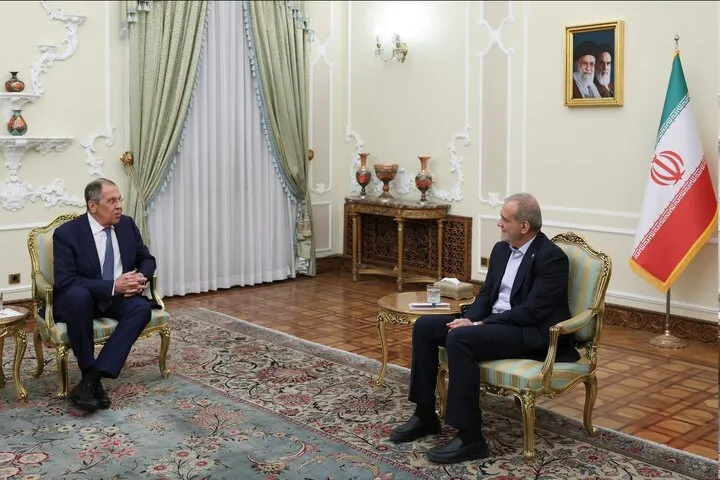
Tehran - BORNA - Pezeshkian made the remarks during a meeting with Russian Foreign Minister Sergey Lavrov in Tehran on Monday afternoon.
Expressing satisfaction with the growing trend of bilateral relations, the president emphasized the need to elevate cooperation, strengthen political and diplomatic coordination, and continuously pursue agreements within the framework of Tehran-Moscow strategic ties.
Referring to his recent meetings and contacts with Russian President Vladimir Putin, Pezeshkian noted: "During our continuous consultations with the Russian president, issues related to bilateral understandings, executive plans, and the development of joint cooperation are being seriously pursued."
He expressed hope that his upcoming trip to Moscow would pave the way for practical advancements and tangible results in agreed-upon areas.
Pezeshkian also expressed gratitude for the stances and support of the Russian president, government, and nation during the recent war, underscoring the importance of continued mutual support and enhanced diplomatic cooperation to serve shared interests.
Highlighting understandings reached regarding the Caspian Sea and trade cooperation, he described these agreements as a suitable foundation for deepening economic and regional interactions. He hoped that during his upcoming visit to Russia, agreements in energy, transportation, and power plant sectors would enter the operational phase with clear timelines and mechanisms.
Addressing regional developments and the recent aggressions by the Zionist regime and the US against Iran, the president stated: "The assassination of the Leader of the Revolution, commanders, scientists, and students, as well as the targeting of our country's infrastructure, aligned with no legal or international logic or criteria. These actions took place while the Islamic Republic of Iran was on the path of dialogue and diplomatic engagement."
He clarified that Iran does not accept any country imposing its will on other nations through coercion and pressure. "We seek a world based on mutual respect, the observance of nations' rights, constructive cooperation, and multilateralism, and we believe Russia shares these views and approaches."
Pointing to Iran's historical, cultural, and religious ties with regional countries, Pezeshkian emphasized neighborhood diplomacy and constructive interactions among Islamic nations.
"The Islamic Republic of Iran has no fundamental differences with regional countries and is ready to resolve existing issues and challenges through dialogue, understanding, and regional mechanisms. It is the US's interventions and divisive policies that have led to discord in our region," the president added.
He stressed that the deployment of US military bases in the region has brought nothing but increased tensions, instability, and insecurity, and will yield no benefits for the region.
Pezeshkian affirmed Iran's support for any joint initiative with regional countries concerning peace, security, economic development, and cultural cooperation, asserting that sustainable regional security must be rooted in mutual trust, respect for legitimate interests, and the participation of regional states.
On the changing international order, he highlighted Iran's determination to actively participate in shaping a just, multilateral system based on mutual respect. He also pointed to the significant capacities of BRICS, the Shanghai Cooperation Organization (SCO), and the Eurasian Economic Union (EAEU) in developing economic, political, and security cooperation.
For his part, Russian Foreign Minister Sergey Lavrov expressed satisfaction with the meeting and briefed the Iranian president on his consultations with senior officials in Tehran.
Lavrov noted that his meetings extensively covered various dimensions of developing bilateral political, economic, commercial, and cultural ties, with both sides stressing the need to expedite the implementation of existing agreements.
Emphasizing Moscow's resolve to strengthen ties with Tehran, the top Russian diplomat listed oil and gas, communications, media, culture, transportation, energy, and academia as key areas for expanding cooperation.
Highlighting the overlapping views of Iran and Russia on international issues, Lavrov underscored the importance of continued diplomatic consultations to bolster peace and security.
He also pointed to the understandings reached concerning the Caspian Sea, stressing the necessity of joint cooperation to protect both nations' interests and enhance regional coordination. Expanding Iran-Russia cooperation, Lavrov added, is an effective factor in advancing shared goals and regional stability.
End Article