US must lift threats, sanctions prior to any dialogue: Iran president
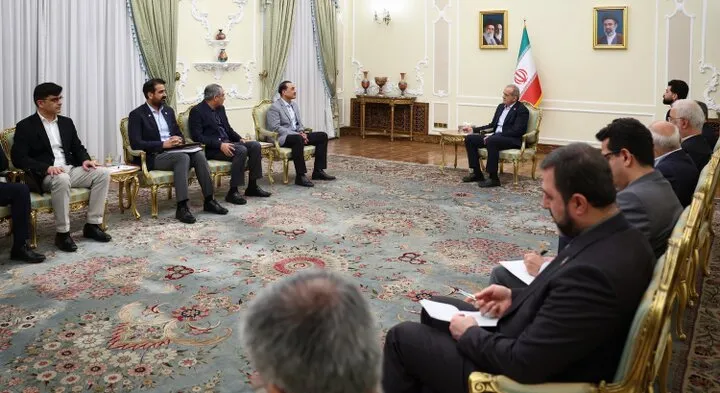
Tehran - BORNA - During a meeting with Pakistan's Chief of Army Staff Asim Munir on Tuesday evening, the Iranian president expressed gratitude for the efforts and concerns of Munir and the Pakistani government aimed at reducing tensions and resolving issues through diplomatic solutions.
Reviewing the US history of broken promises, including launching an attack on Iran in the midst of negotiations and the assassination of the Supreme Leader of the Islamic Revolution, scientists, and innocent students without any legal justification, Pezeshkian noted: "All the problems created in the region, from the escalation of tensions and conflicts to disruptions in the Strait of Hormuz, are all rooted in the warmongering nature of the Americans."
He added that all US claims against Iran lack legitimacy, as Tehran has already proven its goodwill regarding both negotiations and inspections within the framework of international laws and regulations concerning its nuclear program.
Emphasizing that the Americans must first demonstrate their willingness to lift threats and sanctions to pave the way for dialogue, Pezeshkian stated: "You cannot continuously intensify sanctions and pressures, block all paths to our country, and then claim to seek dialogue and negotiations. What kind of dialogue is this?"
Stating that war benefits no one—not Iran, the region, the world, or even the US—the president added: "It is the Americans who must answer why they fundamentally started a war that has now entangled both themselves and the world in crises."
"We have been and remain ready for dialogue, but the Americans must first lift the threats and sanctions, and then we can talk. If they truly seek dialogue and an agreement, their behavior completely contradicts their claims and defies logic," Pezeshkian underscored.
He further noted that the US imposed these criminal acts on the Iranian nation and the region under the false pretext of nuclear weapons, while assassinating the Iranian Leader who had repeatedly stressed the religious prohibition of nuclear weapons, thereby pushing the region into a deadlock. "They will certainly not achieve their goals through war; they will only cause destruction and damage, not just for Iran but for the entire region—a scenario we do not wish to unfold."
Emphasizing that Washington must prove to the Iranian nation that it will not lie again, he stated: "Today, our nation does not trust the US and believes that if we negotiate, they will attack us again."
"They constantly spread propaganda in the media threatening to attack our country to frighten our people, whereas our nation does not fear martyrdom. As our Muslim brothers, you must make them understand that Muslims cannot be treated this way. We do not want to bully anyone, but we will not succumb to bullying either," the president added.
For his part, Pakistan's Army Chief Asim Munir expressed satisfaction with meeting the Iranian president and provided a report on diplomatic efforts to reduce tensions. Expressing concern over the potential resurgence of war, he highlighted the importance of resolving issues through diplomatic avenues and reaffirmed Pakistan's readiness to assist in this regard.
Expressing regret over the failure of the Islamabad understanding, Munir stated: "Negotiation never means weakness, submission, or surrender to the US, as the Iranian nation has repeatedly demonstrated its dignity, authority, and power to the world; rather, it is an opportunity to resolve issues through paths other than war, conflict, and insecurity."
The Pakistani army commander also explained the recent issues regarding transit routes, presenting a report on security measures in the area. He announced that the matter was immediately raised with the Ministry of Foreign Affairs and that the temporary border issue had been resolved as of this morning.
End Article