Indirect talks with US continue, Strait of Hormuz reopening tied to Islamabad MoU: Iran FM
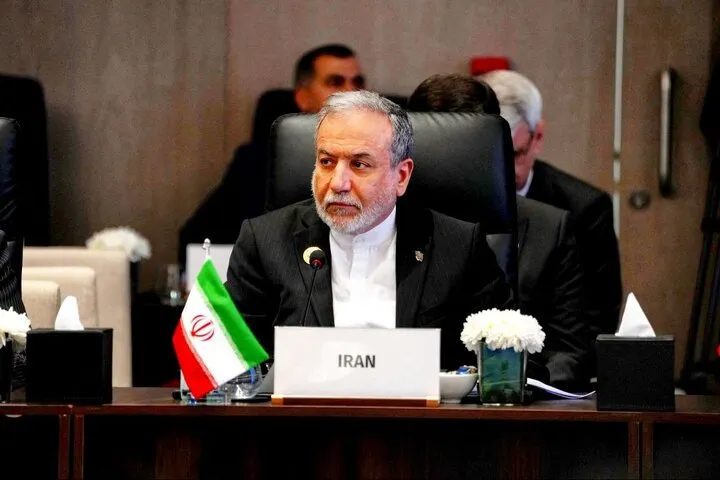
Tehran - BORNA - In an exclusive interview with Iraq's Al Ekhbariya network, Araghchi noted that if the US adheres to the commitments outlined in the Islamabad memorandum of understanding, there is a possibility of fully reopening the Strait of Hormuz and holding subsequent rounds of negotiations until a final agreement is reached.
"Negotiations with the American side are still continuing continuously through intermediary countries, including Pakistan and Qatar," he said regarding the latest status of Iran-US talks.
"Previously, we presented an initiative titled the 'seven-day plan' to the American side, in which we explicitly stated our conditions. It was planned that on the sixth day of this period, the Strait of Hormuz would be completely opened. The Americans informed us that they agree with these conditions, but they want to add a few more clauses to it," he added.
Responding to a question about the nature of the new US conditions, Araghchi stated that the negotiations are not meant to be conducted through the media, noting, "These conditions relate to issues we have previously addressed during previous negotiations."
The Iranian foreign minister clarified: "What we want from the American side is adherence to all the commitments stipulated in the Islamabad memorandum of understanding, which was previously signed. After their adherence to these commitments, we can enter into negotiations on other dossiers."
"In the final stage of negotiations, any issue or problem raised by either side can be discussed, and a final agreement can be reached on it," he continued.
Mistrust in US after three rounds of negotiations
Answering a question about the reason for presenting the seven-day initiative despite Iran's previous statements about mistrusting the US and not returning to negotiations, Araghchi said: "We entered into three rounds of negotiations with the American side, and all three previous rounds ended in a war against us. We were in the middle of negotiations, and ultimately it was proven to us that the Americans cannot be trusted."
"In the third round of negotiations, we reached an understanding with Trump, but Trump himself violated these negotiations and only adhered to its provisions for two weeks; therefore, there is no trust in the approach of the Americans," he added.
Regarding the purpose of presenting the seven-day initiative, the Iranian foreign minister stated: "This initiative was presented to continue the path of diplomacy. In our view, the doors of diplomacy are completely open, provided that the other side adheres to the understandings."
Araghchi emphasized: "The negotiating table is still in place, and the whole world must know that it is the American side that is blocking the path, not Iran. If the Americans are truly serious about an understanding, they must know that the path ahead is open, and it is enough to implement the same conditions that were previously proposed and to which they committed."
"If the US adheres to these conditions, the Strait of Hormuz will be completely opened, and after that, another round of negotiations will be held until a final agreement is reached," he said.
Iran's stance on Strait of Hormuz
In another part of this dialogue, responding to a question about rising tensions in the Strait of Hormuz and claims against Iran regarding the escalation of tension in the Red Sea, Araghchi said: "The issue of the Red Sea and the developments occurring there are in no way related to Iran and have their own specific issues."
Regarding the Strait of Hormuz, he stated: "Our position is transparent and clear, and we have previously announced and emphasized it. Until an agreement or understanding is reached about this strait, the strait will not be opened for everyone."
"We have previously said that the American side must accept our conditions so that the strait can be opened for ships and vessels. Before the realization of such an understanding or agreement, naturally, the strait will be closed, and the movement of ships and vessels in the strait and existing routes will face difficulties," the top diplomat added.
Responding to the host's question about the reason for increased tensions in the Strait of Hormuz in recent days, Araghchi reiterated Iran's position: "Our position is completely clear; the Strait of Hormuz is closed, and any ship that wants to pass through this waterway will face many problems."
He further stated: "The US claims that the strait is open and in practice allows ships to pass through it, but as soon as the ships enter the waters of the Strait of Hormuz, they face numerous problems."
US has not achieved its goals in the war
Referring to the developments of the war and US actions, the Iranian foreign minister said: "In this war, after more than eight months, the US has still not achieved any of its goals. The failure to achieve these goals is considered a strategic defeat for the US and, conversely, a strategic success and victory for Iran."
"Currently, the American side has entered a deep quagmire and is desperately trying to save itself in any way possible. Therefore, we are witnessing military threats, the imposition of economic sanctions, and the enactment of new sanctions," Araghchi added.
"The US is also pressuring neighboring countries of the Islamic Republic of Iran not to cooperate with the Iranian side, but it has not received a positive response," he continued.
The Iranian foreign minister emphasized: "The American side must know that these actions will not yield results. Iran will in no way surrender, neither to economic sanctions nor to military threats."
"The only suitable solution is diplomacy and a negotiation-based solution," he noted.
Continuing his exclusive interview, Araghchi responded to a question about the Strait of Hormuz and some claims that controlling and closing it would ultimately lead to the fall of the Iranian system. He stated: "This strait is not an international strait, but it is located in the territorial waters of Iran and Oman, and its waters are not international."
Responding to the host's remark that Oman has not announced such a position, he said: "We have our own sovereignty and authority before the world. The clear reality is that the Strait of Hormuz is located in the internal waters of Iran and Oman and has no connection to international waters."
"We recently reached an agreement with the Omani side regarding specific routes for the entry and exit of ships," Araghchi added.
Explaining this agreement, the Iranian foreign minister said: "A specific map regarding these routes has been prepared, and their geographical coordinates have been determined and drawn. Therefore, if one day the Strait of Hormuz is to be opened, the route agreed upon by Iran and Oman will be the actual and agreed route for the passage of ships, not any other route."
Responding to a question about since when the waters of the Strait of Hormuz are considered belonging to Iran and Oman, Araghchi stated: "The Strait of Hormuz has existed for thousands of years. During the Empire of Hormuz, when the sovereignty of Hormuz existed, the name of this strait was also taken from that sovereignty and was under its administration."
"I do not know how one can claim, based on thousands of years ago, that this strait was international. During the Empire of Hormuz and the sovereignty of Hormuz, this strait was known by this name and was under the administration of that sovereignty," he added.
Replying to the news network host's insistence that the waters of this strait were international, the Iranian foreign minister addressed him: "You can refer to international law and also the geographical delimitation between Iran and Oman."
Regarding the Red Sea developments and some claims about Iran's directing role, Araghchi stated: "I want to add a point about the Strait of Hormuz, which is that the Strait of Hormuz was completely open before the recent war, and no party from any country collected tolls for passing through it."
"The current situation of the Strait of Hormuz is the natural result of the US and Israeli military aggression against Iran, and this situation will continue unless the American side decides to change its approach," he added.
On the developments in Yemen, Araghchi said: "The people of Yemen have been under economic blockade by Saudi Arabia for years and have suffered from the consequences of this suffocating blockade for over a decade."
"Now the people of Yemen believe they have found an opportunity to break this blockade and, using Bab al-Mandab, have created a blockade against the Saudi side. My question is, what does this have to do with us as Iran?" he added.
Responding to the host's remarks about the statements of some Iranian officials, including Ali Akbar Velayati, regarding the closure of straits and perceptions of Iran's control over the Strait of Hormuz and Bab al-Mandab, the Iranian foreign minister said: "I ask you not to pay attention to what is said here and there in the form of slogans and comments. Iran's official position is more important, and the reality on the ground is clear to everyone."
Reacting to the host's reference to Ali Akbar Velayati's position, Araghchi stated: "He was an advisor to the martyred Leader and was also the foreign minister for many years. He certainly has views and opinions that are, of course, respected for himself."
He emphasized: "I am speaking about Iran's official position, and more importantly, I am speaking about the reality on the ground. The economic and naval blockade of the people of Yemen is a reality that cannot be ignored. However, we are ready to help resolve this crisis and fix this problem."
Iran's mediation initiative between Saudi Arabia and Ansarullah
Responding to a question about Tehran's initiative to mediate between Saudi Arabia and Yemen's Ansarullah and the lack of a public reaction from the Saudi side, the Iranian foreign minister said: "We announced our readiness to mediate between the two sides, but so far we have not received a response from either side."
"This issue shows the degree of Ansarullah's independence in its decision-making," he added.
"Certainly, Ansarullah has conditions for ending the conflict with the Saudi side, and Saudi Arabia also has its own conditions that Ansarullah does not accept. We must help and cooperate to bring the views of the two sides closer together," Araghchi continued.
Ansarullah and Hezbollah are not subordinate to Iran
Responding to a question comparing Yemen's Ansarullah relationship with Iran to Lebanon's Hezbollah relationship with Iran, Araghchi stated: "Neither Hezbollah nor Ansarullah are groups subordinate to Iran; rather, they are independent groups."
"Yes, they are our friends, because they resist and strive to achieve legitimate, legal, and just goals. From this perspective, we support them; but this support does not necessarily mean that they take orders from us," he added.
In response to a question about the possibility of Egypt entering the war against Ansarullah alongside Saudi Arabia and the Persian Gulf countries, Araghchi stated: "I think Egypt has enough experience from the past and can use that experience to keep itself away from entering such complex conflicts."
"Decision-making in this regard is up to the Egyptians themselves, but we believe that any foreign interference in the Yemeni dossier or internal affairs will further complicate the situation," he added.
"Previously, the Egyptians had informed us that their possible position in the future would strictly be within the framework of defending Saudi Arabia and that they would not directly enter into conflict with the Yemenis," Araghchi continued.
Iran's readiness to face a potential new war
Responding to a question about the possibility of resuming the war against Iran and Tehran's readiness for such a situation, the Iranian foreign minister said: "Every possibility exists in the future; including the possibility that the Americans and the Zionist regime will once again start a war against Iran. However, we are in full readiness to face a new war."
"We are completely ready to defend ourselves and our people, and we will stand firm until the last moment. They have tested us before and can do it again," he emphasized.
"When I say we are ready for war, it does not necessarily mean that we want war. On the contrary, our declaration of readiness is a message to the other side to do its calculations and not enter the same war again," Araghchi added.
The top Iranian diplomat reiterated: "Just as we are ready for war, we are also ready for diplomacy."
Iran's readiness is a deterrent against a new war
Responding to a question about the factors that prevent Washington from restarting the war, Araghchi stated: "I believe that the main deterrent factor against the start of a new war by the US is exactly this full readiness of Iran. The Americans know very well that they cannot achieve any of their goals through war."
Referring to the two past imposed wars against Iran, he said: "In the two past wars they waged against us, they fell into Israel's trap and, to be more precise, into Netanyahu's trap."
"Netanyahu does everything to achieve his personal goal, not for the interests of the US, not for the interests of the people of Israel, and not for the interests of any other party. He takes any action that is in his personal interest," the Iranian foreign minister added.
End Article