US data centers, AI facilities in crosshairs: SNSC secretary
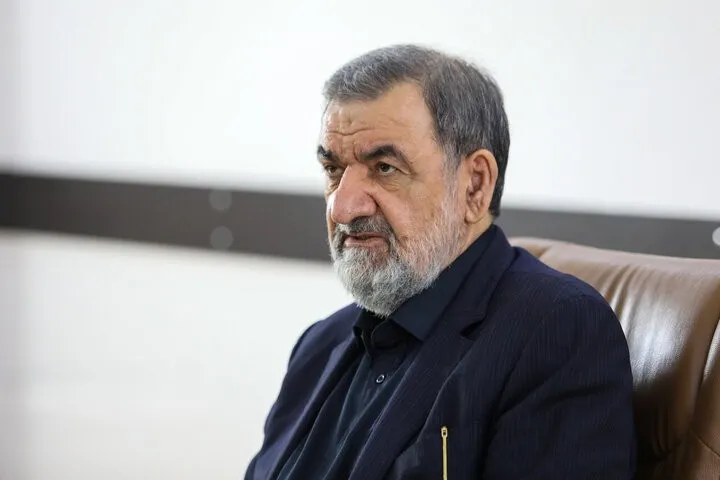
Tehran - BORNA - In a comprehensive interview with the Drop Site media outlet, Major General Mohsen Rezaei elaborated on the reasons behind the failure of the first memorandum of understanding (MoU). He announced that Iran has presented seven new conditions to the United States through intermediaries, emphasizing that the Strait of Hormuz will not be reopened and Tehran will not return to negotiations until these conditions are fulfilled.
Pointing to the failed experience of the first MoU, Rezaei underscored the necessity of altering the sequence of implementing commitments, noting that this time, the guarantee of implementation will be embedded within the structure of the agreement itself. He also announced an understanding with Oman regarding a new maritime corridor in the Strait of Hormuz. Furthermore, referring to dialogues with the Persian Gulf Cooperation Council (PGCC) countries about the region's security architecture, he rejected any coordination with Yemen's Ansarullah to close the Bab el-Mandeb Strait.
The SNSC secretary further detailed Iran's missile and drone capabilities, the country's policy regarding regional energy infrastructure, Iran's strategic resilience in a prolonged war, and the management of the Strait of Hormuz.
The full text of Major General Rezaei's interview with Drop Site is as follows:
Q: You stated that Iran will not open the Strait of Hormuz unless the US returns to the MoU. Why do you think the first MoU failed, and how will you ensure this one doesn't suffer the same fate?
A: The first MoU failed because the sequence of implementing commitments was wrong. We opened the strait and maritime traffic resumed, but the other side's political and economic commitments were not implemented in a way that could sustain the agreement. Once the US got what it urgently needed, the balance of leverage shifted. This experience is important to us.
Therefore, I will correct a part of your question: We will not return to past diplomacy, but we will not abandon diplomacy either. We have presented seven new conditions through intermediaries. Until these conditions are met, Iran will neither open the strait nor return to negotiations.
The difference this time is that we are embedding the guarantee into the structure of the agreement itself. We have reached an understanding with Oman regarding a new maritime corridor in the Strait of Hormuz. A significant portion of this route will pass through waters under Iran's control. However, this corridor does not mean an emergency reopening of the strait. It is a framework that will become operational only after the US implements our declared conditions and following Iran's decision to reopen Hormuz.
This means the sequence is completely clear this time: first, the implementation of commitments; then, Iran's decision to reopen the strait; and finally, the resumption of shipping based on the new arrangements agreed upon with Oman.
We are no longer interested in agreements where the only guarantee is political goodwill. Therefore, Hormuz is not just the subject of the agreement; it is also part of the guarantee for its implementation.
If Washington fulfills its commitments, there is a path to reopening the Strait of Hormuz and continuing diplomacy. But Iran will not first give up the leverage that brought the other side to the negotiating table and then wait to see if promises are kept.
Q: What arrangements are you discussing with PGCC countries regarding the strait and the future security architecture? Why was the Salalah conference postponed this week?
A: We are talking with PGCC countries about what kind of regional security architecture can prevent the Persian Gulf from once again becoming a stage for confrontation between Iran and extra-regional powers.
Our position is that the security of the Persian Gulf cannot be permanently outsourced. Iran, Saudi Arabia, the UAE, Qatar, Oman, Kuwait, Bahrain, and Iraq all have a direct interest in preventing a cycle where regional infrastructure, ports, energy facilities, and shipping lanes become targets. This requires communication mechanisms, avoiding unintended maritime clashes, notifications regarding military movements, and ultimately, understandings about the use of regional countries' soil by foreign powers.
Of course, we are not unaware of the existing level of mistrust. Some PGCC countries are more prepared than others to discuss new arrangements with Iran.
Reopening the Strait of Hormuz and establishing a broader security architecture for the Persian Gulf are not a single decision. Reopening the strait still depends on the implementation of the conditions Iran has declared to the US. Dialogue with the PGCC can prepare the structure around that decision, but it is not a substitute for it.
Q: What role did Iran play in Ansarullah's operation to capture Mokha? Will you coordinate with them to close the Bab el-Mandeb Strait to commercial shipping?
A: Ansarullah is not an Iranian military unit, and decisions regarding Yemeni territory are made by Yemenis themselves. We have political relations with them and have never hidden our support for their resistance, but describing the Mokha operation as an Iranian one or assuming Tehran issues operational orders to Sana'a is inaccurate.
Ansarullah had its own strategic reasons for capturing Mokha. Controlling the western coast alters the military balance inside Yemen and sharply increases their leverage against Saudi Arabia, as well as their access to the Red Sea. Regarding Bab el-Mandeb, you should not automatically assume that what Iran does in Hormuz will be exactly replicated there. These are two different straits, two different political situations, and two different actors.
Iran is responsible for its own decisions in the Strait of Hormuz. Ansarullah is responsible for its own decisions in Bab el-Mandeb. We are not announcing a joint Iranian-Yemeni decision to completely close Bab el-Mandeb to commercial shipping.
However, a larger strategic reality should not be ignored. If the war continues to expand, or if the region's maritime routes turn into tools of economic warfare, every actor will reassess the tools at their disposal.
Iran does not need to order Ansarullah for them to understand the strategic importance of Bab el-Mandeb. They understand this issue very well themselves. Anyone planning for a prolonged regional war must know that stability in Hormuz, the Red Sea, and Bab el-Mandeb cannot be permanently isolated from the overall regional security situation.
Q: How much capacity do you have to continue firing missiles and drones at various targets in the region?
A: If the question is whether Iran still has the capability to continue missile and drone operations, the answer is yes. One of the assumptions behind the campaign against Iran was that continuous attacks would eventually deplete our response capabilities. This assumption has not materialized. Iran's missile and drone capabilities have never been concentrated in a single location, nor have they relied on a single production line.
Iran has invested for years in creating redundancy in this capability: distributed production, underground facilities, various launch systems, and the ability to repair and replace losses.
More importantly, you shouldn't measure our capacity solely by asking how many missiles are left in the stockpile. In a prolonged war, the main question is whether a country can maintain a continuous cycle of production, deployment, and response. We have shown that even months after the start of the war, we can still impose costs on the other side.
We also do not need to fire with the same intensity every day. Deterrence is not a race of launch numbers. The goal is for the other side to know that any further attack will have consequences, and that consequence can occur at a time and place of our choosing.
Everyone must know that acting against Iran has a cost. If diplomacy can create such a situation, we prefer diplomacy. But if the war continues, Iran has the necessary tools to continue its response.
Q: Ansarullah has inflicted heavy damage on energy infrastructure in western Saudi Arabia. If the war continues, do you also intend to target the region's energy infrastructure?
A: Iran does not have a policy of attacking civilian energy infrastructure with the aim of damaging the regional economy. That is not our goal.
But there is another side to this question. If energy infrastructure is directly used to sustain the war against Iran—whether by supporting military operations, replacing the supply lost due to the situation in the Strait of Hormuz, or enabling the continuation of the economic blockade—then the nature of that infrastructure changes in our strategic calculations.
The Persian Gulf is not a one-way vulnerability. One cannot consider Iran's oil facilities, ports, and shipping as legitimate targets, while simultaneously assuming the other side's economic infrastructure supporting this war will remain permanently immune.
Our preference is completely clear: de-escalation. We have offered a political path to end the war. If this path is accepted, there is no reason for the region's energy infrastructure to become part of a broader battlefield.
But if the US strategy is to prolong the war while using the energy infrastructure of neighboring countries to neutralize the pressure from Hormuz and sustain the blockade on Iran, those governments should not assume they can participate in an economic war against Iran without putting themselves at risk.
The message is not that Iran wants to destroy the Persian Gulf's energy system. The message is that one cannot create an arrangement where Iran's economic arteries are attacked, but the economic architecture enabling those attacks is considered untouched and immune.
This is exactly why we tell regional countries that a better alternative is a security arrangement where energy facilities, shipping lanes, and civilian infrastructure are mutually removed from the war. This is possible, but it must be reciprocal.
Q: It has been said in the US administration that the war could last until 2029. Do you think Iran's military and economy can endure until then?
A: Iran has already demonstrated that the extent of its strategic resilience cannot be calculated merely by seasonal economic indicators or the number of missiles fired in a specific month. We survived an eight-year war, and today our power has increased tenfold compared to that war. Therefore, the longer the US prolongs the war, the stronger we become, although we do not desire it. This war will also impose severe costs on the US, Persian Gulf countries, global energy markets, and the weapon stockpiles of the involved nations.
For this reason, assuming that only Iran faces a time constraint is a mistake.
Our military issue is not whether we can repeat the war exactly as it was on the first day for several years. No country sustains a multi-year war in that manner. The military adapts, changes tactics, preserves expensive capabilities, increases production where possible, and seeks more cost-effective ways to impose costs on the enemy.
The same is true for the economy. Iran will suffer from a prolonged blockade; anyone saying otherwise is not being realistic. Families will pay a price, investments will suffer, and sustaining certain economic sectors will become more difficult. But economic pain and strategic collapse are not the same thing.
Washington has repeatedly made the mistake of assuming that if it can make life inside Iran difficult enough, the Iranian political system will consequently accept US strategic demands. These are two different calculations.
Our goal is not to reach 2029. Our goal is to end the war under conditions that reduce the likelihood of another war.
But if the US strategy is built on the assumption that Iran can only last a few months, while the US has infinite time, resources, and political patience, they are making a miscalculation once again.
Q: If oil flows have returned to pre-war levels while Iran's oil exports remain restricted, how can Iran claim to have control over the Strait of Hormuz?
A: Countries around the world manage their economies. For example, they say the US economy is controlled by the US government, but in all these countries, smuggling and underground economic activities also exist. Mr. Trump collaborates with some of these smugglers in the coastal and rocky waters of Oman and then posts every day that the strait is open. What you are doing is smuggling.
First, smuggling exists everywhere in the world, but the Strait of Hormuz is under Iran's control, and we manage it. Second, over the past two or three months, we have targeted an average of five vessels belonging to these smugglers every night. These are the same individuals headed by the CENTCOM commander, who also uses UAE military forces. For instance, they prepare five or six vessels, transfer the cargo to smaller boats, and then transfer it back to larger ships on the other side. We target a number of them every night.
Captains and ship operators who previously received $10,000 to $15,000 are now receiving $100,000. On the southern edge of the strait, smuggling is carried out with heavy costs and enormous risks. Then Trump says the Strait of Hormuz is open. If this is an open Strait of Hormuz, smuggling and piracy also exist everywhere in the world. The current price of oil also reflects the reality.
Q: Saudi Arabia has stated it will not accept new arrangements that effectively mean treating the Strait of Hormuz as Iran's territorial waters. What kind of diplomatic agreement is possible with PGCC countries, and what does Iran expect this agreement to include?
A: The management of Hormuz is a national asset for us, and the issue is not merely about collecting tolls. The main issue is security. One could collect fees for security, insurance, and environmental costs, but the importance of managing the strait goes far beyond the revenue it generates. We continue this management to maintain peace and security in the region and will not back down from this position.
Q: The IRGC has stated that if the war resumes, it will employ new capabilities and expand the scope of its response to new geographical areas. What does this warning refer to?
A: We did not use all our capabilities in the previous stages. We introduced more capabilities proportional to the intensity of the war, and we are ready for the next stage. The US has valuable assets in the region. In the event of a war, cables, data centers, and artificial intelligence facilities could also be in our crosshairs. If the conflict reignites, we will have a much broader plan.
End Article