Iran Foreign Ministry Spokesperson Rejects US Claims, Asserts Tehran Never Sought Nuclear Weapons
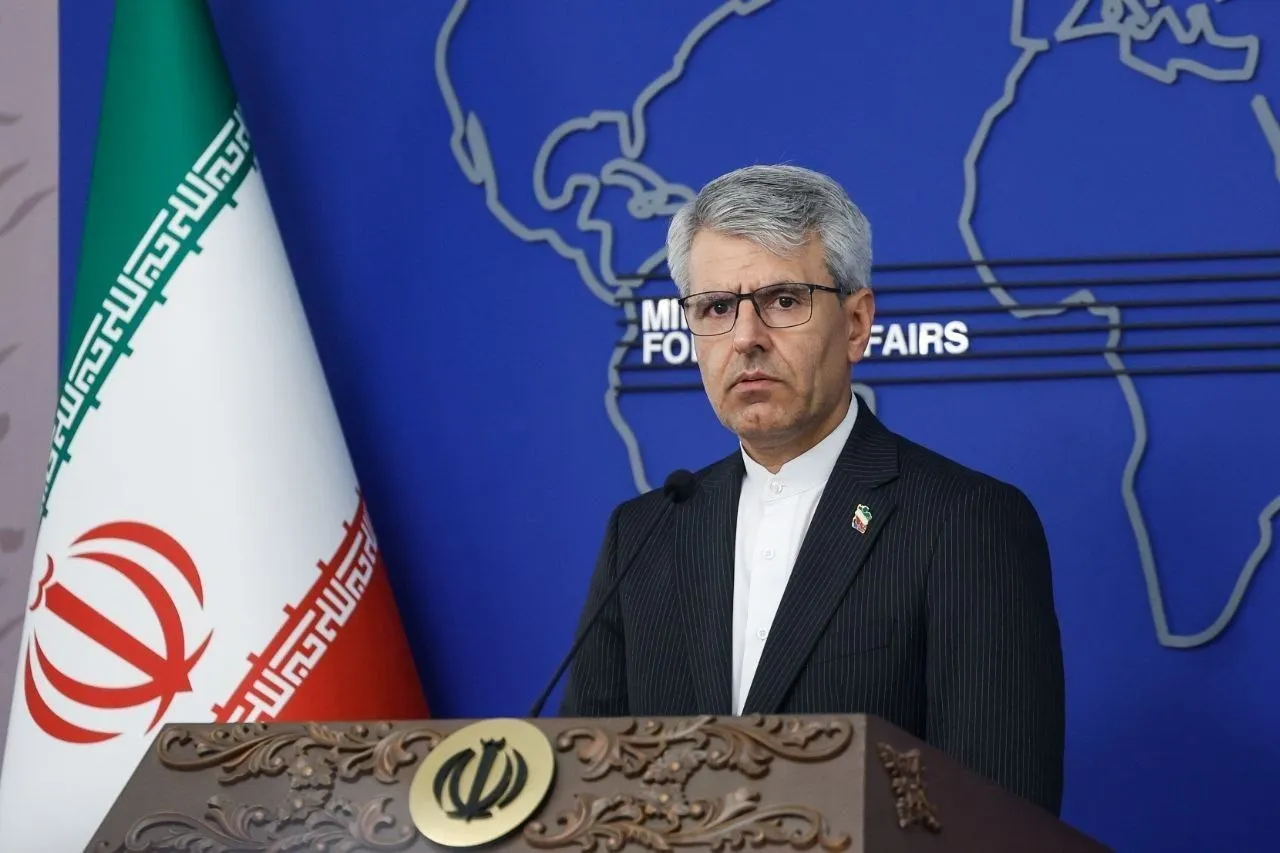
Tehran - BORNA - Foreign Ministry Spokesperson Esmaeil Baghaei emphasized Iran's full defensive readiness during his weekly press briefing with media representatives. Commemorating the martyrs of the Shah Cheragh terrorist attack in Shiraz, including three martyred children, Baghaei stated that while closely monitoring regional developments and pursuing diplomatic movements, Iran possesses full readiness to defend the country.
Pointing to internal developments of the Israeli regime, he stated: "What is happening in this regime, in our belief, is a competition among factions that outdo each other in committing violence and aggression, and it makes no difference to Iran who takes the reins of affairs." Baghaei emphasized that Iran carefully examines recent threats from the Israeli regime and will not hesitate in the legitimate defense of the country under war conditions.
Referring to Tehran hosting senior officials from Turkey, Pakistan, and Saudi Arabia, he said preparations have been made for these officials to meet with the President to discuss the most important regional issues, including developments in Palestine and Lebanon. Emphasizing the necessity of creating regional mechanisms for interaction, he noted that Iran has always stressed over the past few decades that regional security must be secured by regional countries through cooperation and trust. He added that this meeting cannot be without consequences and effects on the Israeli regime and regional developments.
Regarding recent remarks by French and German officials about negotiating with Iran, Baghaei said he is not sure these stances can be considered a change in approach and might merely be a political gesture. Criticizing France, Germany, and the UK for the past two years, he said they failed to condemn the military aggression of the US and the Israeli regime against Iran, showing support or appeasement. He stated Europe became a part of the problem by following the US on the snapback issue, expressing hope they adopt an independent and constructive approach.
On borders with Pakistan, Baghaei said the Pakistani side announced from the beginning that the issues are technical, related to updating systems and security concerns, noting that consultations are ongoing and the trend is positive. Regarding border issues with Iraq, he said the Iranian embassy in Baghdad and consulates are seriously pursuing the matter. He emphasized that the consequences of illegal US sanctions also affect the Iraqi people, and the interests of both nations must be considered.
Regarding reports of drone bases near Iran and Ukrainian movements in Iraq, he stated that responsible forces are carefully monitoring these movements and will act to defend the country and repel threats whenever necessary, just as they decisively defended the country during the 40-day defense.
Baghaei said the Qatari delegation's visit to Tehran was a continuation of regional dialogues aimed at reviewing bilateral cooperation and Qatar's mediation role in the inflamed region.
Reacting to protests in European countries and the silence of human rights bodies, Baghaei said human rights has become a political tool. Pointing to police clashes with protesters in France and Belgium, he noted that excessive violence contradicts their international obligations. He announced that the French ambassador was previously summoned, and the Italian ambassador was summoned yesterday to convey Iran's protest over widespread human rights violations. He criticized European officials for blaming internal problems on foreign factors and demanded accountability for their support of US and Israeli regime military aggression, referencing unanswered questions about NATO Secretary General Mark Rutte's remarks on European participation in designing the attack on Iran.
Reacting to former US President Barack Obama's remarks that Washington prevented Iran from acquiring a nuclear bomb through diplomacy, Baghaei said: "This part of Obama's remarks that Iran did not have a nuclear weapon is a fact, because the Islamic Republic of Iran not only never possessed nuclear weapons, but has also never sought to acquire them." He added that Iran entered the 2015 agreement with goodwill, but the US withdrew three years later without justification. Baghaei emphasized that the US establishment, influenced by the Israeli regime, fed the lie of Iran seeking a bomb to its public to justify military aggression. Pointing to US claims of completely destroying Iran's nuclear program and attacking again eight months later, he called it a rare historical event where a lie justifies a threat and military attack, only to be repeated again to continue the threat.
Baghaei stated that US actions and the insecurities created in the Strait of Hormuz are the causes of rising global oil and fuel prices, holding the US and the Israeli regime responsible. He added that attempts to distort the realities of the Minab incident will fail as the truth is becoming clear globally.
Regarding potential targeting of submarine communication cables and digital economy infrastructure, he said determining the method of Iran's response is up to competent authorities and will not be announced beforehand. He assured that the armed forces will surprise the enemy using valuable experiences gained over the past eight months, while strictly adhering to international humanitarian law, unlike the opposing side which does not distinguish between military and civilian targets.
Baghaei congratulated the people and the President-elect of Brazil on the election results, praising the majority of Brazilians for not submitting to unfair pressures and foreign inductions.
Answering questions about negotiations with the US, he stated the American side is not serious and confuses negotiation with dictation. Pointing to contradictions, he noted the US President claimed to task his government with negotiating with Iran just 30 minutes before the June 13 military attacks. Baghaei highlighted the US violation of the 2015 deal and the Islamabad MoU, which lasted less than three weeks despite the current US President's signature. He emphasized Iran does not fear negotiation but expects mutual give-and-take, not one-sided concessions while facing ongoing sanctions, threats, and US support for the Israeli regime.
Regarding reported disputes between Benjamin Netanyahu and the regime's army chief over attacking Iran, Baghaei said they share a consensus on evil and expansionism and only differ on tactics. He stressed that the Israeli regime remains a warmongering and hegemonic entity.
Responding to the US President's claim that the war against Iran aims to prevent Tehran from acquiring a nuclear weapon, Baghaei said Iran tells the truth and the other side lies. He noted the opposing side has repeated a false claim for 30 years, emphasizing that repeating a lie does not make it the truth.
Baghaei confirmed that Iran's official stance regarding mandatory hijab protests in the Republic of Azerbaijan remains unchanged from what was announced last week.
Ahead of the Iranian delegation's trip to Russia for the Gas Exporting Countries Forum, Baghaei called it an important opportunity for energy suppliers. He noted the long-standing cooperation between the Iranian Petroleum Ministry and Russia on increasing investment, technology transfer, and diversifying gas export routes, adding that the President will hold bilateral meetings during the summit.
Regarding the cancellation of the Salalah meeting, he said this does not halt Iran's principled stance that regional countries must take steps for joint security relying on internal capacities, as continuously proposed at the Baghdad and OIC summits.
Baghaei stated that security in West Asia is interconnected like communicating vessels, and the Yemen-Saudi issue must be resolved through dialogue. He warned that sanctions and military action against Yemen violate people's rights and harm a Muslim nation, expressing hope Saudi Arabia moves toward a peaceful resolution.
Reacting to Albanian officials accusing Iran, Baghaei said the people's protests against corruption and land grabs are an internal issue. He stated that attributing the people's opposition to foreign incitement is insulting to Albanian citizens and discredits the officials.
Baghaei condemned the US President's derogatory remarks about the people of Libya, Somalia, Yemen, and Haiti, calling it unjustified and a sign of the low level of statesmanship and governance in the current US administration.
Finally, Baghaei clarified that foreign policy decisions, including negotiations with the US, are based on national interests and are a continuous complex diplomatic process, not determined by single variables like daily fluctuations in global oil prices.
End Article