Iranian Foreign Minister: Two-Day Plan to Reopen Strait of Hormuz on the Table; We Are Ready for Any War
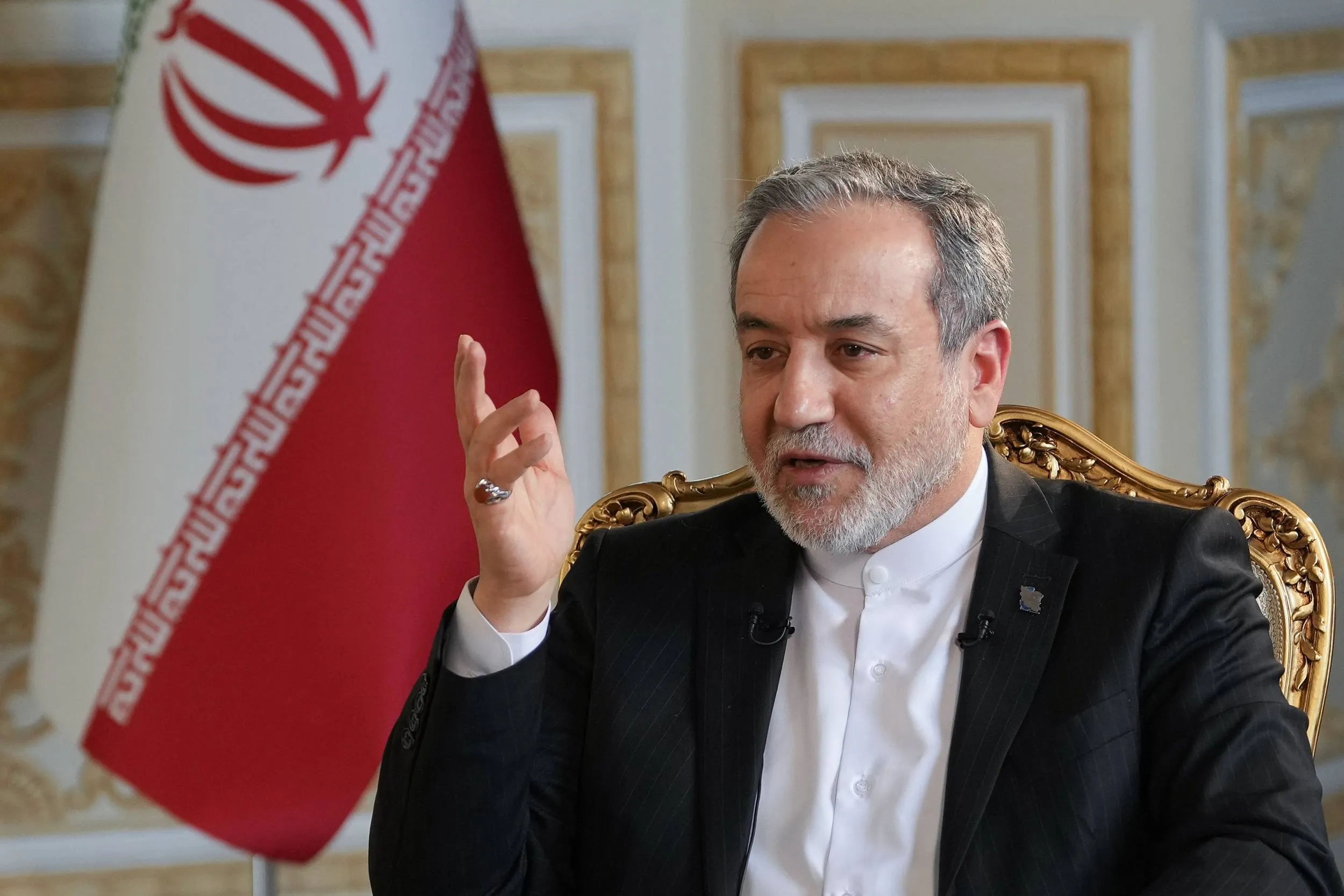
Tehran - BORNA - Iranian Foreign Minister Seyed Abbas Araghchi has outlined the details of Tehran's proposal to reopen the Strait of Hormuz, announcing continued consultations with Qatari and Pakistani mediators and emphasizing that the Islamic Republic remains prepared for diplomacy while being better equipped than ever to confront any potential war.
In an exclusive interview with Al Jazeera, Araghchi discussed the latest developments in indirect negotiations between Iran and the United States and the mediation efforts undertaken by Qatar and Pakistan.
"Our Qatari friends came to Tehran as part of the ongoing consultations with Qatari and Pakistani mediators, and we appreciate the efforts of both countries," he said.
Referring to Iran's proposed plan for reopening the Strait of Hormuz, Araghchi explained that the proposal currently on the table is essentially the same initiative Tehran initially presented, known as Iran's seven-day plan.
He said the plan outlined Iran's conditions for reopening the Strait of Hormuz, under which the waterway was scheduled to reopen on the sixth day following the fulfillment of those conditions, with negotiations between Iran and the United States resuming on the seventh day.
"We presented this plan in New York during the United Nations General Assembly, and consultations have continued uninterrupted since then," he said.
Araghchi added that Qatari and Pakistani mediators had conducted extensive consultations and proposed ideas to make the plan more practical and easier to implement.
The foreign minister said one of the proposals put forward by Qatar involved reducing the seven-day period to five days or even less.
"We worked on this issue during the recent visit, and we have now reached a two-day plan," he explained.
"Under this plan, a series of measures will be taken by the United States on the first day, and on the second day, the Strait of Hormuz will reopen and maritime traffic will return to its previous conditions."
Iran's Conditions for Reopening Strait of Hormuz
Explaining Iran's conditions for implementing the proposal, Araghchi said the measures Washington must take are not unusual and had already been included in the Islamabad Memorandum of Understanding.
However, he noted that new circumstances had emerged since the agreement was reached.
"For example, Article 9 of the memorandum stipulated that the United States should not impose new sanctions or increase its military forces in the region," he said.
"Naturally, we now demand the removal of all new sanctions imposed after the memorandum and a reduction in US military forces to their previous levels."
Araghchi identified lifting the blockade and implementing the oil waivers previously agreed upon as additional Iranian conditions.
He said Tehran had also presented other requirements in a written document.
"All these conditions are achievable, provided that the American side demonstrates goodwill and a genuine determination to reach an agreement, and Washington is truly seeking a peaceful solution," he emphasized.
The foreign minister also identified the release of Iran's frozen assets as one of Tehran's principal demands.
"The new shipping route agreed upon between Iran and Oman for passage through the Strait of Hormuz must be accepted, and the other routes to the south will be closed," he said.
Araghchi added that Iran's frozen funds in different parts of the world, including $6 billion held in Qatar, must also be released.
He said Qatari mediators had identified solutions for releasing these funds, although their implementation remained dependent on reaching an agreement.
The foreign minister further emphasized that ending the war on all fronts, including Lebanon, was another condition set by Tehran.
"If the United States accepts these conditions, which it had previously accepted and even implemented for two weeks before violating them, their implementation can pave the way for the restoration of normal life in the Persian Gulf and the Strait of Hormuz," he said.
Regarding the timing of the strait's reopening, Araghchi explained that these measures constitute the conditions for reopening the waterway.
Once they are implemented, discussions between Iran and the United States on issues of mutual interest can resume on the same day.
He stressed that implementing Iran's conditions and reopening the Strait of Hormuz would pave the way for the resumption of negotiations between Tehran and Washington.
Direct Negotiations with US Not on Agenda
Responding to a question about reports that an Iranian expert delegation had traveled to Doha to meet American officials, Araghchi clarified that the visit was intended solely for consultations with Qatari mediators.
"My deputy is currently in Doha to continue consultations with our Qatari friends, but we have no plans at present to meet with the American delegation," he said.
Rejecting speculation about a possible direct meeting between Iranian and American officials in Doha or Türkiye, Araghchi emphasized that no such meeting had been arranged.
"No plans have been made for talks, and all the rumors circulating in this regard are media speculation," he stated.
"We are not currently in a position where we need to hold a meeting. Our conditions are clear, and our Qatari and Pakistani friends are conducting consultations on them."
Araghchi explained that if Washington accepted Tehran's conditions, the Strait of Hormuz would reopen and negotiations could subsequently begin.
He added that such negotiations could take place either indirectly through intermediaries or directly without mediation.
Referring to previous indirect negotiations with Steve Witkoff and Jared Kushner in New York, Araghchi said Iran had held one round of indirect talks with the two American representatives through Qatar.
He noted that he had presented Iran's conditions for reopening the Strait of Hormuz and introduced the seven-day proposal during those discussions.
Addressing the nuclear issue, Araghchi emphasized that two separate matters were under consideration.
"The first is reopening the Strait of Hormuz, which has its own conditions. The second concerns issues that Iran and the United States are interested in discussing," he said.
"We are interested in negotiating the complete removal of sanctions, while the American side is pursuing the nuclear issue."
The foreign minister reiterated that Tehran's policy remains clear.
First, a decision must be reached regarding the Strait of Hormuz, and the waterway must reopen following the implementation of Iran's conditions.
Afterward, the two sides can discuss and make decisions on matters of mutual interest.
Araghchi added that Pakistani and Qatari mediators were seeking to bring the two stages closer together and arrange the process in a manner that would help build confidence.
Lack of Trust Is Biggest Obstacle to Agreement with US
Araghchi identified the absence of trust as the greatest obstacle to reaching an agreement between Iran and the United States.
"Over the past two years, we have experienced diplomacy three times, and on all three occasions, it led to war initiated by the United States," he said.
"Once in 2025, once in February 2026, and once when we signed the memorandum of understanding."
He noted that US President Donald Trump had personally signed the agreement, but Washington violated it less than two weeks later.
"Unfortunately, we do not have a good experience of negotiations and diplomacy with the Americans," Araghchi said.
He also referred to the 2015 nuclear agreement, known as the Joint Comprehensive Plan of Action (JCPOA), emphasizing that Iran had reached an agreement with the United States only for Washington to violate it and withdraw.
"Therefore, it is natural that we now approach negotiations and diplomacy with great caution," he added.
The foreign minister stressed that Washington must take practical steps to restore confidence if it genuinely seeks an agreement.
"If the United States wants an agreement, it must take confidence-building measures," he said.
"In fact, proposals for confidence-building are also included in the negotiations currently underway, and we are examining them."
Nuclear Agreement More Complicated Than Strait of Hormuz Deal
In another part of the interview, Araghchi addressed the possible return of International Atomic Energy Agency (IAEA) inspectors and developments concerning Iran's nuclear program.
He emphasized that Iran remains a member of the Treaty on the Non-Proliferation of Nuclear Weapons (NPT) and has consistently fulfilled its obligations under the treaty.
However, he noted that Iranian nuclear facilities operating under IAEA supervision and safeguards had been subjected to military attacks.
"This is an entirely new situation in the history of nuclear facilities worldwide," Araghchi said.
"There has never been a precedent for several nuclear facilities being subjected to military attacks. This was a major red line crossed by the United States and the Zionist regime, and naturally, such an action has disrupted our relations with the agency."
The foreign minister said numerous questions and uncertainties remain between Tehran and the IAEA.
He explained that the agency has no established protocol for inspecting nuclear facilities that have been subjected to military attacks.
"There is no clear procedure for how such facilities should be inspected," he said.
"Therefore, we still have a long way to go before reaching a common understanding with the agency, addressing our concerns, and creating the conditions for normal cooperation to resume."
Araghchi emphasized that the IAEA would have a role in any future nuclear agreement.
However, he reiterated that the agreement concerning the Strait of Hormuz and a potential agreement on Iran's nuclear program must be treated as two distinct issues.
The first concerns reopening the Strait of Hormuz under specific conditions and is unrelated to the nuclear issue.
The second would address Iran's nuclear program and would have its own separate conditions.
Araghchi also stressed the necessity of confidence-building before entering nuclear negotiations.
"Confidence must first be established, and only after the necessary trust has been created can we enter negotiations," he said.
"In 2015, we negotiated for two and a half years, and the result was a 104-page document. Negotiations may be shorter this time, but they will not be easy."
Iran's Armed Forces Are the Only Guarantor of Any Agreement
Responding to a question about which party or institution could guarantee the implementation of a potential agreement concerning the Strait of Hormuz, Araghchi emphasized that Iran's military capabilities provide the ultimate guarantee.
"The only guarantor is the Armed Forces of the Islamic Republic of Iran," he stated.
"There are no 100-percent guarantees in international relations, and our power is the guarantor of any agreement."
The foreign minister said Iran would implement any future agreement by relying on its people, national strength and Armed Forces.
"The Americans and Zionists have tested us. They fought wars against us two or three times, hoping to bring about fundamental changes and force us to surrender, but they saw the results," he said.
Referring to the prolonged conflict, Araghchi reiterated that the power of the Islamic Republic guarantees both its security and the agreements it concludes.
He emphasized that Tehran enters negotiations from a position of strength.
Iran Better Prepared Than Ever for Any War
Asked about the economic pressures resulting from sanctions and the maritime blockade and their impact on the Iranian people's daily lives, Araghchi acknowledged the existing difficulties but rejected the possibility of surrendering to external pressure.
"I do not deny the economic pressures, but we will not surrender or raise our hands because of economic pressure," he said.
"We will not sell our dignity or sacrifice our independence."
The foreign minister emphasized that Iran would resist and overcome these difficulties through its national capabilities.
He said economic pressures and costs had been imposed entirely unjustly on Iran and its people.
However, he stressed that Tehran's position remains unchanged.
"We place great value on our independence, dignity and people, and we are not prepared to bow before major powers," he stated.
Addressing the possibility of another US military attack against Iran, Araghchi said Tehran considers every scenario possible, given its experience with the American government over the past two years.
"We consider every possibility and are better prepared than before for all of them," he said.
"We have learned many lessons from previous wars, upgraded our weapons, addressed their weaknesses and added new strengths. New weapons have also been tested."
The foreign minister emphasized the preparedness of Iran's Armed Forces.
"I am a man of diplomacy, and I do not want to talk about war, but I know that our Armed Forces are more prepared than ever for war and for defending the country," he said.
"I am certain that if another war takes place, the Americans will fail to achieve any of their objectives, just as they did in previous wars, and another defeat will be added to their previous defeats."
Araghchi also referred to the duration of the ongoing conflict, noting that Washington had initially expected the war to last only two or three days, or at most two weeks.
However, he said the conflict had now continued for eight months.
"If they want to continue this situation, that is their choice," he said.
"We are prepared. The government is ready to manage the affairs of society, the Armed Forces are prepared to defend the country, and our diplomacy is also ready to represent the voice of the Iranian nation internationally."
Araghchi emphasized that the Islamic Republic has never abandoned the negotiating table or set diplomacy aside.
He said Iran has consistently pursued a rational approach and remains prepared for either diplomatic engagement or military confrontation.
"If the United States chooses diplomacy, we are ready, and our proposal is on the table," he stated.
"If it chooses war, we are also ready, and all our capabilities are on the table."
Differences of Opinion in Iran Do Not Mean Divisions in Decision-Making
In another part of the interview, Araghchi addressed claims concerning disagreements among Iranian officials and the existence of multiple decision-making centers.
He said one of Washington's greatest mistakes has been its failure to understand the Islamic Republic, the Iranian people, the country's officials and its system of governance.
"Unfortunately, one of the Americans' biggest mistakes is that they have not understood the Islamic Republic of Iran, the Iranian people, our officials or our governing system," he said.
"They imagine that there are divisions among individuals. This perception is certainly wrong."
Speaking from his experience of participating in high-level meetings, Araghchi emphasized that there is consensus among Iran's government, Parliament, Supreme National Security Council and Armed Forces.
"We may debate matters during meetings, but once we reach a decision, everyone stands behind that decision and implements it," he explained.
Referring to Mohammad Bagher Ghalibaf's role in negotiations, Araghchi said Tehran continues to regard him as the chief negotiator.
"From our perspective, Dr. Ghalibaf remains the chief negotiator, and Mr. Mohsen Rezaei fully supports this arrangement," he said.
"We make decisions together, and we implement them together."
Addressing a letter attributed to US Vice President JD Vance and sent to Mohsen Rezaei, Araghchi said questions regarding its purpose should be directed to the American side.
"If Mr. Vance has sent a letter to Mr. Rezaei, you should ask him about it," he said.
"If the objective was to open the door to further dialogue and understanding, I consider it a positive step. However, if the letter was sent to create divisions, it would be another mistake added to the Americans' previous mistakes."
The foreign minister also discussed the contents of the letter.
He said the message sought to maintain a channel of communication between the two countries to reach a peaceful settlement of their differences.
"We examined the letter carefully, and Mr. Rezaei also gave it considerable thought," Araghchi said.
"The matter has been discussed and reviewed in high-level meetings, and we will formulate our policy accordingly."
Leader Continues Duties Under Security Considerations
Responding to a question about the situation of the Leader of the Islamic Republic and the absence of publicly released images or messages from him, Araghchi emphasized that the Leader continues to perform his duties actively and maintains full command of national affairs.
"He is carrying out his responsibilities as Leader very actively and with complete command," Araghchi said.
"All our issues and policies are presented to him, and his decisions are communicated to us. There is no weakness whatsoever in this regard."
The foreign minister explained that the absence of public appearances, images or statements was primarily due to security considerations.
He said Iran faces enemies seeking to carry out assassinations, as demonstrated during the previous two wars.
"They illegally assassinated our political officials and martyred our Leader," he said.
Araghchi emphasized that the country must therefore exercise greater caution and prioritize security.
He said specific security protocols had been established and were being followed by Iranian officials.
"This decision was made for security reasons to protect him, and in my view, it has created no problems in the administration of the country or the decision-making process," he stated.
Asked about the latest meetings with the Leader, Araghchi said he had not personally met him.
However, he noted that officials who had recently attended meetings with the Leader, including Ghalibaf, Ejei and the President, had reported that he was in full health, actively engaged in his duties, in high spirits and fully informed about current national affairs.
According to Araghchi, those officials had also emphasized that the Leader was making strategic decisions.
He added that the Leader's decisions were also communicated to officials in writing and that the country's affairs were being managed effectively.
Iran Seeks Good Relations with Regional Countries
Responding to a question about the possibility of Persian Gulf countries being targeted if the United States and Israel launch another attack against Iran, Araghchi emphasized that Tehran's previous military operations had targeted American bases and facilities, not regional countries themselves.
"In previous attacks, we targeted only American bases and objectives. We did not target our friends," he said.
"Unfortunately, American bases are located on the territory of these countries, and they were used to attack Iran."
Araghchi said Tehran had previously warned regional countries that if the United States attacked Iran, the Islamic Republic would have to defend itself by targeting American military bases in the region.
"We had already warned our friends that if the United States attacked Iran, our missiles could not reach American territory, and we would have no choice but to defend ourselves by attacking US military bases in the region," he explained.
"Our targets were exclusively American."
Referring to his consultations with the foreign ministers of Gulf Cooperation Council member states in New York, Araghchi said he had explained Tehran's position to all of them.
He reiterated that Iran's military operations were directed solely against American targets.
"If a missile occasionally went astray or went out of control, such incidents can occur in any war," he said.
"But this is not our fault. The issue stems from the presence of American bases on the territory of those countries."
The foreign minister emphasized that American military bases do not guarantee the security of their host countries.
"Fortunately, our friends and the countries of the region have now realized that these bases do not provide them with security and are not even capable of protecting their own security," he stated.
Responding to a question about damage to civilian infrastructure in some regional countries, Araghchi reiterated that Iran had not initiated the war and had acted solely in self-defense.
"We did not start this war. We only defended ourselves," he said.
"We have never intended, and do not intend, to target our friends in the region. But when it comes to American bases, we will not hesitate, and we will certainly target them."
Araghchi warned that regional countries should work to prevent another war, as any renewed conflict would have consequences for the entire region.
He emphasized that the best approach would be for regional countries to persuade Washington not to initiate another military confrontation.
"If we are attacked, we will have no choice but to defend ourselves, and no one should expect us to remain silent in the face of an attack," he said.
The foreign minister also reiterated Tehran's commitment to maintaining good relations with neighboring countries.
"We have no hostility toward these countries. In fact, over the past several months, we have had good cooperation with them," he said.
Araghchi highlighted Iran's longstanding cooperation with Oman, noting that Muscat had previously mediated talks between Tehran and Washington.
He also praised Qatar's current mediation efforts and emphasized that Iran had maintained continuous dialogue with Saudi Arabia.
Need for Regional Security Structure Without Foreign Forces
Addressing the recent visit of a high-level delegation from countries associated with the Mecca Pact to Tehran, Araghchi said constructive discussions had taken place regarding new regional security arrangements.
"We had good discussions with these countries about new security structures in the region," he said.
"During the visit of the three countries, we also discussed regional security and new frameworks."
The foreign minister emphasized the need to establish new security arrangements based exclusively on regional countries, without the presence of foreign military forces.
"We must reach new security arrangements that do not involve foreign forces and rely solely on the countries of the region," he said.
"This has long been our policy, and I believe the Persian Gulf countries have also reached the same conclusion."
Araghchi clarified that the three-country delegation's visit to Tehran had not taken place within the framework of their membership in the Mecca Pact.
Instead, he said the visit represented consultations among four major regional powers on issues of common concern.
"The main message of this visit was cooperation among major regional countries to confront regional threats and challenges," he explained.
Araghchi noted that although the three countries had signed the Mecca Pact, their visit to Tehran was not conducted in their capacity as members of that agreement.
Rather, three major regional countries had consulted with another major regional power.
He described the initiative as positive and constructive, adding that the four countries had agreed to continue their consultations.
The foreign minister said arrangements were being made to maintain these discussions regularly at different levels.
Iran Ready to Help End War in Yemen
Asked about developments in Yemen and escalating tensions between Ansarullah and Saudi Arabia, Araghchi expressed regret over the continuation of conflict among Muslim countries and groups.
"It is truly regrettable for us that Muslim brothers are engaged in conflict with one another," he said.
He emphasized that the situation in Yemen has deep historical complexities and that the war has continued for years, while the blockade imposed on the Yemeni people remains in place.
"Ansarullah has decided to resist and defend itself," he said.
"It is regrettable that Muslim brothers resort to war to resolve their differences."
Araghchi announced that Tehran had informed both sides of its readiness to help bring the conflict to an end.
"We have declared our readiness to both sides of this war to help, and if there is anything we can do to end this conflict, we are prepared to do it," he said.
The foreign minister added that Iran had communicated this position to its counterparts in Saudi Arabia and Yemen.
He noted that direct discussions between the parties, as well as negotiations mediated by different sides, were continuing.
"If any assistance is requested from us, we will provide it," Araghchi emphasized.
Addressing the relationship between developments in Yemen and the crisis involving Iran and the United States, the foreign minister said that although regional issues are interconnected in a broader sense, the conflicts in the Strait of Hormuz and Bab el-Mandeb have different origins and causes.
"The war in the Strait of Hormuz and the war in Bab el-Mandeb are entirely separate issues, each requiring its own solutions," he explained.
Araghchi reiterated that Iran has never welcomed the expansion of war among Muslim countries and would not do so in the future.
He emphasized Tehran's readiness to help resolve the conflict while maintaining that the two crises are not directly connected.
Resistance Remains Alive Through Its Ideals and Principles
In another part of the interview, Araghchi addressed the situation of resistance groups in the region and claims that Iran's regional position had weakened.
"I do not believe Iran has been weakened. The resistance has suffered blows," he said.
The foreign minister explained that resistance against the Zionist regime in the region had sustained damage as a result of Israeli plots in Lebanon and Syria.
However, he emphasized that the ideology of resistance remains alive and has become even stronger.
Referring to the history of Lebanon's Hezbollah, Araghchi said the movement had previously suffered major losses, including the martyrdom of its former secretary-general, Seyed Abbas Mousavi.
He noted that Hezbollah subsequently rebuilt itself and emerged larger and stronger than before.
"Resistance remains alive through the blood of martyrs, and the blood of every martyr further nourishes the tree of resistance," he said.
Araghchi expressed confidence in the future of the Resistance Front, emphasizing that it is founded on an ideology and sacred ideals.
He said temporary setbacks should not be viewed solely as losses, as struggle inevitably involves sacrifices and confrontation.
However, he stressed the importance of recognizing that the Zionist regime was behind the plots targeting resistance groups.
Responding to a question about Iran's support for resistance groups in Iraq and Lebanon, Araghchi defended Tehran's position.
"If groups are fighting for just and legitimate causes and we support them, that is not a weakness on our part," he said.
"In my opinion, these groups should be supported by all Islamic countries."
Referring to the establishment of Iraq's Popular Mobilization Forces, also known as Hashd al-Shaabi, Araghchi said the organization had emerged to confront occupation.
He explained that Iraqi groups had initially formed to resist the American occupation and later fought against ISIS and other Takfiri groups.
He noted that most Islamic and regional countries had suffered from ISIS and participated in efforts to combat it.
The foreign minister emphasized that Iran's support for resistance groups does not contradict its desire to maintain good relations with neighboring and regional countries.
"Supporting the resistance is not incompatible with having good relations with regional countries and neighbors," he said.
"We are interested in establishing good relations, mutual understanding and cooperation."
Araghchi added that greater dialogue and understanding could help eliminate many existing misunderstandings between Iran and other countries.
We Are United in Practice
Responding to a question about differing views within Iran regarding foreign policy, regional relations and economic issues, Araghchi emphasized that diversity of opinion does not undermine national unity.
"What is wrong with having different opinions and perspectives in society?" he asked.
"In practice, we are united. There are different views in the realm of thought and ideas, and all these perspectives are respected and heard."
The foreign minister acknowledged that disagreements exist on various issues but stressed that Iranian society remains united.
He said this unity had been demonstrated during the recent wars.
"The social cohesion we witnessed during the past two wars was truly unprecedented," he said.
"People with different views united during the war."
Araghchi added that some members of Iranian society may hold different opinions about relations with the United States, regional affairs or economic policies.
However, he emphasized that these differences do not prevent collective action.
"I believe we are united in practice," he said.
"The decision-making system in Iran is completely clear, and we operate based on consensus. This is how we have acted so far."
Concluding the interview, Araghchi emphasized that Iran's independence, national dignity and ability to resist the United States and the Zionist regime for eight months demonstrate the strength of the Islamic Republic.
He acknowledged that achieving and maintaining this strength has required sacrifices and would continue to involve costs.
However, he stressed that Iran would not abandon its principles in the face of external pressure.
"This path certainly has its costs, but we will never bow before our enemies," the foreign minister concluded.
End Article