Ghalibaf: Iran Will Never Surrender to Its Enemies
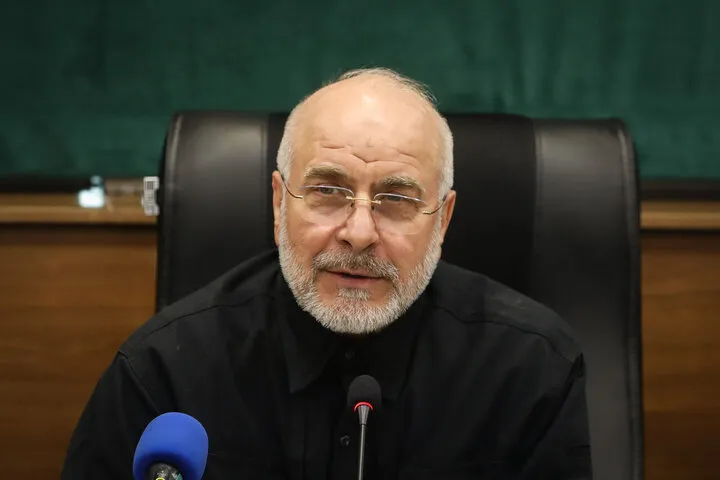
Tehran - BORNA - Speaking at an open session of Parliament on Tuesday, November 3, ahead of the National Day of Struggle Against Global Arrogance on November 4, Ghalibaf said the United States’ hostility toward Iran stems from the Iranian people's determination to defend their independence.
He said November 4 commemorates three historic events: the exile of Imam Khomeini in 1964, the killing of students by the Pahlavi regime in 1978, and the takeover of the US Embassy in Tehran in 1979.
Ghalibaf said these events shared a common underlying cause: Washington's longstanding ambition to dominate Iran.
“In the past, the United States pursued this objective through the submission of its puppet rulers. Today, confronted with a united and independent Iranian nation, it resorts to military, economic and cognitive warfare,” he said.
He added that the United States and its regional allies had learned from the two recent wars imposed on Iran that the era of their excessive demands had come to an end.
The Parliament speaker said Iran's determination to preserve its independence had become an inspiration for other freedom-seeking nations.
Iran's Response to Any Enemy Miscalculation Will Be Unpredictable
Ghalibaf said the resistance of the Iranian people had left the United States and the Israeli regime at a loss over how to proceed.
“Faced with a resilient Iranian nation, the enemies do not know what to do. Confronted with a series of defeats, they occasionally attempt to force the Iranian people into submission through threats and military action,” he said.
“But they are gravely mistaken. Iran will not surrender. Such fantasies belong to the era of former subservient and dependent governments.”
Ghalibaf emphasized that Iran's armed forces were fully prepared to confront any potential threat.
“Our military and strategic response to any miscalculation by the enemy will be unpredictable. Without observing geographical limitations, we will shatter their flawed calculations and strike at their material and non-material assets,” he warned.
He said the Commander-in-Chief of Iran's Armed Forces had already determined the country's military strategy for responding to any potential attack.
Ghalibaf added that Iran remained ready for battle while simultaneously pursuing a firm and rational approach toward the United States.
“Just as the Islamic Republic of Iran stands ready for battle with its finger on the trigger, it has also provided a firm and rational response to the American side. The ball is now in Washington's court to prevent another war,” he said.
“We are at the highest level of defensive readiness on the ground and militarily. If Washington makes another strategic miscalculation, it must understand that this time it will face a new battlefield and will find itself even more desperate to seek a way out.”
Addressing regional countries, Ghalibaf stressed that Iran was fully prepared to defend itself and would respond decisively to any hostile action.
National Unity Is Iran's Strongest Deterrent
The Parliament speaker described national unity and cohesion as Iran's most powerful assets in confronting future threats.
“Preserving national cohesion is our strongest weapon in the next war and, consequently, the most effective factor in deterrence,” he said.
Addressing the Iranian people and government officials, Ghalibaf dismissed rumors suggesting a lack of coordination among the country's authorities.
He said Iranian officials were operating within a coordinated planning structure and remained prepared to confront challenges across military, diplomatic and public-service fronts.
“We are all united and focused on decisively countering the enemy's plans and actions in the fields of defense, public service and diplomacy, under the wise guidance of the Leader of the Islamic Revolution,” he said.
Ghalibaf expressed confidence that Iran would overcome the challenges ahead through national solidarity, intensified efforts and new initiatives.
Parliament Calls for Urgent Action on Rising Prices
Turning to domestic economic issues, Ghalibaf acknowledged the mounting pressure of inflation and price fluctuations on Iranian households.
He said field reports and public complaints indicated that recent price increases had placed a heavy burden on families.
According to Ghalibaf, inconsistent pricing and inadequate market supervision had created opportunities for profiteers and intermediaries to exploit wartime conditions.
He called on the government and regulatory authorities, particularly the Ministry of Justice and the Government Discretionary Punishments Organization, to take immediate and effective measures to oversee the distribution and pricing of essential goods.
Ghalibaf Urges Action to Resolve Truck Congestion at Border Crossings
The Parliament speaker also raised concerns over lengthy queues of trucks and transit vehicles at several border crossings, particularly in northwestern and southeastern Iran.
He said export and import trucks were sometimes forced to wait for days or even weeks, undermining Iran's export markets and commercial credibility while placing considerable pressure on drivers and businesses.
Ghalibaf called on Parliament's Industries and Mines Committee, Economic Committee and Special Committee for Supporting Production to investigate the issue through field inspections and coordination with the relevant ministries and customs authorities.
He said previous investigations and provincial visits had already been conducted, but stressed that the matter required more determined follow-up.
Economic and Livelihood Issues Must Take Priority in Parliament
Ghalibaf concluded by urging lawmakers to prioritize urgent economic and livelihood concerns over lengthy legislative initiatives.
He proposed that Parliament focus on resolving specific economic bottlenecks rather than proceeding exclusively according to the routine order of bills and proposals.
He said specialized parliamentary committees could use existing legal mechanisms, including the provision under Article 45 of Parliament's Rules of Procedure, to expedite consideration of issues such as customs-related obstacles.
“My clear proposal is that we move beyond the routine order of reviewing bills and proposals and place economic issues on the agenda as a special priority,” he said.
He added that Parliament could use expedited procedures, where necessary, to address public concerns more quickly and ensure that approved legislation proceeded through the required legal stages, including review by the Guardian Council.
End Article