Trump’s Unreal Politics: A President Diminished Abroad, a World in Transition
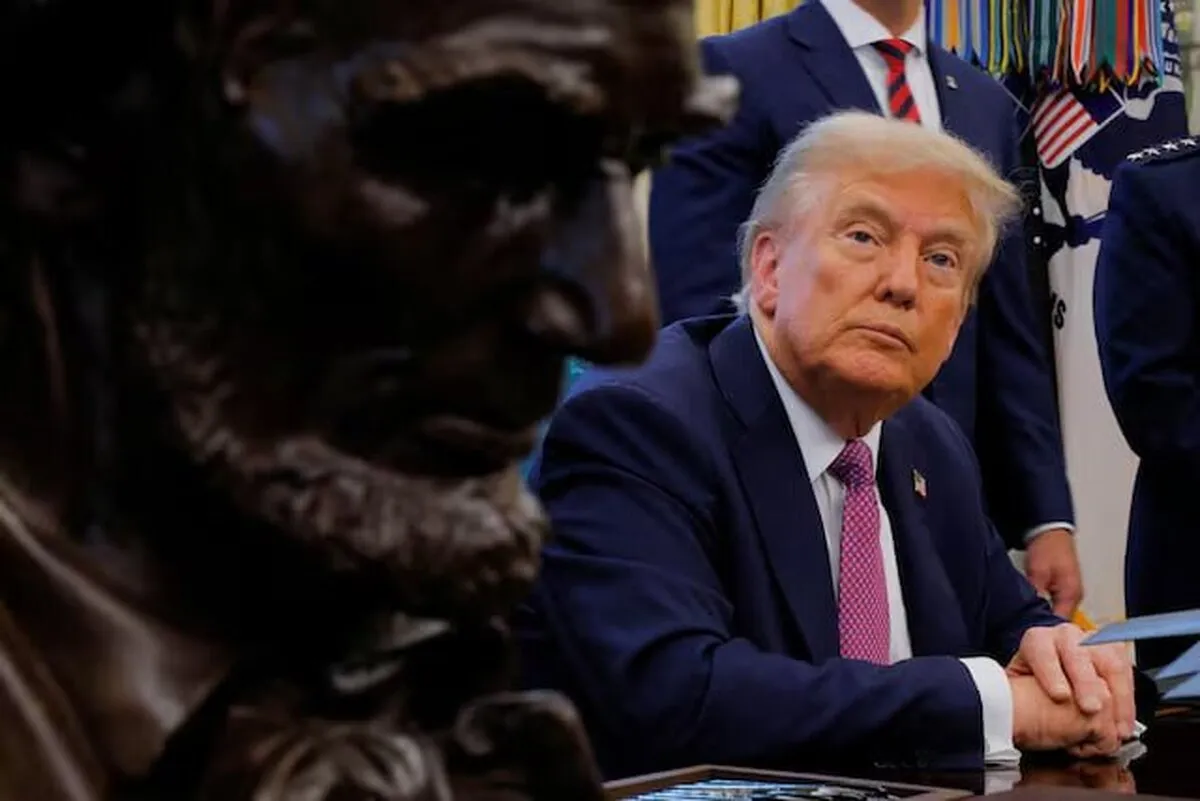
Tehran - BORNA - Trump has long sought to frame his foreign policy as a series of bold, deal-making achievements. Yet, as the experts underlined, the outcomes have often undermined U.S. interests, weakening alliances and emboldening adversaries. The very nations Washington once claimed to deter—China, Russia, and even North Korea—now sense opportunity in what they perceive as America’s self-inflicted decline.
The Erosion of Alliances
Jeffrey Goldberg, editor of The Atlantic, opened the discussion by citing reporting from Tom Nichols: leaders in Moscow, Beijing, and Pyongyang view Trump as unworthy of respect. This perception, far from rhetorical, has tangible geopolitical consequences. Stephen Hayes, a veteran conservative analyst, argued that while America’s rivals openly declared their ambition to end the U.S.-led rules-based order, the Trump administration appeared “to be watching passively—and in some ways, even helping them.”
This posture has fractured trust among U.S. allies. Trump’s public blame of Europe for prolonging the Ukraine war, his imposition of tariffs on European goods, and even offhand remarks about Canada as a potential target of U.S. aggression all illustrate a pattern: Washington, under Trump, berates its allies while extending concessions to adversaries.
The “Axis of the Disgruntled”
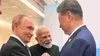
Vivian Salama, a seasoned foreign policy correspondent, described India’s estrangement under Trump. Prime Minister Narendra Modi—once seen as a natural partner for Washington in countering China—was pushed closer to Moscow and Beijing. Trump’s ill-conceived intervention in South Asia, including his suggestion of mediating between India and Pakistan, alienated New Delhi. Compounded by 50 percent tariffs on Indian imports, as Elizabeth Bumiller of The New York Times noted, Washington squandered a strategic partnership while simultaneously tolerating similar behavior from China.
Salama summarized the outcome as an “axis of the disgruntled,” with India now cultivating ties with Russia and China—an outcome that runs counter to decades of U.S. strategic planning in Asia.
Trump’s Politics of Display
Beyond policy, the analysts underscored Trump’s obsession with spectacle. His suggestion to rename the Pentagon the “Department of War” drew sharp reactions at home, with critics warning that such theatrics mask the lack of coherent strategy. As analyst Leigh Ann Caldwell observed, “so much of Trump’s presidency has been about showmanship.”
Even within his populist base, this rebranding jars with his pledge of “no new wars.” Instead, it conveys a more bellicose message at odds with his supposed isolationist instincts.
Toward a Post-American Order
The Atlantic roundtable concluded with a sobering assessment: Trump’s erratic unilateralism has quickened the unraveling of Washington’s post-war hegemony. Far from isolating China, Russia, or other challengers, his policies have nudged them closer together while creating disillusionment among longstanding allies.
Recent summits within frameworks like the Shanghai Cooperation Organization (SCO) demonstrate this new reality. As powers across Asia consolidate ties and explore alternatives to U.S.-led structures, the image of an invincible, rules-based order under American stewardship is fading.
In the words of one participant, the real legacy of Trump’s foreign policy may be this: a weakened United States, estranged allies, emboldened adversaries, and a world increasingly prepared to navigate a multipolar future without deference to Washington.
End Article