Iran’s Freestyle Wrestlers End 12-Year Wait with Sixth World Title
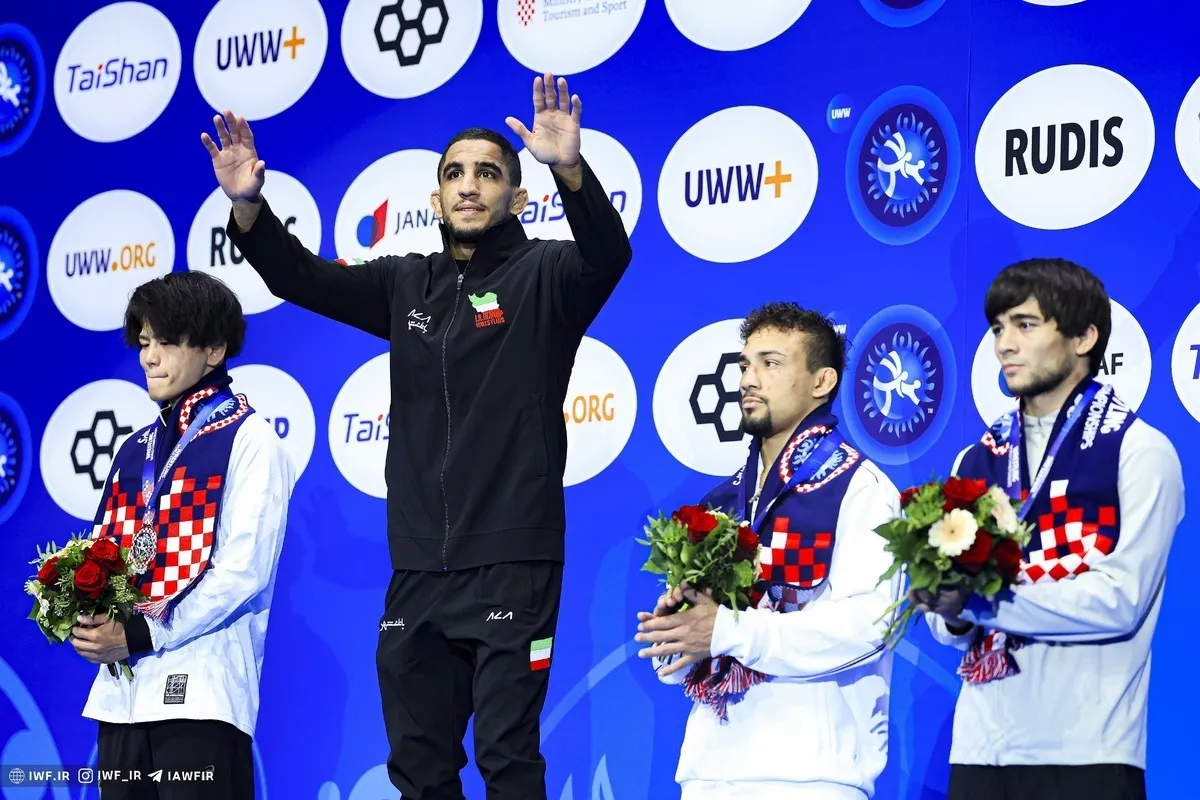
Tehran - BORNA - Iran’s freestyle wrestling team finally reclaimed the top of the world after a long 12-year wait, securing the team championship at the 2025 World Championships in Zagreb. The triumph, sealed even before the final day of competition, marked Iran’s sixth global crown and a resounding return to supremacy.
The victory carried a special weight for both the wrestlers and their coaches. Since lifting the trophy in Budapest in 2013, Iran had endured years of near-misses. This time, however, the combination of bold tactical decisions and unwavering performances across ten weight categories proved decisive. Head coach Pejman Dorostkar, who returned to lead the squad after the Paris 2024 Olympics, guided a team that was both renewed and resilient. The absence of Olympic champion Hassan Yazdani could have been a heavy blow, yet the introduction of fresh faces like Ali Momeni, Ahmad Mohammadzadeh Javan and Amirhossein Firoozpour, alongside seasoned names such as Rahman Amouzad, Younes Emami, Amirali Azarpira and Amirhossein Zare, created a balanced and formidable roster.
The outcome vindicated the coaching staff’s strategy. Wrestlers were shifted into new weight classes, injured athletes returned in time, and younger competitors were given their first taste of the senior world stage. The results spoke for themselves: Iran collected seven medals, more than any other country, while only three weight categories ended without an Iranian on the podium. By contrast, the United States, finishing second overall, managed five medals, and Japan, traditionally a strong Asian rival, took home four. Even if Russia’s points had been fully counted, Iran would still have topped the table—clear proof of the team’s dominance.
What truly distinguished Iran’s performance was not merely the number of medals but the manner of victory. Wrestlers recorded 31 wins against only nine defeats, amassing a point differential that underscored both their offensive strength and defensive solidity. On average, Iranian competitors scored nearly seven points per bout while conceding just three. Such consistency across the board turned narrow margins into a commanding team lead.
There were moments of personal redemption and national pride that electrified the campaign. Rahman Amouzad, who had suffered a shocking defeat in the Olympic final just a year earlier, dismantled his Japanese rival Kotaro Kiyooka in under three minutes—transforming heartbreak into one of the tournament’s most celebrated triumphs. Amirali Azarpira delivered another iconic performance by ending the 36-match winning streak of Akhmed Tazhudinov, the world and Olympic champion competing for Bahrain. Kamran Ghasempour defeated Russia’s Ibrahim Kadiev in a high-profile clash, while the youthful Ahmad Mohammadzadeh Javan reached the final with a last-second takedown against a North Korean opponent. Each of these victories added momentum to Iran’s campaign and inspired confidence in the team’s collective strength.
Yet the celebrations will be brief. Wrestling in Iran rarely allows for complacency. The calendar ahead is unforgiving: just 355 days remain before the 2026 World Championships in Manama, Bahrain. Complicating matters further, the tournament will follow only five days after the Nagoya 2026 Asian Games, forcing the federation to prepare two separate teams capable of excelling on both stages. The Asian Championships in Amman, scheduled for spring, will also demand full focus.
For now, however, the achievement in Zagreb stands as a reminder of Iran’s enduring wrestling heritage. Twelve years of waiting, adjustment and rebuilding culminated in a performance that silenced doubts and reaffirmed the country’s place at the pinnacle of world freestyle wrestling. It was not just a return to glory—it was a declaration that Iranian wrestling remains a force that can adapt, evolve and prevail on the toughest stage of all.
End of Report