Iran Joins the Ranks of Anti-Fibrotic Drug Producers!

Tehran - BORNA - In recent decades, chronic and progressive respiratory diseases have become one of the major challenges facing healthcare systems worldwide. Among these conditions, Pulmonary Fibrosis stands out as one of the most complex and fatal lung diseases a disorder that gradually scars and stiffens lung tissue, reducing its oxygen absorption capacity and ultimately depriving patients of their vital ability to breathe. To date, there has been no definitive cure for this disease, and only a few medications have succeeded in slowing its progression.
Globally, Nintedanib is one of the few approved treatments for controlling pulmonary fibrosis. By inhibiting the molecular pathways responsible for fibrotic tissue formation, it helps preserve lung function and enables patients to live longer, higher-quality lives. However, the high cost of this drug and limited access in developing countries, including Iran, have long posed serious obstacles to treatment.
Under such circumstances, the domestic production of Ofenib, the Iranian version of Nintedanib, by a knowledge-based company located in Pardis Technology Park marks a turning point in pharmaceutical self-sufficiency and offers new hope for Iranian patients. Produced in 100 mg and 150 mg doses, this drug has entered the domestic market at a much lower price than its foreign counterparts an initiative that could ease the treatment path for hundreds of pulmonary fibrosis patients across the country.
This report provides a comprehensive review of this national achievement from the scientific introduction of pulmonary fibrosis and the mechanism of action of Nintedanib, to the technical and economic details of producing the indigenous Ofenib drug, the challenges and objectives of the research team, the future outlook of treatment in Iran, and the role of this innovation in improving patients’ quality of life.
A Silent Disease with Gradual and Relentless Progression
Pulmonary Fibrosis is a lung disease in which lung tissue becomes irreversibly scarred. Over time, these scars cause the tissue to stiffen and reduce its oxygen absorption capacity. Patients gradually experience shortness of breath, dry cough, chronic fatigue, and diminished physical ability. The disease can be triggered by various factors ranging from long-term exposure to chemicals or dust, to autoimmune disorders or unknown causes, the latter known to physicians as Idiopathic Pulmonary Fibrosis (IPF).
Until recent years, treatment for such patients was limited to supportive medications and palliative care, with little hope of controlling the disease. Among existing drugs, Nintedanib and Pirfenidone were the only FDA-approved options known to slow the progression of fibrosis.
A Drug to Slow Lung Tissue Destruction
Nintedanib is one of the few medications proven effective in slowing the progression of pulmonary fibrosis. It works by inhibiting Tyrosine Kinase enzymes, which are involved in the proliferation of fibroblast cells and the formation of fibrotic tissue. By blocking the molecular pathways that lead to scarring in the lungs, Nintedanib reduces disease progression and helps preserve respiratory capacity, thereby improving patients’ quality of life.
However, due to its high price and import restrictions, many patients in Iran were unable to access this medication. Experts report that the black-market price of Nintedanib in Iran exceeded $1,000 per month, an amount unaffordable for most patients, forcing many to abandon treatment altogether.
The First Locally Produced Nintedanib in Iran
In this context, an Iranian knowledge-based pharmaceutical company has successfully produced a domestic version of Nintedanib, relying on local expertise, technical knowledge, and advanced equipment.
Maryam Navabakhsh, a member of the medical department at Sana Pharmed Pharmaceutical Company, told Borna’s science correspondent that the drug will enter the market within the next few days. "Ofenib is produced in 100 mg and 150 mg doses. It is a specialized drug for pulmonary fibrosis, manufactured with the same quality as international brands, and will soon be available in selected pharmacies. This initiative can bring new hope to patients who have been waiting for such a treatment for years"She stated.
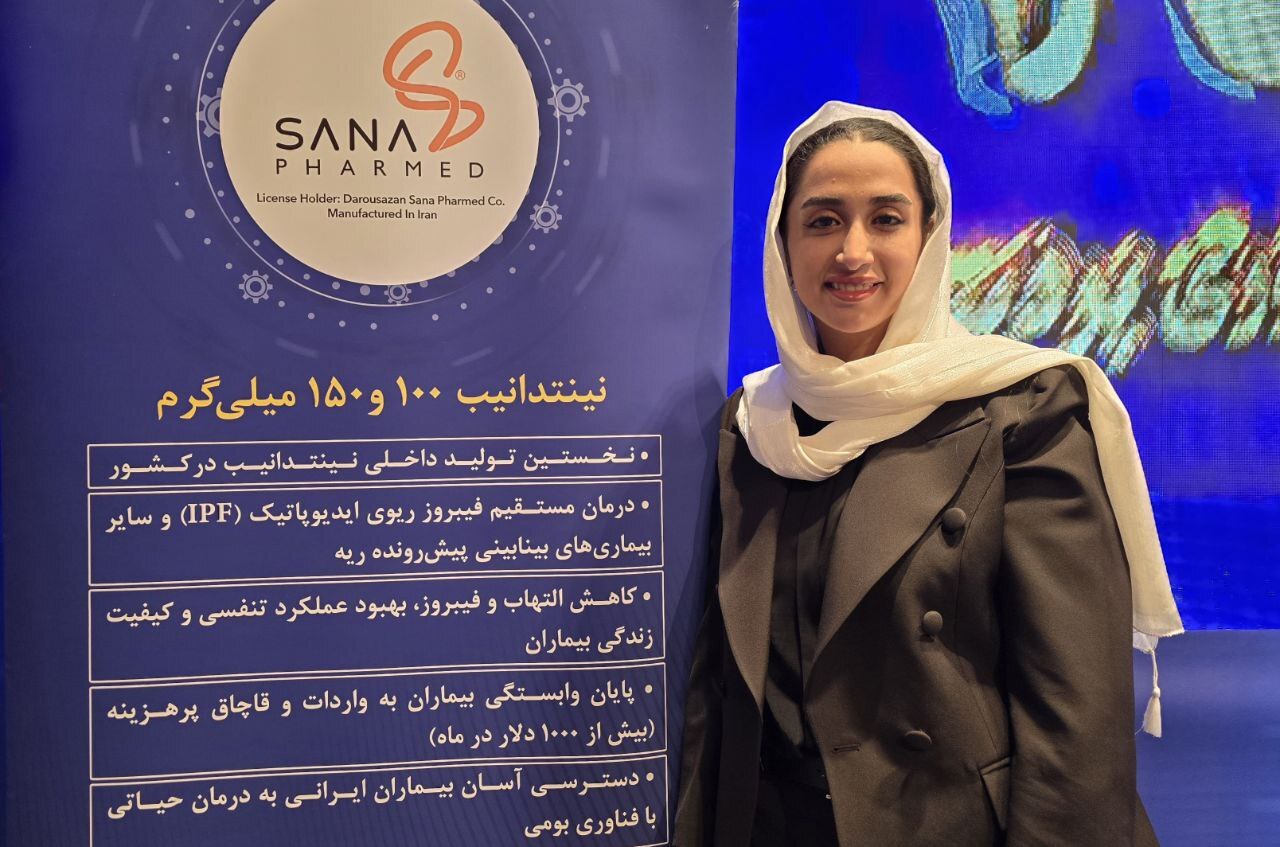
The Need for Domestic Production: From Smuggling to Therapeutic Self-Sufficiency
Explaining the necessity of local production, Navabakhsh said: Pulmonary fibrosis is a progressive disease with no definitive cure. Many patients had to stop treatment due to the high cost or unavailability of imported drugs. Some even resorted to purchasing medicine from unofficial sources at prices exceeding $1000 per month. Consequently, many were excluded from the treatment process, and unfortunately, numerous patients lost their lives.
She emphasized that the company’s main goal in producing Ofenib domestically was to ensure equitable access to standard treatment and reduce costs.
“By relying on our strong R&D team and advanced production lines meeting international quality standards, we produced a drug that eliminates the need for patients to rely on unsafe, illegal sources for their essential medication,” she added.
Clinical Applications of Ofenib in Various Forms of Pulmonary Fibrosis
Ofenib is specifically designed for the treatment and control of different types of progressive pulmonary fibrosis. According to Navabakhsh:Ofenib is effective in treating Idiopathic Pulmonary Fibrosis (IPF), fibrosis caused by autoimmune diseases such as Systemic Sclerosis, and other forms of progressive pulmonary fibrosis. These conditions are typically characterized by gradual lung tissue destruction, and previously, patients had little hope of improvement or often required intensive care unit (ICU) hospitalization.
From a scientific standpoint, Nintedanib exerts its effect by inhibiting FGFR, PDGFR, and VEGFR pathways, which play key roles in abnormal fibrotic tissue growth.
From Patent Expiration to Domestic Production
“The German company Boehringer Ingelheim held the main patent for Nintedanib, which expired about five to six months ago. Following this, companies like Glenmark in India began producing the drug. Taking advantage of this opportunity, we were able to manufacture a domestic version in Iran.
We cannot claim technical superiority over major global pharmaceutical firms, but by maintaining comparable quality standards and offering a significantly lower price, we succeeded in producing a drug vital to Iranian patients. This is a major achievement toward the country’s pharmaceutical self-sufficiency.” Navabakhsh explained.
Global Quality at an Iranian Price
On the global market, Nintedanib is among the most expensive drugs for lung diseases, with imported versions in the U.S. and Europe priced at around $1,000 per month. However, by using local raw materials and domestic production technology, the Iranian manufacturer has reduced the final cost to less than one-fifth of the global price.
Navabakhsh emphasized: “Our goal from the outset was not purely commercial. It was about restoring hope to patients and enabling them to continue living. Human beings have the right to life and aspiration, and we are committed to safeguarding that right.”
Safety, Side Effects, and Usage Guidelines
Like other anti-fibrotic drugs, Ofenib has known side effects, primarily gastrointestinal symptoms such as nausea, diarrhea, and loss of appetite.
Navabakhsh noted: “All patients must take this medication under the supervision of a pulmonologist or an interstitial lung disease specialist. Strict monitoring protocols including liver function tests, dosage adjustment, and regular clinical follow-ups must be observed to ensure maximum safety and efficacy.”
She added that the company’s regulatory and medical teams, in continuous collaboration with scientific associations and academic centers, oversee the safe and evidence-based use of the drug and collect clinical data for ongoing quality improvement.
Pharmaceutical Technology Development in Iran
The production of Ofenib is not merely a pharmaceutical achievement but also a sign of technological maturity in Iran’s pharmaceutical sector. Project managers explained that the process involved complex stages of Active Pharmaceutical Ingredient (API) synthesis, multi-stage quality control, bioavailability testing, and laboratory approvals.
The project was carried out with collaboration among experts in medicinal chemistry, pharmacokinetics, quality control, and pharmaceutical engineering, and successfully met all requirements of the Iranian Food and Drug Administration (IFDA) for market entry.
Navabakhsh also highlighted the human dimension of the project: “Pulmonary fibrosis is considered a rare disease, and patients in this group require broad social and medical support. Through local drug production, we aimed to alleviate some of their concerns and those of their families. In addition to manufacturing the drug, we are implementing programs for physician training, patient education, and post-marketing support services.”
Five-Year Outlook: Controlling the Disease and Improving Quality of Life
Global clinical studies have shown that continuous use of Nintedanib can extend the lifespan of pulmonary fibrosis patients by 9 to 11 years and significantly slow lung function decline. Navabakhsh stated: “Our ultimate goal is not a definitive cure since that is not yet possible but to give patients more time and better quality of life by controlling disease progression. Ofenib can help slow the course of the disease and allow patients to live longer, more fulfilling lives.”
From Localization to Export
The production of Ofenib marks only the beginning of Iran’s journey toward self-sufficiency in advanced pharmaceuticals. The producing company announced plans to not only meet domestic demand but also pave the way for exporting the drug to regional countries.
With the expiration of Nintedanib’s global patent and the technical capabilities now established in Iran, the country has the potential to become a leading regional producer of anti-fibrotic drugs. Plans are also underway to develop new formulations, investigate the drug’s effects on other fibrotic diseases, and conduct joint clinical trials with medical universities nationwide.
The production of Ofenib, as the Iranian counterpart of the international drug Nintedanib, can be considered a significant milestone in the advancement of pharmaceutical technology in Iran.
From a scientific perspective, entering the field of Tyrosine Kinase Inhibitor (TKI) drug production demonstrates that Iran now possesses the technical and intellectual capacity to design and manufacture targeted therapies. Achieving a quality standard comparable to international reference products represents a meaningful step toward alignment with global benchmarks.
Clinically, Ofenib offers an accessible treatment option for patients suffering from various forms of pulmonary fibrosisespecially Idiopathic Pulmonary Fibrosis (IPF) and secondary types resulting from autoimmune diseases. Although it is not a definitive cure, available evidence indicates that continued use can slow lung function decline and extend patient survival.
Socially, the availability of Ofenib can help reduce the psychological and financial burden on pulmonary fibrosis patients and their families. However, the true success of this initiative will only be realized if post marketing surveillance, physician education, and close cooperation between medical centers and pharmaceutical companies are strengthened alongside production.
The continuation of such projects can pave the way for sustainable development in Iran’s complex and innovative pharmaceutical sector. Yet achieving this goal requires a strategic vision, targeted investment, and an efficient regulatory system.
End Article