Alarm Bells Ring: Azerbaijan’s Gas Surge Risks Permanently Sidelining Iran from Europe
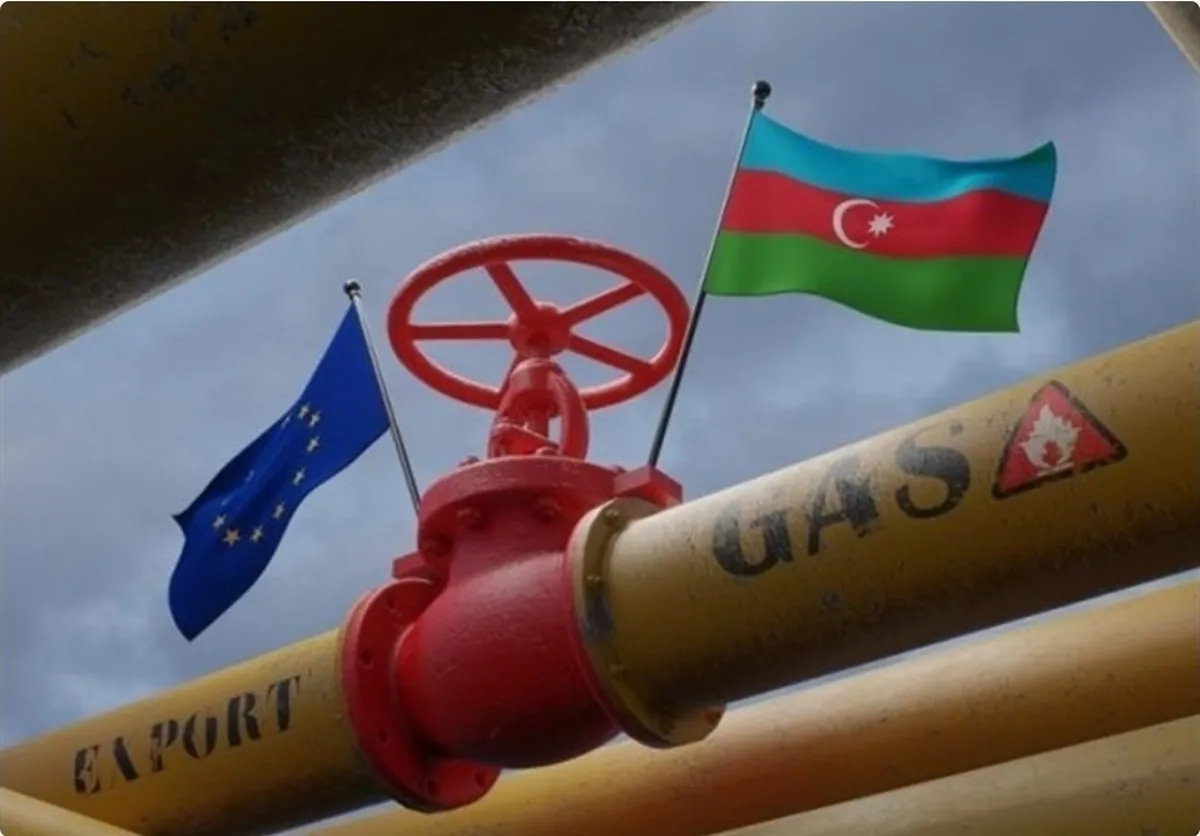
Tehran - BORNA - Recent remarks made by U.S. Ambassador to Turkey Tom Barrack at the Middle East & Africa 2025 forum have once again drawn attention to Turkey’s expanding influence in the regional energy map. Barrack emphasized that establishing a reliable energy corridor between Turkey and Azerbaijan — and potentially between Turkey and Syria — “could resolve many of the region’s energy challenges” and turn the Caspian–Mediterranean axis into a vital energy artery.
These comments not only reflect Washington’s strategic perspective on the region’s energy future but also underscore the decisive roles Turkey and Azerbaijan have gained over the past decade through major infrastructure and pipeline projects. For Iran, however, this evolving dynamic has generated far more risks than opportunities.
Azerbaijan’s Rise as a Key Gas Supplier to Europe
Azerbaijan has long pursued an ambitious strategy to secure a permanent and significant share of the European gas market. The Southern Gas Corridor — consisting of the SCP, TANAP, and TAP pipelines — has become the backbone of the country’s export infrastructure.
This system, which delivers gas from the Shah Deniz field in the Caspian Sea to Turkey and onward to Europe, now supplies gas to more than ten European countries, including Italy, Greece, Bulgaria, Hungary and Romania.
Export volumes have grown sharply in the past two years. Azerbaijan’s gas exports to Europe exceeded 12 billion cubic meters last year, with plans underway to increase this figure to 20 bcm annually in the coming years. This rapid growth has strengthened Baku’s status as a reliable supplier for the European Union, particularly at a time when Europe has been seeking alternatives to Russian gas. In this configuration, Turkey acts as the central transit hub — a role that further sidelines Iran.
Turkey’s Bid to Become an East–West Energy Hub
Turkey’s long-term energy strategy aims to transform the country from a major gas importer into a regional energy hub. In addition to receiving Azerbaijani gas, Ankara has expanded LNG infrastructure, diversified gas supply contracts, and increased underground gas storage capacity.
Its geographic position, combined with extensive pipeline networks and strong political backing from the United States and Europe, places Turkey in a pivotal role in Europe’s energy security architecture. As Azerbaijani exports increase, Turkey’s influence grows accordingly — and Iran’s share diminishes.
Negative Implications for Iran: A Gradual Exit from Regional Gas Equations
1. Lost Opportunity to Enter the European Gas Market
Despite holding the world’s second-largest gas reserves, Iran has been unable to capitalize on Europe’s demand. Sanctions, lack of investment, insufficient export infrastructure, and geopolitical tensions have blocked Iran’s entry. Europe is now meeting its needs through Azerbaijan, Norway, domestic production and LNG.
With the Turkey–Azerbaijan corridor firmly established, Iran’s prospects of supplying gas to Europe have virtually disappeared.
2. Reduced Incentive for Europe to Engage with Iran
Europe once viewed Iran as a potential diversification option. However, with a functioning alternative corridor now available — cheaper and far less politically risky — Europe has limited motivation to negotiate energy agreements with Iran.
3. Iran’s Elimination from Regional Transit Routes
Even if direct exports were unrealistic, Iran could have benefited from regional gas transit from Central Asia or the Caspian basin. Now, that role is fully occupied by Turkey and Azerbaijan, leaving Iran outside the main east–west energy pathways.
4. Strengthening of a Regional Competitor Near Iran’s Northern Borders
Azerbaijan’s gas-driven economic growth boosts its political weight in the South Caucasus. Given recent tensions between Tehran and Baku, this shift further reduces Iran’s leverage in the regional balance.
5. Permanent Consolidation of Turkey’s Advantage
Turkey stands to gain the most from these developments. As it cements its position as an energy hub, Ankara’s influence expands across the Middle East, Caucasus and even the Balkans — while Iran loses one of its most strategic geopolitical tools.
Constraints Facing Azerbaijan — but Not Benefiting Iran
Azerbaijan still confronts challenges: new field development costs, capital needs for expanding TANAP and TAP, Europe’s skepticism toward long-term gas contracts, and stricter environmental policies.
However, these challenges do not translate into opportunities for Iran, as the country lacks the infrastructure, political agreements and investment required to enter the market.
What Iran Needs to Do
Experts argue that Iran must pursue a strategic shift to avoid full exclusion from regional gas dynamics:
1. Prioritize development of joint gas fields and reduce domestic consumption
2. Revive regional energy diplomacy, especially with Turkey and Iraq
3. Invest in small-scale LNG and regional export routes
4. Reduce reliance on hydrocarbon revenues and diversify the economic base
Without such reforms, Turkey and Azerbaijan will continue consolidating their positions while Iran remains a passive observer.
Tom Barrack’s remarks about “new horizons” in the Turkey–Azerbaijan energy corridor are more than a diplomatic statement. They signal a future in which Turkey becomes the primary east–west energy hub and Azerbaijan one of Europe’s key gas suppliers.
In contrast, Iran — despite its massive gas reserves — faces the risk of being removed entirely from Europe’s energy map and losing its geopolitical foothold in the region. Unless major changes are implemented in Iran’s energy strategy, one of the country’s most significant historical opportunities in the global gas market may be permanently lost.
About the author: Basim Laleh is the Economic Desk Editor at Borna News Agency. He specializes in macroeconomic policy, agriculture and food-security analysis, and the political economy of production in Iran. His reporting focuses on evidence-based evaluation of government decisions, sectoral inefficiencies, and their broader impact on national economic stability.
End Article