Poultry Industry Warns of Billion-Dollar Losses from “Arian” Breed / Low Efficiency Imposes Nearly $1 Billion in Extra Costs
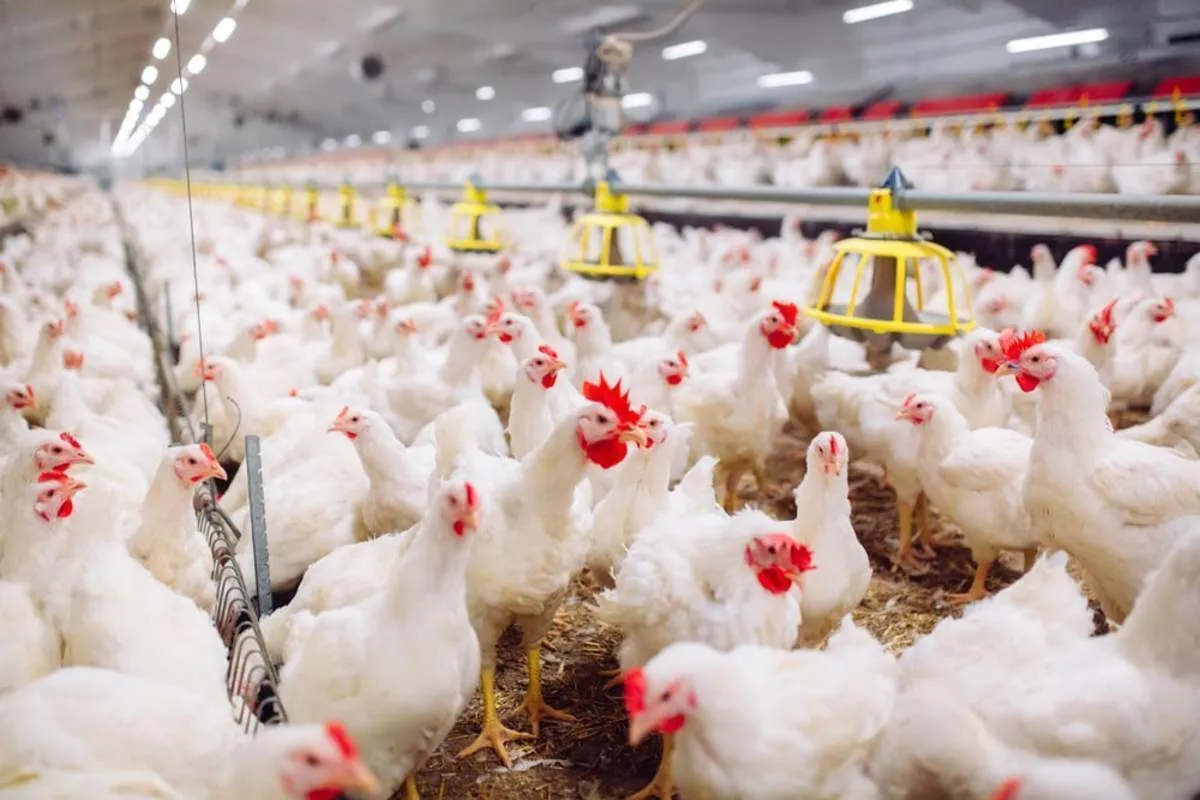
Tehran - BORNA - The most critical issue raised during the President’s meeting with economic actors in Qazvin Province was the mandatory use of the “Arian” poultry strain. Producers argued that while the government already struggles to supply animal feed, the Arian breed — which reportedly contains around 20% more bone mass and performs poorly in meat production — significantly increases production costs.
Annual Loss of $1.2 Billion Attributed to Arian Strain
Ali Akbar Abdolmaleki, President of the Sanandaj Chamber of Commerce, told Borna News Agency that the low carcass quality and high mortality rate associated with the Arian strain have imposed a heavy economic burden on the industry.
“Using the Arian strain costs the country about $1.2 billion every year, while importing the parent stock of efficient global broiler breeds requires only $22–25 million,” Abdolmaleki said. “In the current circumstances, avoiding this unnecessary billion-dollar expense would significantly support the national economy.”
He added that 777 poultry farms in the province are on the verge of shutdown due to the low performance of the Arian strain and the high cost of feed sourced from the open market.
“With a change in breed, these farms can return to production, and consumers will also benefit from lower prices,” he noted.
Abdolmaleki criticized the enforced use of the low-efficiency strain and said such decisions — lacking scientific and economic justification — create conditions for rent-seeking and distort agricultural policymaking.
Experts Warn of Threat to National Food Security
Arsalan Jamshidi, an expert in the livestock and poultry industry, told Borna that advanced countries have more than 135 years of research and development behind their breeding programs.
“In contrast, the Arian line, introduced in Iran in 1993, was never fully developed and was imposed on producers without sufficient scientific backing. As a result, its adoption dropped sharply from the 2010s onward,” he said.
Jamshidi pointed to the feed conversion ratio as a key issue: “Global broiler strains deliver a feed conversion ratio of 1.6 to 1.7. In the Arian strain, for every kilogram of live weight, there is 200–300 grams of feed waste. This seemingly small difference translates into a national loss of around $700 million annually.”
He stressed that requiring producers to use the Arian strain in one out of every four production cycles has placed additional pressure on an industry already facing severe economic challenges.
“If this policy continues, many farms will shut down, and the country’s food security will face serious risks,” he warned.
Letter from 93 Major Producers to Top Officials
These concerns echo a letter sent eight months ago by 93 major poultry producers, who collectively supply around 30% of the national market. In their open letter to the heads of the three branches of power, they warned of the potential collapse of the poultry sector and called for the immediate removal of the mandatory Arian strain.
The signatories urged senior officials to take urgent action to eliminate the existing monopoly, citing the strain’s low efficiency and adverse impact on the economy and food security.
About the author: Basim Laleh is the Economic Desk Editor at Borna News Agency. He specializes in macroeconomic policy, agriculture and food-security analysis, and the political economy of production in Iran. His reporting focuses on evidence-based evaluation of government decisions, sectoral inefficiencies, and their broader impact on national economic stability.