Diplomacy as cover: Investigation details how US-Iran talks masked preparations for 12-day war
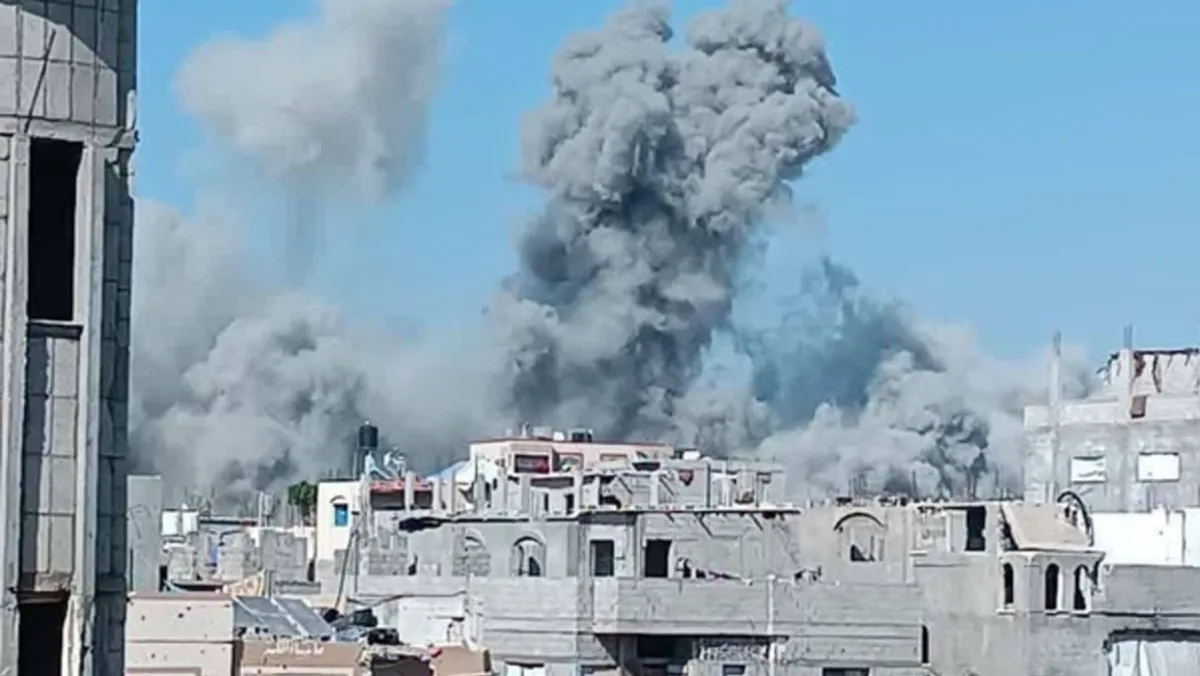
Tehran - BORNA - The probe was jointly conducted by The Washington Post and PBS Frontline, with the daily reporting the results on Wednesday.
It showed how the indirect talks that preceded the aggression, were deceptively portrayed as ongoing and potentially viable.
However, Israeli officials had already decided to strike, with their American counterparts fully aware, the report added.
According to the daily, in early 2025, Israeli prime minister Benjamin Netanyahu presented US President Donald Trump with multiple scenarios for attacking Iran, ranging from a unilateral Israeli strike to full US-led military aggression.
Afterwards, Trump would claim he sought to “give nuclear diplomacy with Iran a chance,” but intelligence-sharing and operational planning continued in parallel, it added, citing two people familiar with the matter.
Israeli officials “thought that giving diplomacy a chance was important for global public opinion if they ultimately decided to strike Iran,” the investigation found.
In the immediate run-up to the strikes, Trump would still allege he preferred negotiations, The Post wrote, adding that Israeli officials would simultaneously allow media speculation about tensions between Washington and Tel Aviv over the prospect of the aggression.
“All the reports that were written about Bibi not being on the same page with [US regional envoy Steve] Witkoff or Trump were not true,” a person familiar with the matter said.
But “this was the general perception, it helped to move on with the planning without many people noticing it.”
‘Civilians not spared’
The paper and investigative outlet Bellingcat also verified civilian deaths that were caused during the attacks, which targeted Iranian scientists throughout the war, challenging Israeli claims that civilian harm was minimized.
The daily noted that one of the strikes targeting Iranian scientists had caused extensive civilian fatalities, including a two-month-old infant.
It also reported the regime’s failure to assassinate Mohammad Reza Sedighi Saber, a nuclear scientist, during its targeting of the victim’s home, saying the strike rather resulted in the martyrdom of his 17-year-old son. Days later, Saber himself was martyred at a relative’s home during his son’s mourning ceremony, it added, noting that the latter attack resulted in the martyrdom of 15 civilians, including four minors, and leveled two homes.
At least 1,062 people were martyred during the aggression, including 276 civilians.
The Islamic Republic retaliated by firing hundreds of missiles, including ballistic and hypersonic variants, towards sensitive and strategic Israeli targets, besides striking Al Udeid Airbase in Qatar, the heart of American military operations in West Asia.
The reprisal forced the adversaries to request a ceasefire no longer than 12 days into the launch of the unlawful aggression.
End Article
