Iran Rejects Trump’s Claim on Kharg Island, Says Nation’s Will — Not Foreign Powers — Determines Its Future
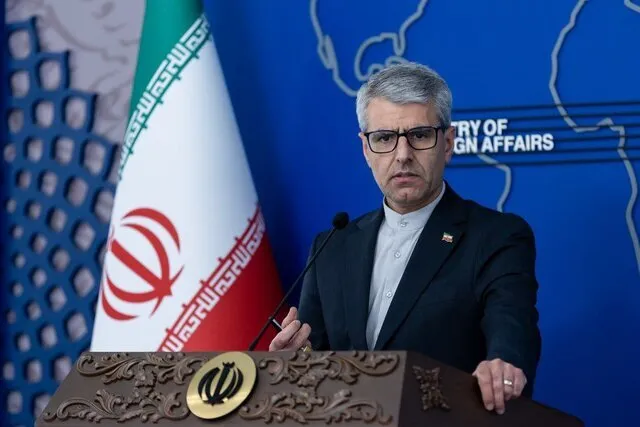
Tehran - BORNA - Esmaeil Baghaei, spokesman for the Ministry of Foreign Affairs of Iran, made the remarks on Monday during his weekly press briefing with reporters.
Referring to Trump’s statements about seeking control of Kharg Island, Baghaei said: “What determines the future is the will of the Iranian nation, not malicious foreign powers.”
He said the U.S. president has made similar remarks about other territories, from Greenland to Canada, adding that it appears “as if the entire planet is viewed as prime real estate and governments are treated like property agencies,” while in reality countries are formed based on national sovereignty, the will of their peoples and the right of nations to self-determination.
Iran’s Borders Reflect Its History and Identity
Baghaei said the borders of any country are the result of historical, social and cultural developments and represent the essence of a nation.
He stressed that the map of Iran reflects everything Iranians take pride in.
“Iran has always been the graveyard of the ambitions and illusions of foreign powers,” he said, warning that countries in the region should not assume that remaining silent would prevent similar developments from affecting them.
“All governments and all free people who care about peace and human dignity must not remain indifferent to this issue,” he added.
“Heroic Resistance” Against U.S. and Israeli Aggression
Baghaei said the developments come during the second week of what he described as the Iranian people’s “heroic resistance” against aggression by the United States and Israel.
“In these two weeks, Iran’s soldiers have shown how they sacrifice their lives in the face of the enemy and how they give everything for the dignity and survival of our beloved country,” he said.
The spokesman also referred to the introduction of the third leader of the Islamic Republic, Mojtaba Khamenei, describing it as the most significant development of the day and reading a Foreign Ministry statement pledging allegiance.
U.S. Seeks Dominance Over Other Nations’ Resources
Referring to what he described as Washington’s objectives in its actions against Iran, Baghaei said the United States has long sought dominance over other nations’ resources.
He cited remarks by U.S. Senator Lindsey Graham, who said that if Iran’s oil were also brought under U.S. control alongside Venezuelan oil, Washington could dominate about 31 percent of the world’s oil resources.
Baghaei also said that the U.S. secretary of state had previously acknowledged that Washington entered the conflict because of Israel.
Iran Focused on Defending Its Sovereignty
The spokesman said Iran’s priority is defending its sovereignty and territorial integrity.
“At present, all our efforts, attention and focus are directed toward defending Iran against this brutal aggression,” he said.
Baghaei added that the history of U.S. hostility toward Iran does not begin in 1979 but dates back to the 1953 Iranian coup d'état, when Washington supported the overthrow of Iran’s government.
He said Iran’s experience in past negotiations with the United States also showed that Washington had violated commitments during periods of diplomacy.
Accusations Over Civilian Attacks
Baghaei accused the United States and Israel of targeting civilians and civilian infrastructure in Iran.
He referred to the attack on a girls’ school in Minab, which he said killed more than 170 children, as well as attacks on oil facilities and other infrastructure.
“It is shameful that even regarding the Minab school attack they first said it would be investigated and then claimed that Iran itself was responsible,” he said, calling such claims “audacious and irresponsible.”
“This level of normalization of killing human beings is truly nauseating,” Baghaei added.
“A War Over Humanity”
According to Baghaei, the ongoing conflict represents a broader struggle.
“This war is a war over humanity — between those who seek domination, destruction and killing, and Iran, which is defending human dignity and protecting its people against the most vicious regimes,” he said.
He stressed that Iran’s actions go beyond defending its territory.
“What Iranians are doing is not only defending Iran, but also defending humanity, human dignity and freedom against domination,” he said.
Warning to Regional Countries
Baghaei warned that the presence of U.S. forces in the region does not contribute to security.
“In the past days it has become clear that the U.S. military presence in the region brings neither stability nor security,” he said, adding that Washington’s primary concern is protecting Israel rather than the safety of regional countries.
He urged regional states not to allow their territory or facilities to be used for attacks against Iran.
“This demand is not only based on the principle of neighborliness but also on a well-established rule of international law,” he said.
Iran’s Military Response Within Self-Defense
Baghaei said Iran’s armed forces remain committed to humanitarian principles but warned that any facilities used to support aggression against Iran could become legitimate targets under international law.
He said Iranian missile strikes on U.S. military bases and support facilities in the region were examples of legitimate self-defense.
Diplomatic Missions in Iran Continue Operations
Responding to a question about diplomatic missions in Iran, Baghaei said the country hosts more than 100 diplomatic representations, with more than half remaining active.
“Some embassies have reduced their activities, but many continue operating,” he said, adding that Iran guarantees the security of diplomatic premises and diplomats despite what he described as violations of the rules of war by the aggressor states.
End Article