Araghchi: There Are No Negotiations / U.S. Sacrifices Regional Countries for Israeli Regime
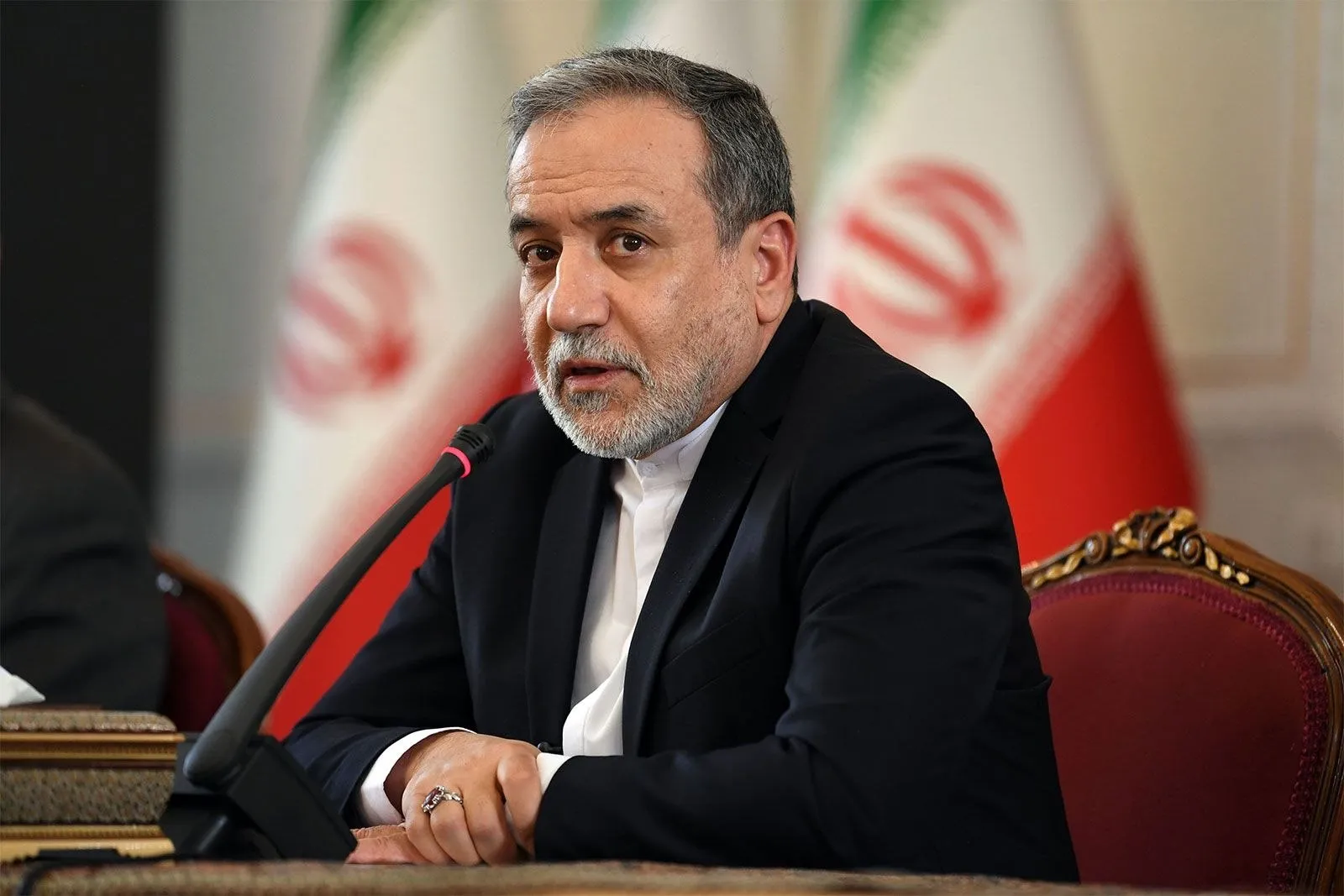
Tehran - BORNA - Araghchi said: “From our perspective, the Strait of Hormuz is not completely closed, but it is closed to enemies.”
The foreign minister, noting that countries which have not participated in the war against Iran can pass through the Strait of Hormuz in coordination with Iran, said: “In recent days, ships from China, Pakistan, Iraq, Russia, India and others have passed through this strait.”
He added: “After the war, it will be the same. The Strait of Hormuz is located within our internal waters; it is within our territorial waters, and our sovereignty exists over it. We are seeking to prepare and formulate arrangements in this regard.”
Araghchi, referring to US calls for negotiations and stressing that there are no negotiations, said: “Previously they were seeking Iran’s unconditional surrender, and now they are talking about negotiations, and this is an admission of defeat.”
“We do not want a ceasefire; rather, we seek an end to the war in such a way that such an issue does not recur.”
The foreign minister emphasized: “We did not start this war and we were not seeking war.” In response to a question about reports of negotiations between Iran and the United States for a ceasefire and remarks made by the U.S. president, he said: “We do not want a ceasefire; rather, we seek an end to the war in such a way that such an issue does not recur.”
Araghchi added: “When we say we do not want a ceasefire, it does not mean that we want war. A ceasefire means that the previous cycle may be repeated and we may witness another attack. We do not want such a thing. We seek an end to the war in a way that it will not recur and that our enemies learn a lesson so that they will no longer have the desire to attack and aggress against Iran.”
He stated that during this period, the foreign ministers of various countries have been in contact with Iran and the presidents of some countries have also engaged with Iran and proposed ideas for a ceasefire, adding: “Our position is principled and firm, and we conveyed these principled and firm positions in these phone conversations and continue to adhere to them.”
“In recent days, the U.S. side has begun sending various messages through some friendly countries.”
This senior Iranian diplomat emphasized: “No negotiations have taken place so far; there have been no negotiations with the U.S. side. However, in recent days the U.S. side has begun sending various messages through some friendly countries, and our positions have also been conveyed. Therefore, there has been an exchange of messages, not negotiations, and in these exchanges we have reiterated our principled positions, in some cases accompanied by warnings, including regarding a possible attack by enemies on infrastructure and Iran’s response to such actions.”
Referring to remarks by the U.S. president about postponing an attack on Iran’s infrastructure for five days, Araghchi said: “Our position regarding their threats about attacking infrastructure was firm. Our armed forces took a firm stance, and necessary warnings were issued through media and diplomatic channels that they should not enter such a war, and if they do, what consequences it will have and what calamities it may bring to the entire region, which would benefit no one.”
Araghchi emphasized: “The exchange of messages has taken place through friendly countries. Ideas have been proposed. I have seen that in some places there is talk of a 15-point plan and related matters. As I said, ideas have been proposed. We have conveyed these ideas to the country’s senior authorities, and if necessary and deemed appropriate, a position will be taken.”
He stressed: “At present, our policy is resistance. We have no intention of negotiations. So far, no negotiations have taken place, and our positions remain principled.”
The Israeli regime imposed this war on the United States based on the ‘Greater Israel’ plan
In response to a question about reports that the Israeli regime imposed this war on the United States based on the “Greater Israel” plan and why regional countries have aligned with the aggressors, Araghchi said: “This war revealed many truths. One of the most important is that U.S. bases, which were supposed to provide security for regional countries, not only failed to do so, but have become a source of insecurity. If these bases did not exist, those countries would not have been threatened. If they are being targeted, it is because of the presence of these bases. I hope this reality has become clear to our friends in the region, and I believe it has.”
The United States will sacrifice all regional countries for the security of the Israeli regime
He said regarding the second point: “The priority for the United States is the Israeli regime. These bases were used to support Israel and have undermined the security of regional countries. I hope it has become clear to our friends that the United States will sacrifice everyone for the security of this regime.”
Referring to a third point, Araghchi said: “The third reality that became clear is that the goals of the Israeli regime are greater than what is stated. It is not the case that they want to live securely alongside two states; they have ambitious goals for dominance over the region. We have seen them speak about ‘Greater Israel,’ which includes parts of the territory of regional countries.”
The cost of this war is paid by the people of the United States and the region
The Iranian foreign minister added: “The fourth reality is that this is neither America’s war nor Iran’s war; it is Israel’s war. It was Israel that dragged the United States into the war, and the cost is being paid by the American people and the people of the region. This is currently a major debate in the United States that an unnecessary war has been waged in favor of Israel’s interests, and we are witnessing that protests in the United States on this issue are at their peak.”
Europe’s stance shows it is no longer a major international actor
Regarding the reactions of European countries, Araghchi said: “The positions of Europeans are worth examining. All of them say they oppose this war, but in practice they have not been willing to condemn the aggressor, showing that Europe is no longer a major actor on the international stage.”
Referring to contradictory positions among European countries, he said: “In Germany, we saw that the chancellor made unusual remarks at the beginning of the war, but in recent days there has been a shift in position. The German president has also recently spoken more clearly. Spain has also reiterated its positions. In my view, Europeans are beginning to realize the mistake they made and that they should have condemned the war from the outset.”
He added: “We hope that courageous voices in Europe will grow stronger. Europe claims to be the standard-bearer of international law, but all of this has been called into question. Instead of condemning aggression, they attempted to appease the aggressor. The aggressor speaks of ‘peace through strength,’ meaning that power prevails, which is another expression of the law of the jungle.”
Araghchi also said, in response to a question about the actions of the foreign ministry during this period: “We have tried to fulfill our duty as the voice of the Iranian nation.”
He expressed appreciation for humanitarian assistance provided by some friendly and regional countries, adding: “One of our services was assisting Iranians who were stranded at the borders. Through the efforts of our embassies and consulates, these issues were resolved. I thank neighboring countries including Afghanistan, Turkey, Turkmenistan, Azerbaijan, Armenia, and even Saudi Arabia for helping with the transfer of pilgrims.”
The Iranian foreign minister added: “Regarding the cowardly attack on the destroyer Dena, I thank Sri Lanka, India, and our missions in those countries.”
He concluded: “In our surrounding region, countries have provided assistance, although in the southern area we face some challenges. Nevertheless, the people and governments of these countries have, to some extent, provided help. I hope that at the end of this war we will reach a new understanding with our friends and neighbors in the southern Persian Gulf.”
End of Report