Baghaei: Iran Remains Committed to Nuclear Non-Proliferation Treaty
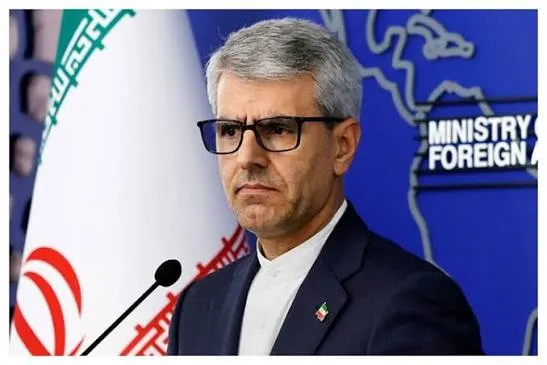
Tehran - BORNA - Iranian Foreign Ministry Spokesman Esmaeil Baghaei, speaking at his weekly press briefing on Monday, November 23, began his remarks by commemorating the children who lost their lives and the nation's martyrs, extending condolences to their bereaved families.
He emphasized that the absence of these children would always be deeply felt.
Baghaei also expressed condolences over the passing of Reza Amirkhani, an Iranian writer and literary figure. Referring to his personal acquaintance and conversations with Amirkhani, as well as his familiarity with the writer's works, he stated that his generation had grown up with Amirkhani's books and literary contributions.
He emphasized that Amirkhani's valuable role in promoting Persian culture and literature could not be overlooked, adding that the writer's passing after spending a year in a coma represented a loss for Iran's cultural community.
Responding to questions regarding Iran's continued membership in the Treaty on the Non-Proliferation of Nuclear Weapons (NPT), Baghaei stressed that the Islamic Republic of Iran had been a party to the treaty since 1970 and had consistently remained committed to its obligations.
Referring to Iran's 1974 initiative to establish a nuclear-weapon-free zone in the Middle East, the Foreign Ministry spokesman stated that the NPT is significant because it aims to prevent the proliferation of nuclear weapons while recognizing countries' right to use nuclear energy for peaceful purposes.
Criticizing the conduct of certain nuclear-weapon states, including the United States, in implementing their obligations under the treaty, Baghaei said: "Unfortunately, these countries are not fulfilling their commitments."
He emphasized that the Islamic Republic of Iran remains a member of the Nuclear Non-Proliferation Treaty and that no discussions have taken place regarding withdrawal from the treaty.
Iran-Armenia Relations Must Not Be Affected by Third-Party Interference
Iranian Foreign Ministry Spokesman Esmaeil Baghaei reaffirmed the Islamic Republic's position regarding developments in the Caucasus, emphasizing that Iran supports the expansion of economic relations, the reopening of blocked routes and the development of regional connectivity.
However, he stressed that such measures must not lead to changes in the region's geopolitics or interference by third-party forces in relations between neighboring countries.
Referring to the longstanding relations between Iran and Armenia, Baghaei stated that ties between the two countries had been established and developed over the years through the efforts and determination of their leaders.
He emphasized that the Islamic Republic of Iran seeks to ensure that these relations continue without interference from external parties.
The Foreign Ministry spokesman further stressed that Iran would not rely solely on the promises and commitments of others.
He added that all relevant authorities in Iran would closely monitor the matter and that the Islamic Republic's position in this regard remained unchanged.
"We support the expansion of economic relations and the reopening of roads and transportation routes, but this process must not lead to changes in the region's geopolitics or pave the way for the presence and interference of third-party forces in relations between neighboring countries," Baghaei stated.
Emphasizing that the presence of any third-party military forces near Iran's borders is unacceptable, he noted that the Islamic Republic maintains good relations with the Republic of Armenia.
Baghaei added that, based on past experiences, Iran views the involvement and interference of third parties in the region with distrust.
Accordingly, he emphasized Iran's commitment to preserving regional stability, respecting the sovereignty of countries and maintaining friendly relations among neighboring states.
Lebanon's Main Problem Is Israeli Occupation and Aggression
Iranian Foreign Ministry Spokesman Esmaeil Baghaei reaffirmed the Islamic Republic's support for establishing good relations with Lebanon, emphasizing that the country's principal problem is the occupation and aggression of the Zionist regime, which continues with US support.
Referring to repeated Israeli attacks against Lebanon, Baghaei stated that violations of the country's sovereignty, attacks on Lebanese territory and threats against its people have continued for several decades.
He emphasized that the Lebanese resistance had emerged to confront the aggression of the Zionist regime.
Baghaei reiterated that the Islamic Republic of Iran undoubtedly seeks good and constructive relations with Lebanon, stressing that the country's primary problem remains the continuation of Israeli occupation and aggression.
Iran Makes Independent Decisions on Its Relations and Policies
Iranian Foreign Ministry Spokesman Esmaeil Baghaei stated that discussions on various issues are a common feature of international meetings.
He emphasized that the Islamic Republic of Iran has demonstrated that it is not only an active player on the international stage but also an independent one, making decisions on its affairs based on national interests and its own assessments.
Referring to Iran's good relations with Russia and China, Baghaei said: "We held discussions with our Russian and Chinese counterparts both before and after the meeting."
Addressing talks between certain countries and the United States, he stated that every country engaging in dialogue with Washington has its own issues and considerations.
He added that Iran would continue pursuing its positions in light of the meeting's final statement.
The Foreign Ministry spokesman emphasized that the Islamic Republic of Iran acts independently in its affairs and decision-making, based on its own judgment.
To be continued...