Baghaei: Details of understanding and signing process to be announced today or tomorrow
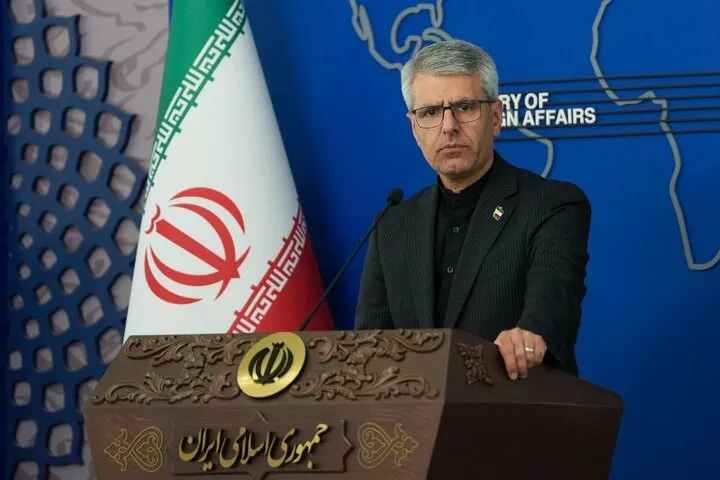
Tehran - BORNA - The weekly press briefing of the Foreign Ministry spokesman was held on Monday afternoon with the presence of domestic and foreign journalists.
Esmail Baghaei, the Foreign Ministry spokesman, referred to the beginning of the month of Muharram, describing it as a symbol and sign of resistance against oppression.
He also honored the memory of the martyrs of the 12-day war and said: "We will not forget what crimes the Zionist regime and the United States committed against Iran and the Iranian people during this war. They attacked Iran's nuclear facilities, martyred a number of Iranian military commanders and citizens, and unfortunately, the international community and the IAEA did not emerge successfully from this test."
The Foreign Ministry spokesman, referring to the agreement between Iran and the United States to end the war and the signing of a memorandum of understanding between the two countries in the coming days, said: "This was a very important development, and it is the product of the legendary resilience and resistance of the Iranian people against the aggressions of two villainous actors equipped with all material means. I must take this opportunity to thank all the people and various sectors who, over these 110 days, stood as a support for the defenders of the homeland in both the military and diplomatic arenas. I also pay tribute to the souls of all the martyrs of this war, including our martyred leader, and promise them that we will spare no effort in continuing this path to defend Iran and secure the interests of the Iranian people."
In response to a question about the details of signing the memorandum of understanding between Iran and the United States in Switzerland and who will attend the ceremony from Iran, he said: "We will announce the details of this matter soon."
We will have a meeting in Doha before traveling to Geneva
The spokesman for the Iranian negotiating team also said regarding the signing process of the memorandum of understanding and its details that a decision will be finalized today or tomorrow, and information will be announced accordingly.
Baghaei also responded to another question about some Western news agencies reporting that preliminary negotiations will be held in Doha, Qatar, before the Friday meeting in Geneva and the Iran-US talks in that country, saying: "Plans are underway for a trip to regional countries before the Geneva meeting, and as soon as it is finalized, that will also be announced."
We will travel to some regional and neighboring countries before going to Switzerland
He added: "As I said, we have plans to travel to some regional and neighboring countries."
Zionist regime's attack on Lebanon turned into an opportunity
In response to a reporter's question about the Islamabad Memorandum of Understanding regarding ending the war in Lebanon and simultaneous attacks by the Zionist regime on that country, Baghaei said: "Yes, we witnessed that at the same time as efforts to reach an understanding were intensifying, the Zionist regime committed repeated crimes in Lebanon's Dahieh and in a terrorist attack on a residential area, martyring a number of Lebanese citizens."
Iran's Foreign Ministry spokesman expressed condolences for the martyrdom of a senior Hezbollah commander and other Lebanese citizens, describing the act as a heinous crime.
Referring to how Iran made decisions regarding regional developments, he stated: "Every development is decided upon based on a precise and comprehensive assessment of Iran's greater interests and benefits. I think it will become clearer later that the Zionist regime's terrorist act against Lebanon on the afternoon of Sunday, June 14, turned into an opportunity for the maximum fulfillment of the national interests of Iran, the resistance front, and Lebanon."
Baghaei emphasized: "The Islamic Republic of Iran and its friends did not allow this evil act by the Zionist regime to disrupt our focus on securing the interests of the Islamic Republic of Iran and Lebanon. In fact, this crime led to greater cohesion and strength of the resistance front against the Zionist regime."
Lebanon ceasefire is an inseparable part of the understanding
Iran's diplomatic spokesman also reminded: "Lebanon and ending the war in that country are an inseparable part of the understanding to end the war. We have shown in the past that we are determined in this regard. Ending the war and establishing a ceasefire in Lebanon was part of the April 8 ceasefire, and we have proven in practice that we are serious. In the future, we will certainly monitor developments carefully and, wherever necessary, use all our tools to ensure that the other parties fulfill their commitments."
In response to another question about whether the Islamabad Memorandum of Understanding merely refers to a "cessation of war in Lebanon" or also includes the "withdrawal of the Zionist regime from Lebanese soil," Baghaei said: "It may interest you that in this memorandum of understanding, the word 'Lebanon' is used three times: 'ending the war on all fronts, including Lebanon,' and 'respect for the sovereignty and territorial integrity of Lebanon.' I think this phrase is completely clear as to what any understanding in this regard should include: respect for Lebanon's territorial integrity and national sovereignty. Therefore, it is completely clear what the parameters of this commitment are."
The hype about the Hamadan trip is exaggerated
In response to a reporter's question about his trip to Hamadan and news published about an attack on him or being prevented from speaking at a gathering, the Foreign Ministry spokesman said: "If I want to speak emotionally, I would say... First, I need to thank the good people of Hamadan for their hospitality, generosity, and kindness. I went to Hamadan at the invitation of the respected family of Martyr Shadmani on the anniversary of his martyrdom during last year's imposed war by the Zionist regime and the United States, and I used this opportunity to meet with the good people of Hamadan. I had good meetings with professors at Bu-Ali University, as well as with scholars and clerics in Hamadan. In the evening, I attended the martyr's commemoration ceremony and gave a short speech."
Regarding the news published about the trip, he stated: "These things circulating on social media are exaggerated. I think it is our duty to be present among the people – people who have shown their insight, endurance, and love for their country over these past one hundred and some days – to listen to their words. Patience is one of the necessary qualities for anyone who takes on responsibility."
Iran's Foreign Ministry spokesman emphasized: "I attended that gathering with great pride, both listening to and thanking them for their kindness, and also hearing their words and complaints. Certainly, both the people's kindness and their complaints help us in performing our duty."
We neither forgive nor forget the crimes committed against the Iranian nation
In response to a reporter's question about how to continue pursuing legal action against the crimes of the United States and the Zionist regime and the issue of seeking blood vengeance for the martyrs alongside negotiations and the possibility of reaching an agreement, the Foreign Ministry official stated: "I think the issue of seeking blood vengeance for all our martyrs is a permanent issue. No one can in any way overlook, forget, or forgive the great crime that was committed against the Iranian nation. Therefore, this demand will be a permanent and continuous demand."
Baghaei added: "As the Foreign Ministry, we will certainly use every tool – both to document the crimes and to explain the heinous crimes committed against the Iranian people. This is a permanent and continuous effort. We will use every international institution, every international podium to record and explain these crimes and to seek justice."
He stated: "There is no doubt that diplomacy and reaching an understanding with the other side to end the war and reduce tensions will not mean that we will forget or forgive the crimes committed against the Iranian people."
The US has a long way to go to gain the trust of Iranians
Referring to the process of the imposed war against Iran, Baghaei said: "After about 100 days, after many ups and downs, and after the other side claimed it wanted to destroy Iran's civilization, sought to destroy all of Iran's infrastructure, and referred to the Iranian nation in the worst terms, we reached a point where last night the understanding to end the war on all fronts was finalized. I think examining the reasons for this process will be telling."
Emphasizing the deep mistrust of Iranians toward the United States, the Foreign Ministry official stated: "At the same time, we must unfortunately acknowledge that the depth of Iranians' mistrust toward the United States is deeply rooted due to the long-standing evils of successive US administrations against the Iranian people, beginning in 1953 and continuing to the present. Therefore, the US has a long way to go to gain the trust of Iranians. So the memorandum of understanding is merely a step toward reducing tensions and ending a war that harmed our region, caused great damage to the Iranian nation, and resulted in significant loss and defeat for the initiators of this aggression."
Baghaei added: "The Iranian people have shown well that they spare no effort in defending Iran's entity and protecting their dignity, independence, and national sovereignty. So we must see which direction the future path will take."
Reconstruction compensation and release of frozen assets are two important economic issues
In response to a question about the economic aspects of the memorandum of understanding between Iran and the United States, including the release of Iran's frozen assets, lifting sanctions, and obtaining compensation through a reconstruction fund, he said: "The release of Iran's blocked or restricted assets, along with the issue of reconstruction compensation, are two important economic issues, and the American side undertakes to take action on both."
Emphasizing Iran's right to access its assets, Baghaei stated: "The issue of making Iran's blocked assets accessible as a right – not that the American side is giving Iran money – is very important, and the necessary arrangements in this regard will be made in the understanding."
Baghaei noted: "Reconstruction compensation is also extremely important to us. Seeking compensation is one of the indisputable rights of the Iranian people and is being pursued in the negotiation process."
Iran must be able to sell oil and petrochemical products without any obstacles from the day after Friday
Referring to the details of sanctions lifting under the memorandum of understanding, Baghaei stated: "Under this memorandum of understanding, the American side is obligated to lift all sanctions – both secondary and primary – as well as UN Security Council sanctions and relevant IAEA Board of Governors resolutions. This issue, along with matters related to the nuclear issue, are topics that will be discussed after the signing of the memorandum of understanding and an understanding will be reached on them within 60 days. This is essentially the main foundation of the economic discussions of this memorandum of understanding."
Baghaei added: "Matters related to the removal of obstacles to Iran's oil, petrochemical, and petroleum derivatives sales must happen as soon as the memorandum of understanding is signed on Friday, and Iran must be able to sell oil and petrochemical products and derivatives without any obstacle or problem."
Iran, as a littoral state along with Oman, will take necessary measures for safe transit through the Strait of Hormuz
In response to a question about how the Strait of Hormuz will be managed and US President Trump's statement that no tolls will be imposed by Iran on ships in the strait, the Foreign Ministry spokesman stated: "The Strait of Hormuz is very important to us. The measures we have taken over these past few months to protect Iran's national sovereignty and security have been fully consistent with international law. Moving forward, the Islamic Republic of Iran, as a littoral state along with Oman, will take the necessary measures to ensure safe passage of ships through this strait."
We will arrange safe transit through the Strait of Hormuz for a specified period corresponding to the other side's actions
Baghaei added: "In the text of the memorandum of understanding, Iran is obligated to take the necessary measures in cooperation with the other littoral state, Oman, and in consultation with other stakeholders. Because our goal is essentially to ensure that transit through the Strait of Hormuz takes place safely and securely. For a specified period, we will arrange safe transit through the Strait of Hormuz corresponding to the other side's actions."
Emphasizing the preservation of Iran's sovereignty and standing in this regard, he said: "It is completely clear that this task has been placed on the shoulders of the Islamic Republic of Iran as the littoral state. Therefore, I do not think there is any doubt that Iran's sovereignty and standing in this regard are fully preserved. We have always said that we are not seeking to collect tolls, but in exchange for the services we will provide – navigation services, environmental protection, possibly ship insurance, and other services that Iran and Oman will provide – the necessary fees will be designed and collected."
US is responsible for any breach of commitment by other actors in the region
Baghaei, emphasizing the importance of the US commitment to the provisions of the memorandum of understanding, stated: "What matters to us is the US commitment to the agreement that has been formed under this memorandum of understanding. The people of our region, given past experiences, will never accept that the Zionist regime takes any action without prior or subsequent coordination and cooperation with the United States. Therefore, the US is committed, obligated, and responsible for fulfilling the commitments it has undertaken under this memorandum of understanding. Naturally, any breach of commitment by other actors or US allies in the region will be the responsibility of the American side."
On Trump's remarks about removing Iran's enriched nuclear materials
In response to a reporter's question about Trump's statements regarding the removal of Iran's enriched nuclear materials through operations inside Iran and what decision has been made regarding Iran's nuclear issue in the text of the memorandum, the Foreign Ministry official said: "I think they entered once and saw what happened. So if they are wise, they will not repeat it."
Baghaei, referring to the content of the memorandum, stated: "In the text of the memorandum, as I have previously said, we have not discussed the details of the nuclear issue. It has been generally agreed that within a 60-day period after the signing of the memorandum, negotiations will take place between Iran and the United States exclusively on the 'nuclear issue' and, correspondingly, on the issue of 'sanctions lifting.' Regarding the nuclear issue, it is clear what aspects will be discussed: both the issue of enrichment – where our rights and obligations as a member of the Non-Proliferation Treaty are completely clear – and the issue of high-enriched uranium stockpiles. These two topics will be discussed during that period."
He noted: "In the memorandum, we have not discussed the details of the negotiations. Iran's positions on both issues are clear, but we must wait and see in which direction developments will move during the 60 days of negotiations on these two topics."
US must ensure Israel commits to ceasefire in Lebanon
In response to a question from a Canadian media reporter about what guarantees Iran has received from the US that Israel will adhere to its commitments to stop the war in Lebanon, Baghaei said: "We have no trust in the Zionist regime, just as we have no trust in the United States. It is an established fact that the US and the Zionist regime have never been honest in fulfilling their commitments. At the same time, we have our own tools. The US must fulfill its commitments – the commitments it has undertaken under this memorandum – and must ensure that the Zionist regime also implements its commitments regarding the cessation of war in Lebanon."
Commitments are reciprocal and corresponding
Baghaei added: "Failure to fulfill these commitments will naturally lead to Iran's reciprocal action. Commitments are corresponding and reciprocal. Certainly, no one can expect the Islamic Republic of Iran to implement its commitments while the other side refrains from fulfilling theirs."
On potential domestic opposition to the agreement
In response to another question from the same reporter about possible opposition to the agreement within Iranian public opinion and how the US can be assured that Iran's government will implement the understanding, Baghaei stated: "You have certainly seen and will see that we have a multi-voiced society with a very dynamic, intelligent, and vigilant civil society. This is one of the very valuable achievements of the Islamic Revolution and the Islamic Republic – that both our media are questioning and critical, and our public opinion, our people as the owners of the revolution, as the owners of the country, certainly monitor the performance of the country's officials."
He continued: "What is important is that our people, as a historic nation, have both shown their cohesion and have trust in their decision-makers. They know that the decision-making process in the Islamic Republic of Iran is conducted with consideration of the country's interests and benefits, and that all considerations and aspects related to this issue have been examined in a very precise, delicate, and long-term process. Therefore, we trust our people, and we know that when our people are convinced that the best decisions have been made by their officials to protect national interests and security, they will certainly support us in continuing this path."
Baghaei, referring to the domestic situation in the United States, noted: "I think the American side should actually be concerned in this regard, because it has been shown many times that the decision-making and governance system in the US is heavily influenced by extremist and warmongering currents, the Zionist regime's lobby, and think tanks that have become accustomed over several decades to engaging solely in warmongering and using tools of intimidation and force to advance their own interests."
On legal guarantees and a possible UN Security Council resolution
In response to a reporter's question about the legal guarantees of the memorandum and the possibility of its approval by the UN Security Council, Baghaei said: "The status of this memorandum is clear. The final agreement, after it is reached within the 60-day period I mentioned – whether less or more, within that timeframe – must be submitted to a binding UN Security Council resolution. You will certainly immediately think of our very unpleasant experience with the violation of a Chapter VII UN Security Council resolution. This is a valid point. We will certainly learn from past experiences. The fact that this agreement will be submitted to a UN Security Council resolution will be for its legal strength and legal standing."
Iran's national power is the main guarantee
He continued, emphasizing the importance of Iran's national power as the main guarantee: "But the most important guarantee and the most effective guarantee for the implementation of any commitment is actually our leverage, our power – which, thankfully, has been identified in the best way over these three months, and in the future, we will use it in the best way to ensure the other side fulfills its commitments."
On the role of Pakistan, Qatar, and the choice of Switzerland for signing
In response to a question about the roles of Pakistan and Qatar in the negotiations and the shift of the signing location from Pakistan to Europe (Geneva), Baghaei, while appreciating the efforts of the mediating countries, said: "I take this opportunity to express my gratitude to Pakistan as the mediator of these dialogues over the past two months, as well as to Qatar for its efforts, and alongside them, to Oman as a country that adopted principled positions throughout this entire process and during both imposed wars."
He added: "Regarding the location for signing any understanding or agreement, all parties must express their views, including the parties that played a role as mediators, and their opinions are valuable to us. In any case, the collective opinion of all relevant parties – parties that participated and had a role in this process – was that this should be done in Switzerland on Friday."
The funeral of the martyred leader will be a historic event
In response to a question about the tasks assigned to the Foreign Ministry for organizing the funeral ceremony of the martyred leader of the Revolution, Baghaei, visibly emotional, said: "I never thought I would actually be faced with such a question. That is, it is very difficult for me to imagine speaking about the funeral ceremony of our martyred leader at a Foreign Ministry press briefing. I think the event of the martyred leader's funeral will be a historic event – to renew the covenant of Iranians with their homeland and with a person who will be recorded as one of the greatest names in the history of Iranians and in the history of Iranian patriotism. The Foreign Ministry will spare no effort in organizing this event."
Referring to the tasks assigned to the ministry, he stated: "Part of the work to be done has been assigned to the Foreign Ministry – both in receiving guests and issuing visas for foreign guests who wish to participate in this ceremony, as well as regarding media groups that we expect will be very numerous at this event to cover the ceremony."
Baghaei noted that a special committee has been formed at the Foreign Ministry. "Our consular department is responsible for this committee, which has various components. In the area of the spokesman's office, we also have responsibility for the media-related part."
Iran's national football team security
In response to a question about measures taken to ensure the security of Iran's national football team following security incidents affecting other national teams in the US, including a shooting targeting Argentina's national team and theft from England's national team, he said: "Fortunately, the camp of Iran's national football team is not in the US; it is in Mexico. Our embassy in Mexico is active and stationed in the city of Tijuana, and our diplomats are there assisting."
Baghaei, expressing gratitude to Mexican officials, stated: "We appreciate the professional and responsible hosting of Iran's national football team and other teams by Mexican officials, and that they have considered very good measures from the beginning of Iran's national football team's arrival for a comfortable and pleasant stay."
Clarifying Araghchi's recent remarks
In response to a question about interpretations of remarks made by Mr. Araghchi, including the statement that "negotiation did not lead to war; resistance led to war," Baghaei said to the reporter: "I think his meaning was very clear. He immediately explained. What he meant was that the reason the US destroyed the negotiating table and betrayed the diplomatic process was that Iranian diplomats refused to bow to America's excessive demands and resisted America's illegitimate demands. I think the explanation was very clear."
On recent protests in Herat
In response to a question about recent protests in Herat, the Taliban's crackdown, and the international community's reaction, Baghaei said: "We continuously review reports on Afghanistan's internal developments as a neighbor. We are in normal contact with officials of the Afghan government and discuss all matters that in any way relate to bilateral relations, presenting our viewpoints."
On the relationship between the 10-point and 14-point frameworks
In response to a question about the relationship between the 10-point plan published on April 8 and the current understanding, which has 14 clauses, Baghaei said: "Those 10 points published by the Supreme National Security Council were the basis and guiding principles for the negotiating team to reach this memorandum of understanding, and therefore it should be viewed as an important directive. This has been taken into account in the drafting of various sections of the memorandum."
On US history of breach and potential future scenarios
In response to a question about the US history of breaking promises and the possibility of a renewed attack if no agreement is reached within the next 60 days, Baghaei stated: "Regarding the fact that we have a history of US treachery and that they may repeat this in the future – yes, we must certainly be vigilant. We must certainly learn from past experiences. I think both our military is always ready for any eventuality, and the diplomatic apparatus has considered all options and all possibilities."
Text and explanatory factsheet to be published on signing day
The Foreign Ministry official emphasized: "It is expected that on the day of signing the memorandum of understanding, we will publish both the text and an explanatory factsheet about the various sections of the understanding."
End Article